
Once, when I ran into trouble with a sputtering diesel engine, a friend passed along a bit of advice handed to him by one of his mentors: “If your diesel quits, first check the fuel. If it isn’t the fuel…then check the fuel.”
He meant this only slightly tongue-in-cheek. And, indeed, through years of mostly happy operation of diesel engines on auxiliary sailboats, when my engine has quit or faltered, the culprit has usually been a problem in the fuel system—water or other contamination in the fuel itself, a loose hose clamp, a clogged filter.
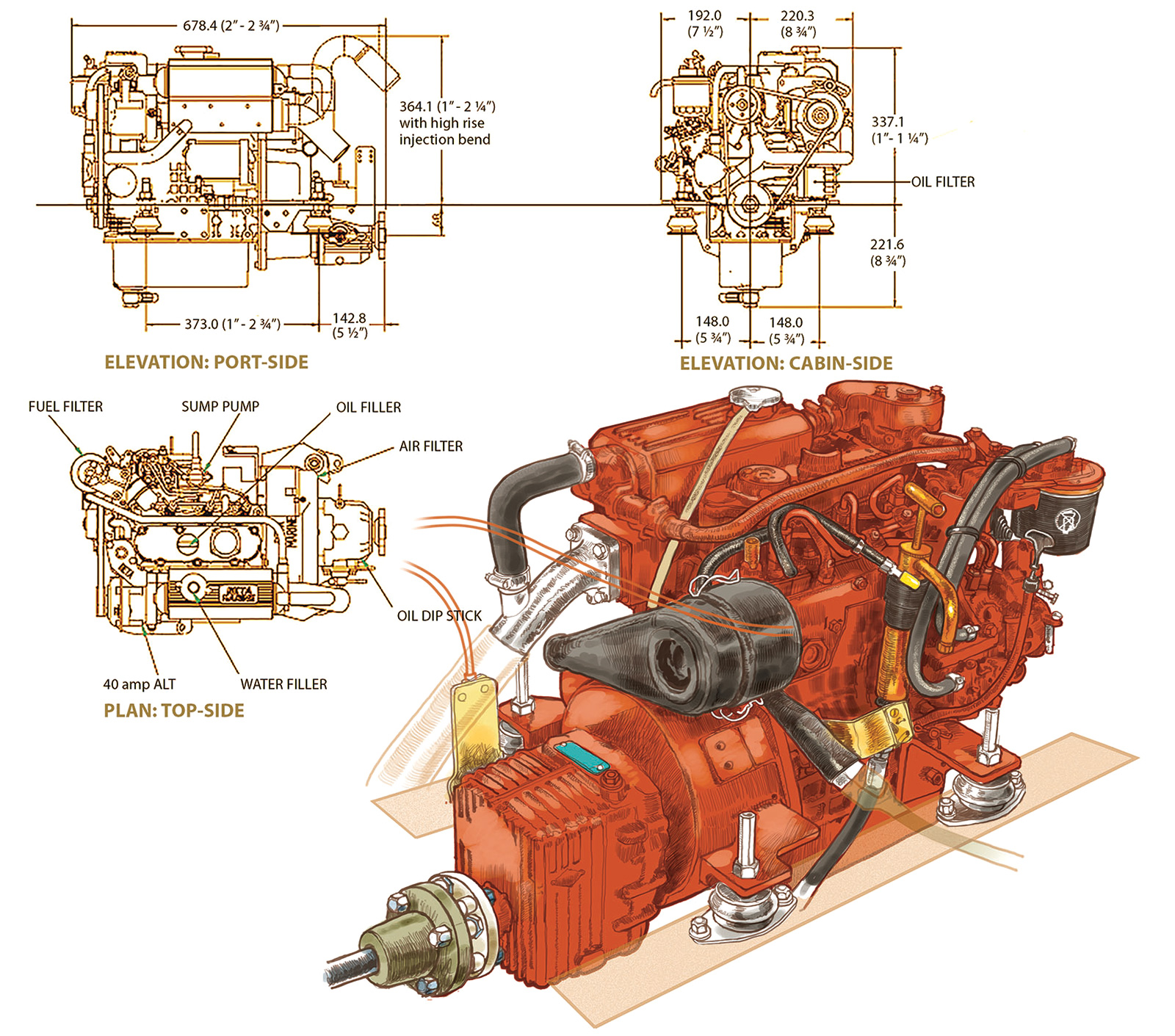
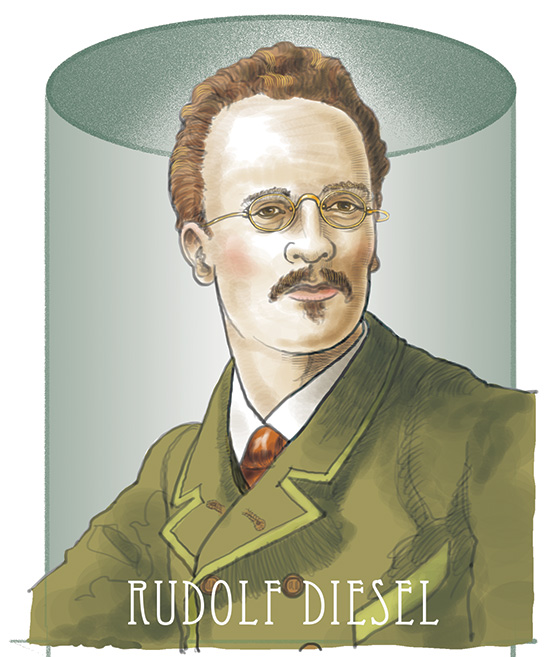
In 1893, Rudolf Christian Carl Diesel published his theory explaining the operation of an internal-combustion engine meant to be far more energy-efficient than the steam engines of his day. Soon thereafter, he built the first actual engines to his design. Diesel’s invention has a distinct advantage over gasoline engines in boats: their fuel, at normal atmospheric pressure, does not explode. Its ignition relies upon intense pressurization within the engine’s combustion chamber. Gasoline vapor, on the other hand, is highly explosive at atmospheric pressure, and if contained within a vessel such as a boat’s hull, it becomes a bomb when ignited. It also requires an electrical spark to combust, and this spark in turn relies upon an electrical system that can be compromised by salt and moisture. A faulty fuel system on a gas engine is dangerous. A faulty fuel system on a diesel engine is, generally, an annoyance. (Although it is not an explosion hazard, it can be a fire hazard.)