
 Benjamin Mendlowitz
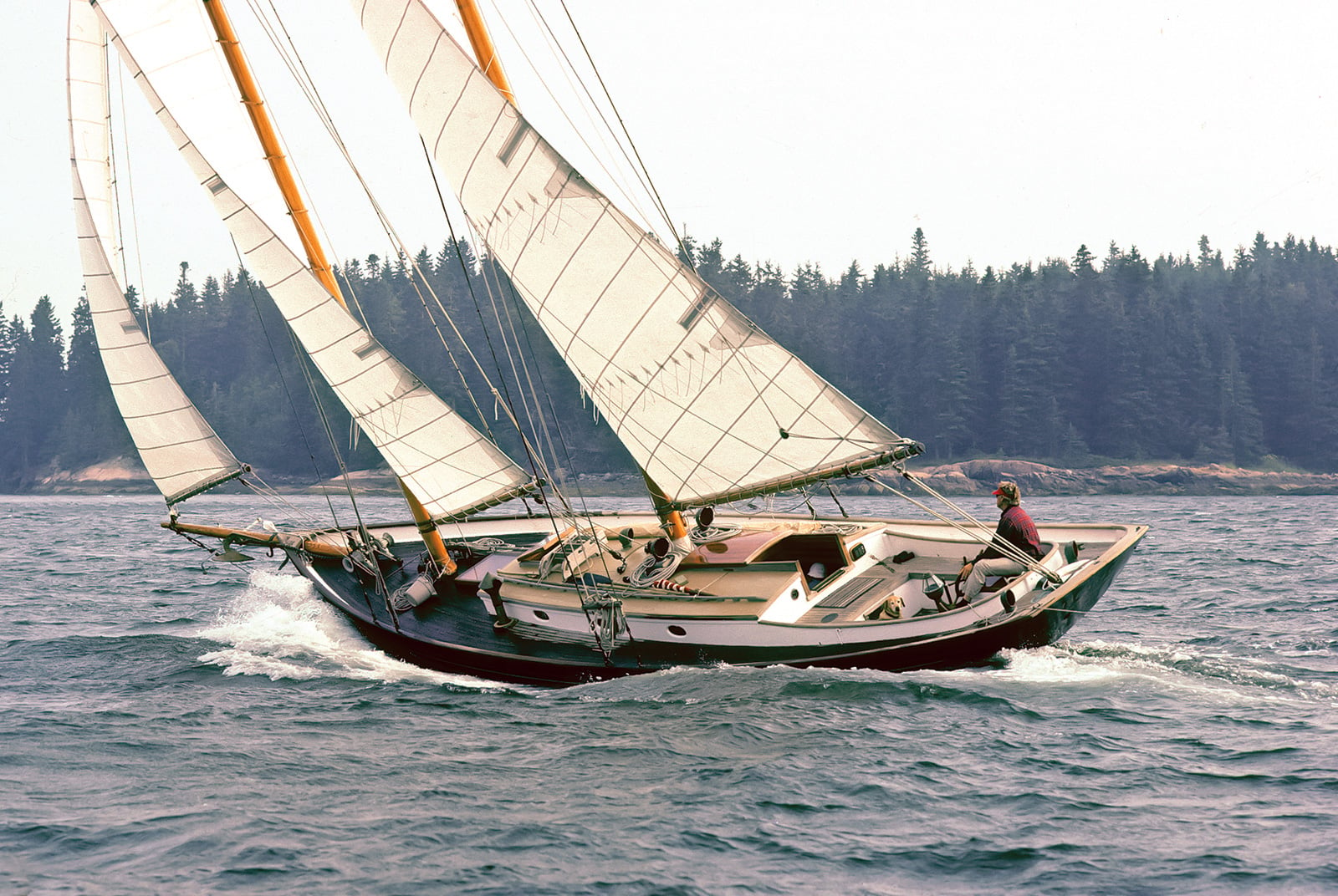
John G. Alden created a series of yachts, almost all of them schooners, with the same name and numbered sequentially, for his own use. MALABAR II, so named as the second of these, was built in 1922. Alden was admired in his own time, and today, for the beauty of his designs. Many of those design elements carried over into his Malabar Junior, which first appeared in 1926.
The success of a boat design is largely dependent on four considerations: safety, performance, comfort, and beauty. The purpose for which the boat was designed will influence the priorities of these components. Other than extreme examples—such as a lifeboat, for which safety is the overwhelming design objective, or AMERICA’s Cup racing, where speed is the goal at all costs—I think that none of these four components can be eliminated without compromising the overall merit of the boat.
Safety, performance, and comfort are relatively easy to quantify, but beauty is more difficult and perhaps nearly impossible to define. We can measure stability, freeboard, righting moment, and ease of handling the rig to conclude that one design is safer than another. Likewise, we can measure speed, weather helm, maneuverability, and fuel consumption to assign numbers to a boat’s performance. Headroom, the arrangement of accommodations, period of roll, or the way a boat feels against a head sea all help to place a boat on a scale of comfort.