
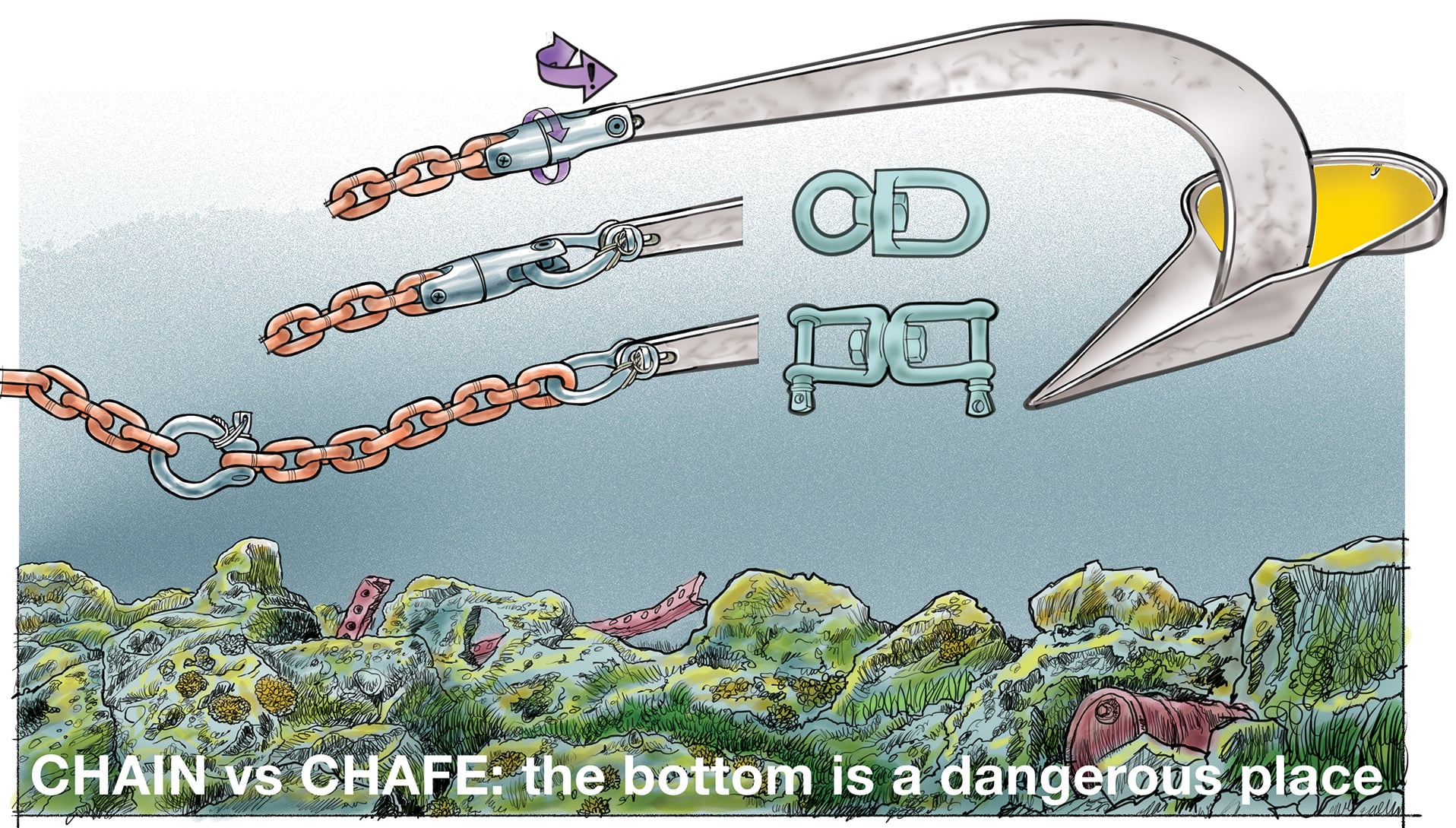
Day’s end is precious time for a sailor. You’ve made your odyssey and found your temporary Ithaka. While landfolk might not be aware of wave fatigue, you are: through a day of courting the wind, you’ve been balancing every moment, flexing muscles to maintain your connection to the boat. What you want from your anchorage, your anchor, and its ground tackle is security, time for ease, yarns, and no surprises. It’s within your reach as you slow your progress to exploratory maneuvering, then fix a spot and initiate your anchoring sequence.
A goodly time before you’ve arrived at the harbor, you’ll have your anchor a’cockbill, which is the old shellback’s way of saying it’s unlashed and ready to drop. You’ll have checked the anchor chain’s shackle and its wire mousing (which secures the shackle pin against turning). The anchor chain will be checked for hockles and—if chain is only part of your rode—laid out in preparation for an easy drop. You’ll have made yourself aware of the anchor rode’s unsnarled readiness to follow anchor and chain to the bottom.
What’s the tide—ebbing, flooding? What’s the phase of the moon and expected tidefall up or down? Tide current? What’s the bottom like? Are you dealing with sand, weed, shell, cobble (chair-sized stones), silt, gravel? Charts have abbreviations noting the bottom type. Neighboring boats may have local knowledge. Know all you can about what you can’t see. You probably carry more than one anchor; which is more suited to the seafloor beneath you? (For a discussion of anchor types, see our Skills 101 article on the topic in the previous issue.)
Weather is another variable. A line squall can pipe up to 60 knots briefly. What does the forecast tell you? Will weather from some exposed compass vector bring a chop into the anchorage?