
A Beginners Guide to Marine and VHF Radios
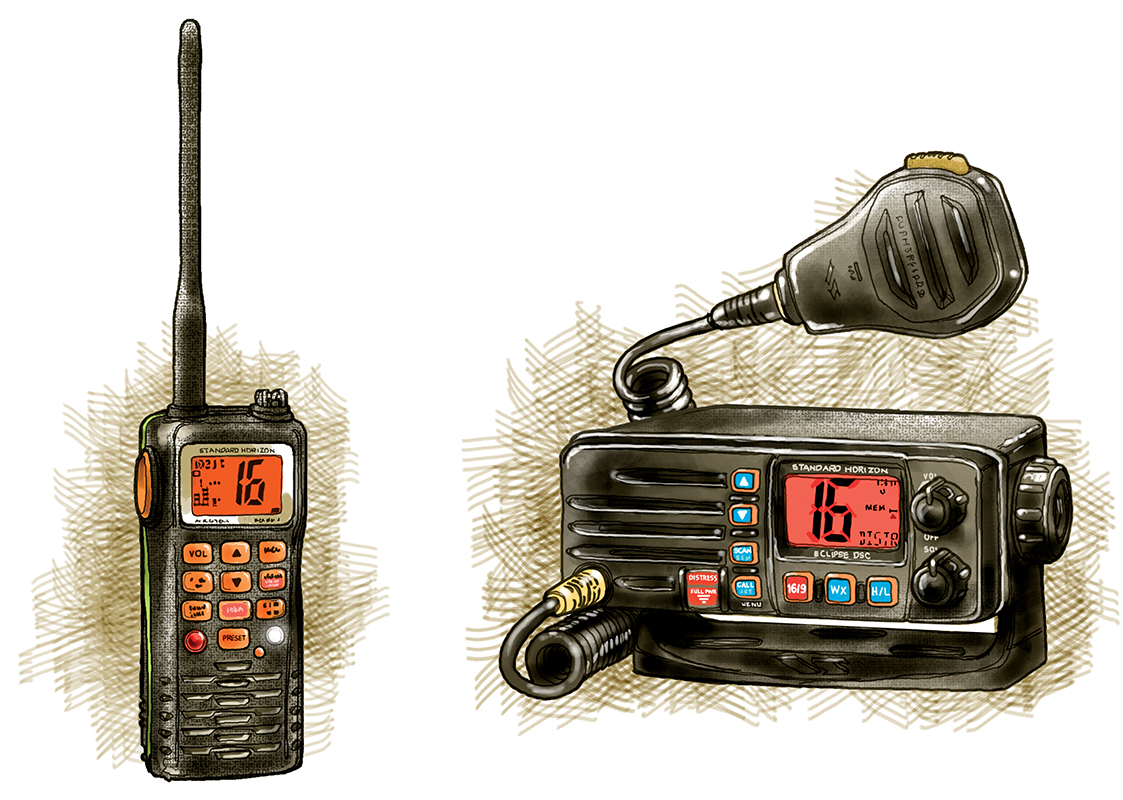
The VHF marine radio on a small recreational boat provides communications with other boats, situational awareness for safe navigation in the vicinity of larger vessels, and in an emergency it can save your life. There is no substitute! Communications at sea have been important through the ages. Until the advent of modem electronics, boaters were limited to short-distance communications using code flags, flashing lights using Morse code, and whistle signals. In the early days of electronic communications, only large ships with radio operators could afford to communicate electronically, but now with reliable low-cost fixed and handheld VHF marine radios we can all have good communication.
While the cell phone can be an added convenience aboard (and smartphones make weather reports even more accessible), it should not be substituted for a VHF radio. The VHF's capabilities and reliability far exceed that of the cell phone. It has a bandwidth dedicated to marine use. The Coast Guard continuously monitors Channel 16 and is required to respond if you make an emergency call. Also, while most VHF units are waterproof, almost all cell phones are rendered useless if submerged. The VHF radio also enables boats to respond to one another in both emergency and non-emergency situations. So, learn to use a VHF radio—it really could save your life one day.