
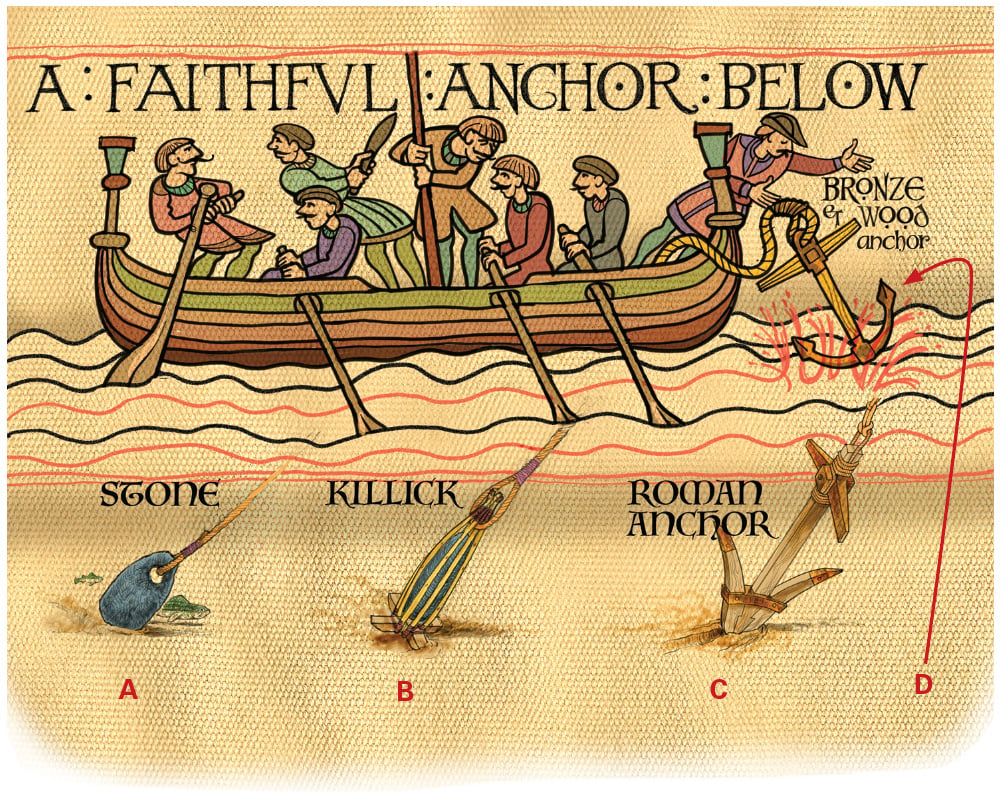
Learning how to make a boat go is hard enough. How does one make it stop, safely, all night, even when the weather intrudes? It’s an ancient problem. Xerxes took his army across the Hellespont (about 1,250 meters, or about three-quarters of a mile) in 480 B.C. on a pontoon bridge, each bireme and trireme anchored bow and stern. The march took seven days and nights. They had good anchors. Xerxes also had good engineers.
What about rural fishermen who found a likely spot for jigging flounder and wanted to stay there? Stone Age anchors were killick stones (A), heavy and smooth, with a hole bashed through to bend on a rode (anchor line). Did they hold their ground?
Here’s the first and ultimate lesson in anchoring: what kind of ground, or bottom, will the anchor encounter? If the bottom were alluvial mud, the weight of the killick stone and the tug of the boat would sink it into the ooze, so the rode tension would amount to more than the stone’s weight; the boat would be pulling against the additional weight of the mud around the stone.
But bottoms may be gravel, stones, big rocks, coral, weed, or sand. That killick stone would skate right across a weed bed. Primitive fisherfolk weren’t ready to cast metal, so they used what they could shape into a killick (B): heavy rocks bound into a withy basket—flexible branches lashed to a helpful geometry of wooden grabbers that might catch a rock or a root. It was a big improvement.
Boats became more complex and larger. Transport became more profitable, technology blossomed, and the necessity of obliging a boat to stay in one place became financial. Because the best anchors were built to last, and because plenty of their rodes failed, we’ve found loads of anchors from early societies. The Egyptians dealt largely with Nile current, but they began an anchor evolution that has continued: a dependable bottom-grabbing tool that relied on weight, basic geometry, and understanding bottoms. Available designs didn’t change much over centuries. Roman anchors (C) made of hardwood stabilized with bronze castings are similar to medieval European anchors (D). One important geometric addition was the 90-degree anchor stock, which lies flat on the bottom and tips the anchor so that its flukes, set at 90 degrees to the stock, “set,” or dig into the bottom sediment.
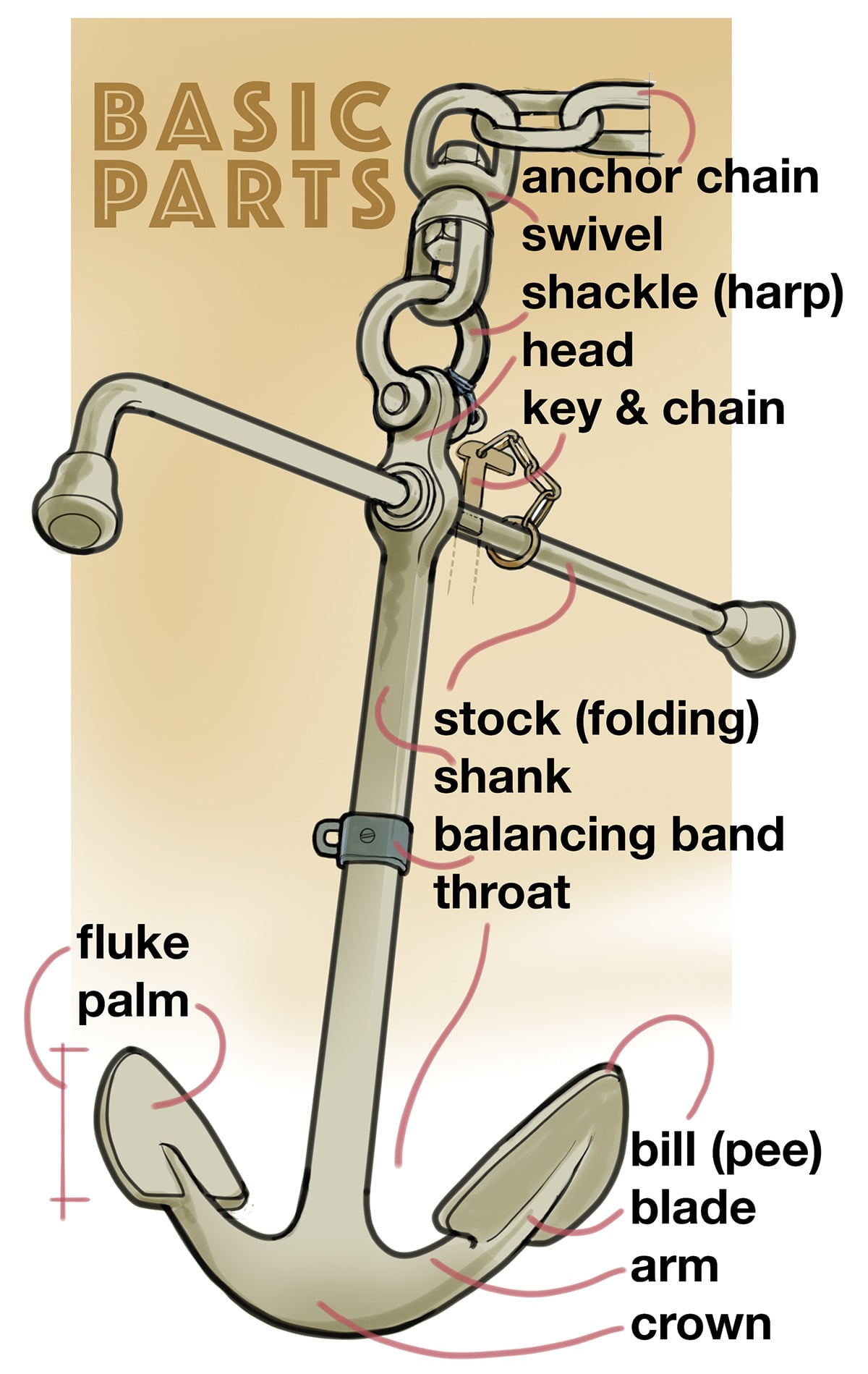
ANCHOR PARTS assume importance in examining the many anchor configurations available to you and your boat. The classic model is the yachtsman’s anchor because later evolutions express its basic functions differently.
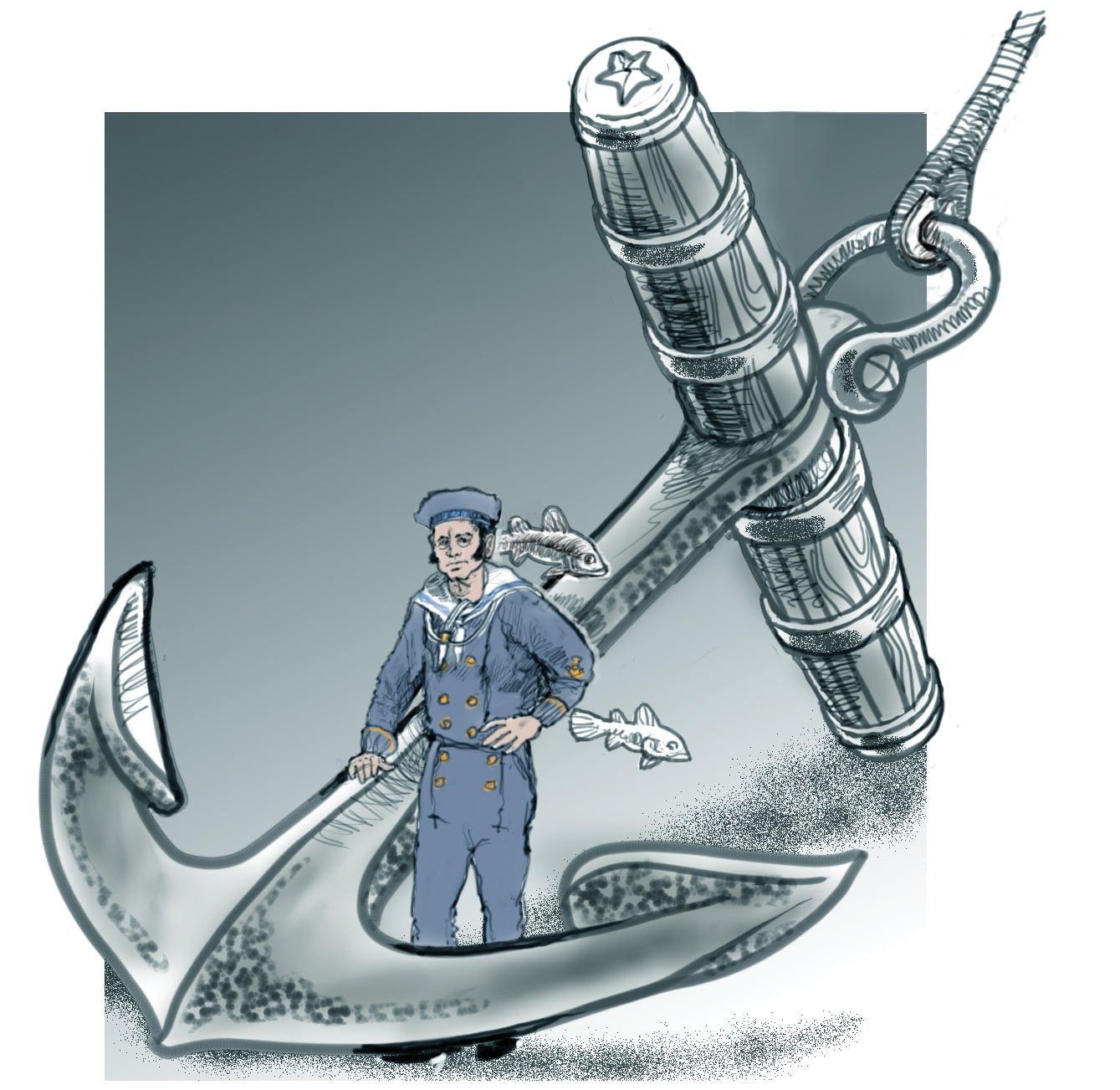
ADMIRALTY ANCHOR for a 19th-century ship. The similarities to the yachtsman’s anchor are obvious. What is also obvious: it’s enormous, 5 to 10 tons of hammer-welded steel or wrought iron, deployed and retrieved with brilliantly conceived force multipliers like two-tier capstans allowing three dozen sailors to exert massive force. The bottom holding principles are the same as for small anchors.
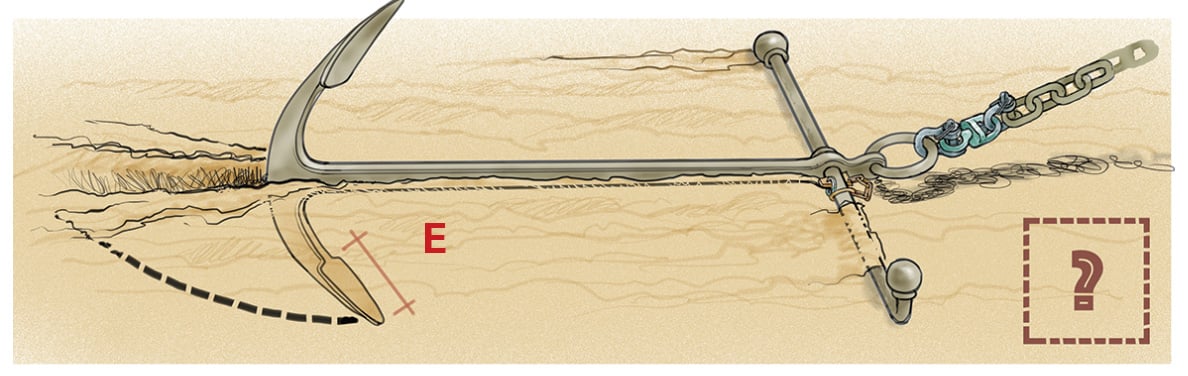
We still think of the yachtsman- and admiralty-pattern anchor as “traditional,” though in an age of connections and comparison tests, the yachtsman doesn’t rank well. When its stock lays the flukes in the ideal digging position it will bite into a soft bottom, even though the fluke’s palm is narrow and doesn’t build up much resistance (E).
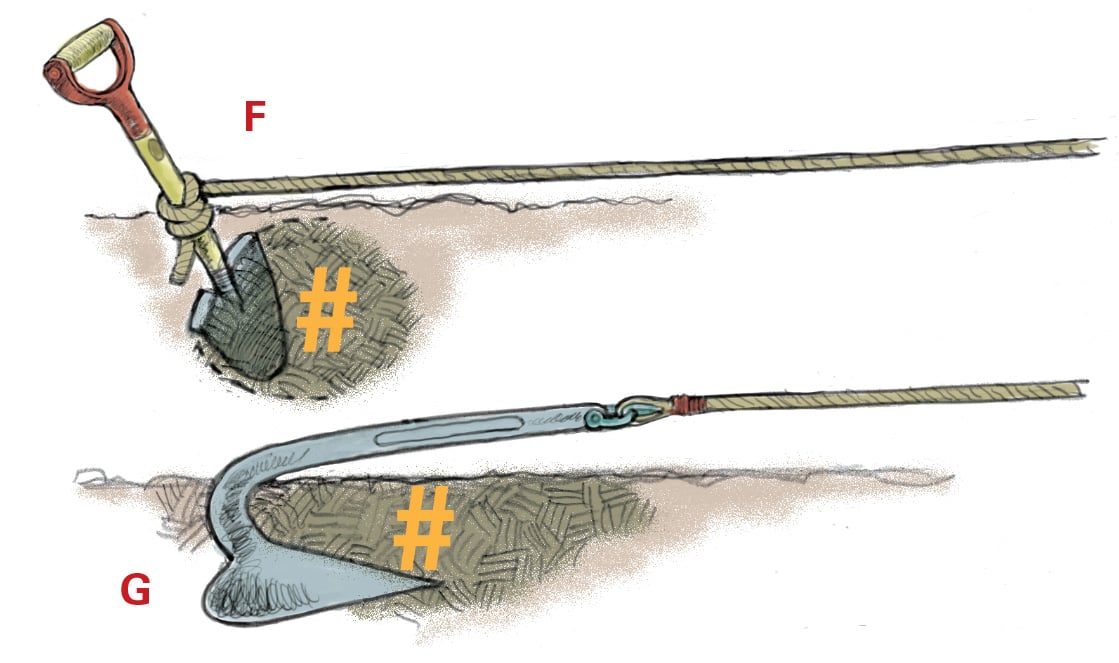
Easy proof: push a shovel into soft ground (F); the horizontal resistance will be greater than the weight of the shovel; it will add the weight of the soil (#) between its blade and the pull. Consider a plough anchor (one of many variants) that is shaped to dig itself deep (G): resistance to pull is much greater than the anchor weight; the amount of bottom between anchor and rode (#) multiply the resistance.
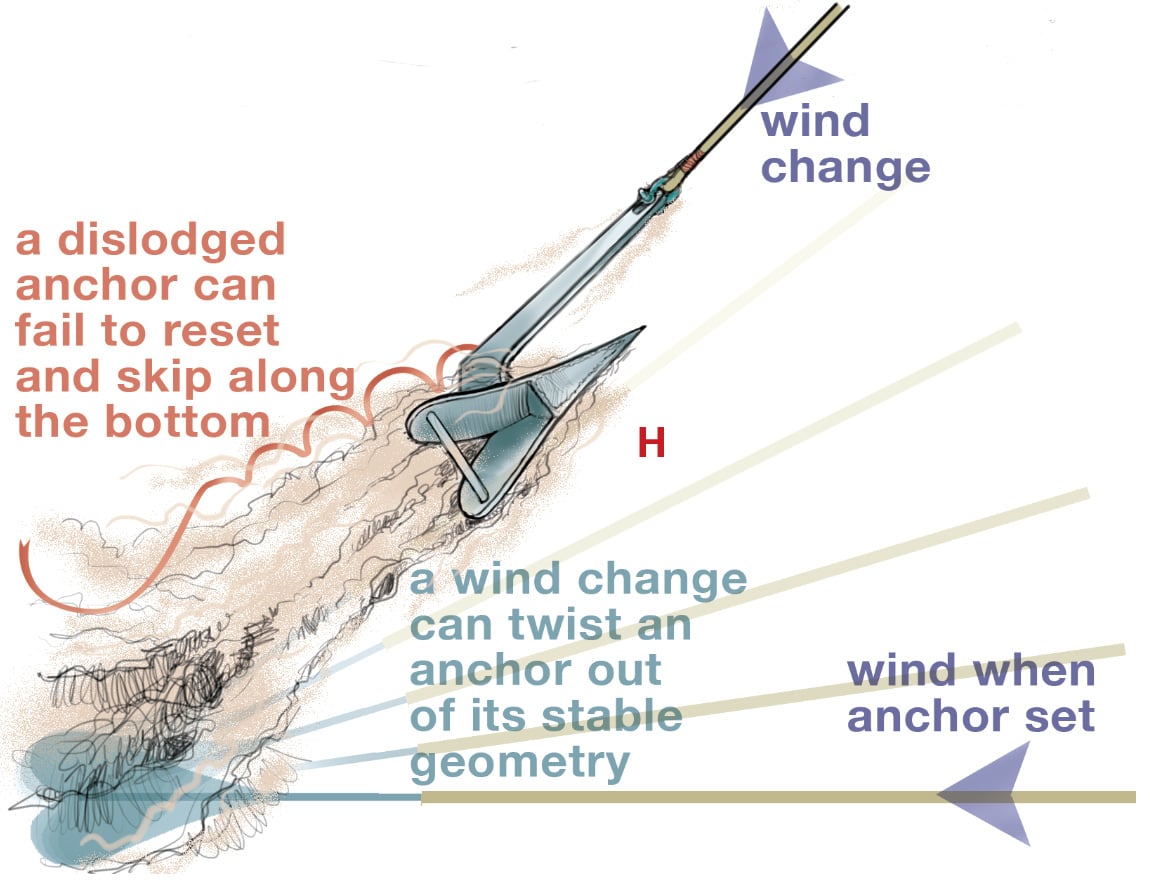
Some anchors, when pulled at a comfortable angle, can skitter across the harbor on their sides (H).
Anchors can drag.
Anchor Types
What kind of shoes should you wear? Are you attending the opera, running a 5K, or fly fishing in a stream? There are hundreds of anchors available, and it would be foolish to recommend a choice. Many perform handsomely in the right bottom. Some have foibles, such as aversion to setting in weed, or the possibility of being unseated by a wind change and not resetting. A single anchor may not be appropriate for all situations. There is no ideal anchor. The anchors here are relatively recent designs by conscientious sailors. They have been tested rigorously for security in several bottoms.
Note that none of these is shown with a chain, anchor float, or a chain-rode swivel. These are necessities for the prudent mariner. Lowering the anchor is a minor part of anchor drill. Do your homework.
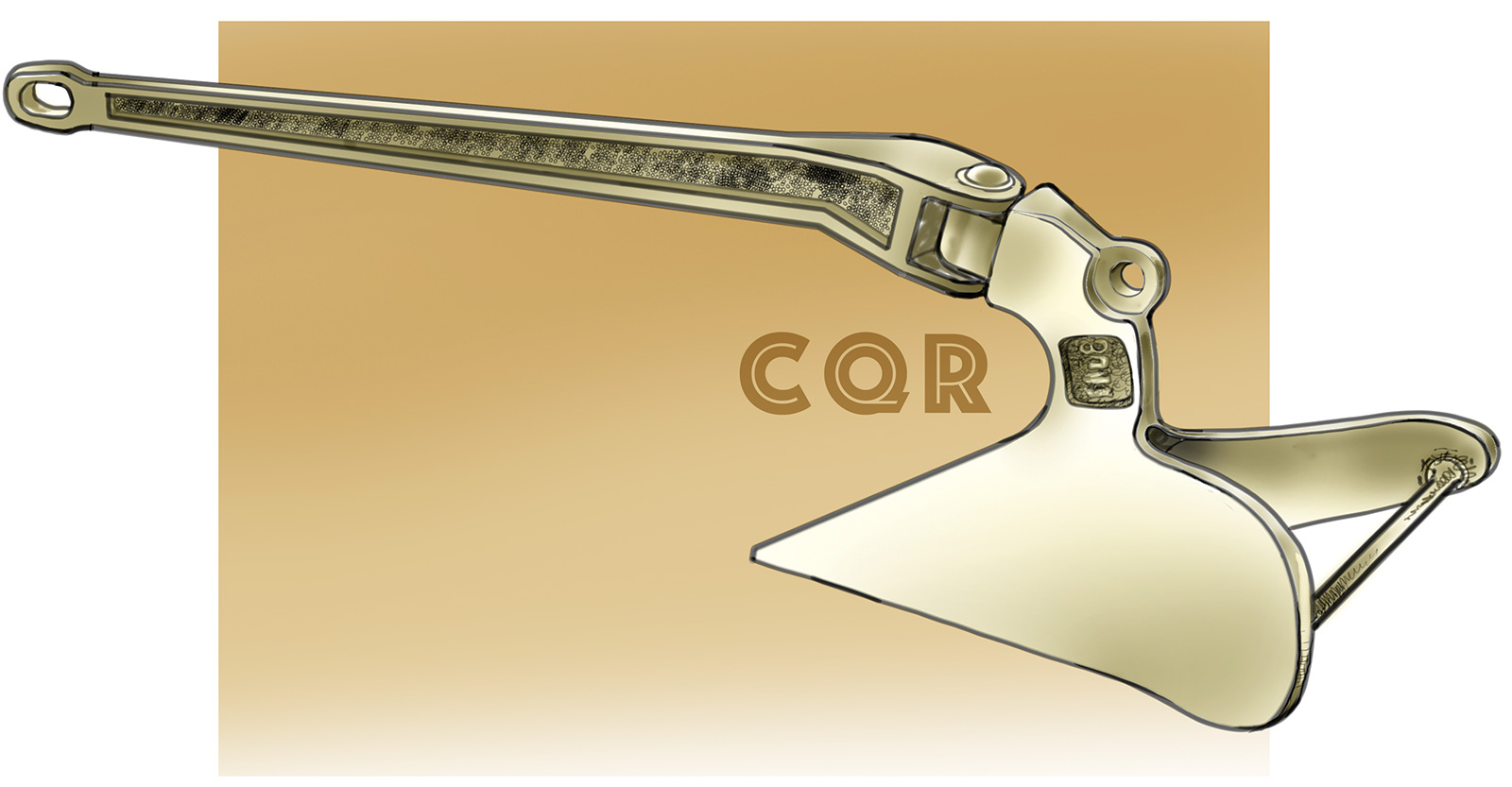
CQR: shorthand for “secure.” It looks futuristic but is one of the oldest designs here; it was developed by the physicist and mathematician Sir Geoffrey Ingram Taylor in 1933 for his own yacht. Its jointed shank gives its plough a wide angle in which to set and burrow. Heavy and tough, it shines in sand, mud, and light weeds. On the other hand, a sudden wind change has been known to disinter a CQR and overset its geometry, allowing it to scoot along the bottom with its hook above the ground.
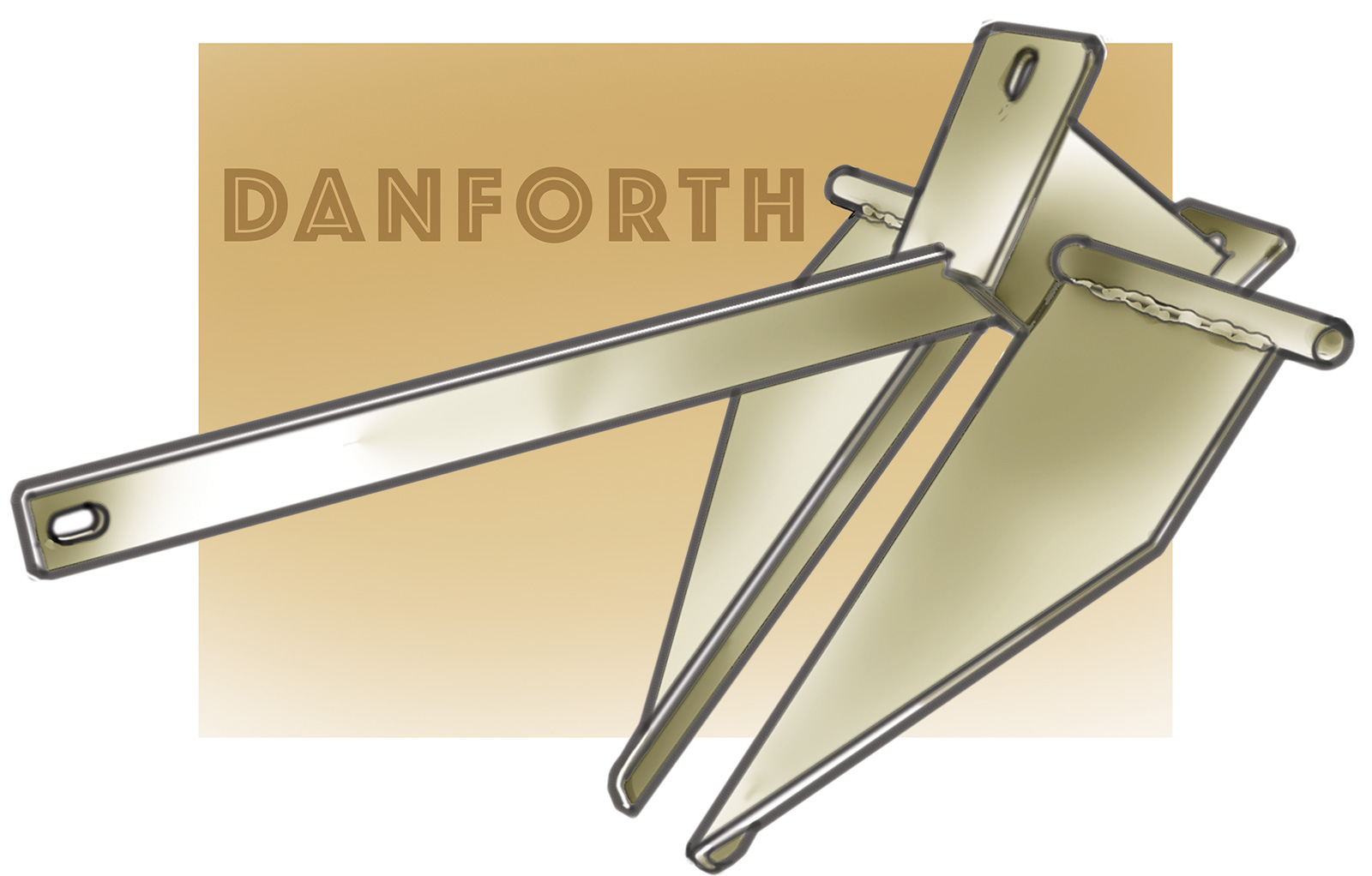
DANFORTH: patented by Richard Danforth in 1940 especially for seaplanes and landing craft, its stock is in the same plane as its variable flukes, which have broad surfaces that set well in sand and mud. World War II lore is that Higgins LCVP landing boats dropped Danforth anchors just before they hit the beach so a boat winch could tow the boats back into deeper water. It’s true that the Danforth in its many sizes and guises has terrific holding power, but its reputation for resetting with a change of wind is questionable.
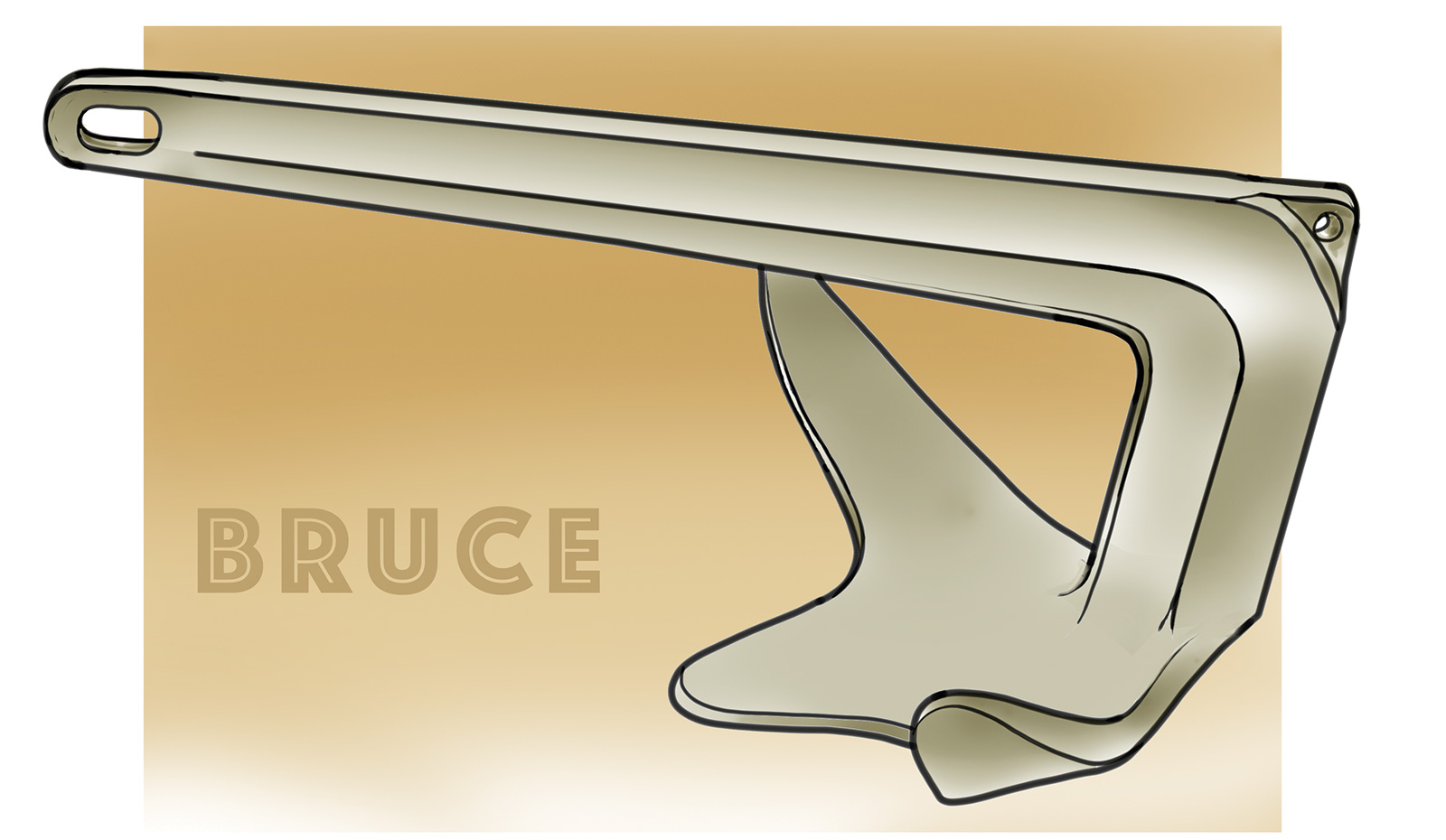
BRUCE: a “claw” designed in the 1970s by Peter Bruce. These were made in enormous sizes for anchoring North Sea drilling rigs. Scaled down, the Bruce is an excellent performer in mud and sand but a poor choice for weed. Cobble (closely packed rounded stone between orange and melon size) defies a Bruce anchor…and every other anchor under several hundred pounds.
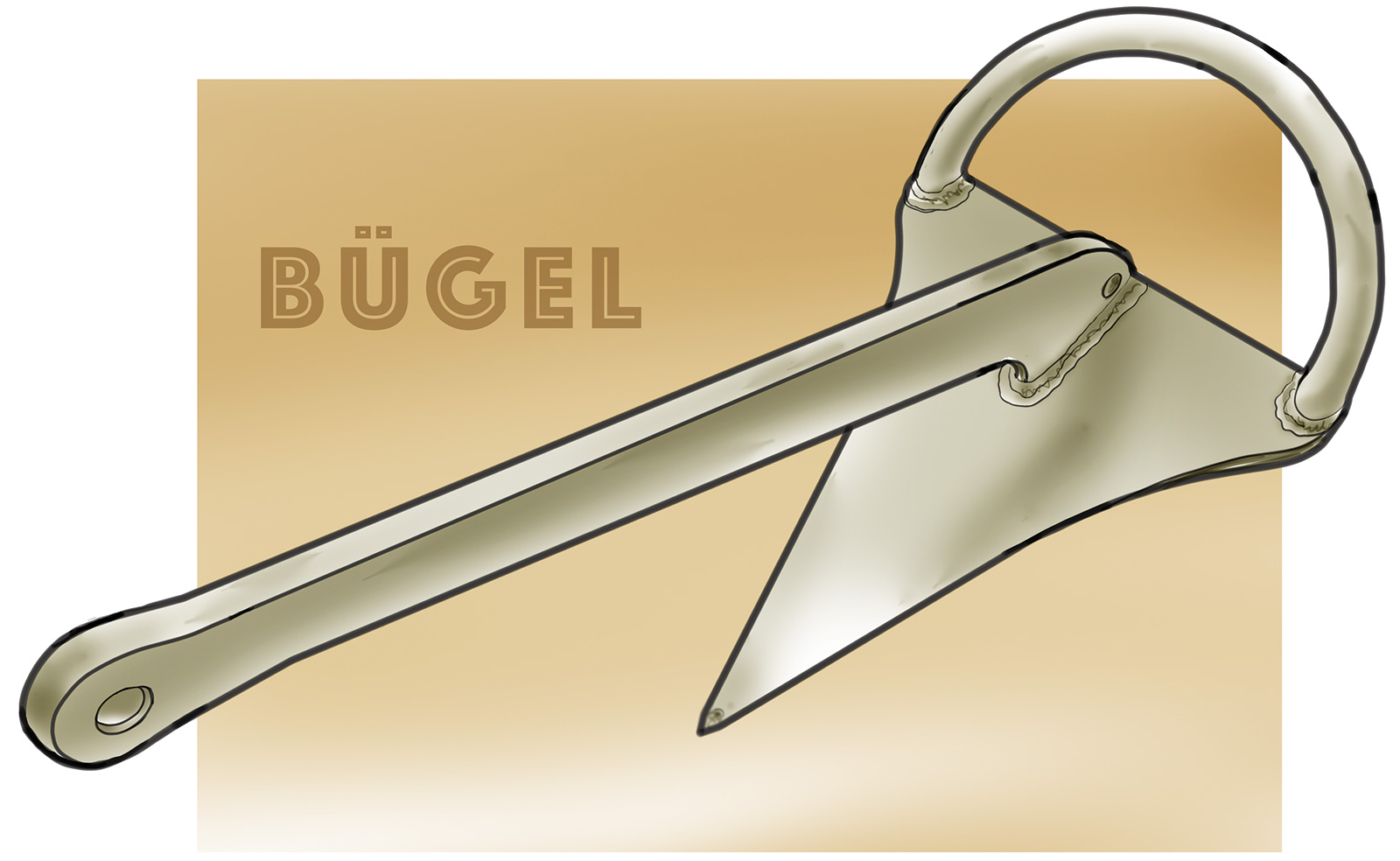
BÜGEL: a 1980s design by German engineer Rolf Kaczirek featuring a “stirrup” roll bar and a flat spear fluke. It’s an inexpensive anchor perhaps produced more for ease of manufacture than for security. It has reasonable sand holding but high rode tensions, as in strong winds, will drag its small fluke. Users recommend very shallow rode angles, achieved by lengthening scope.
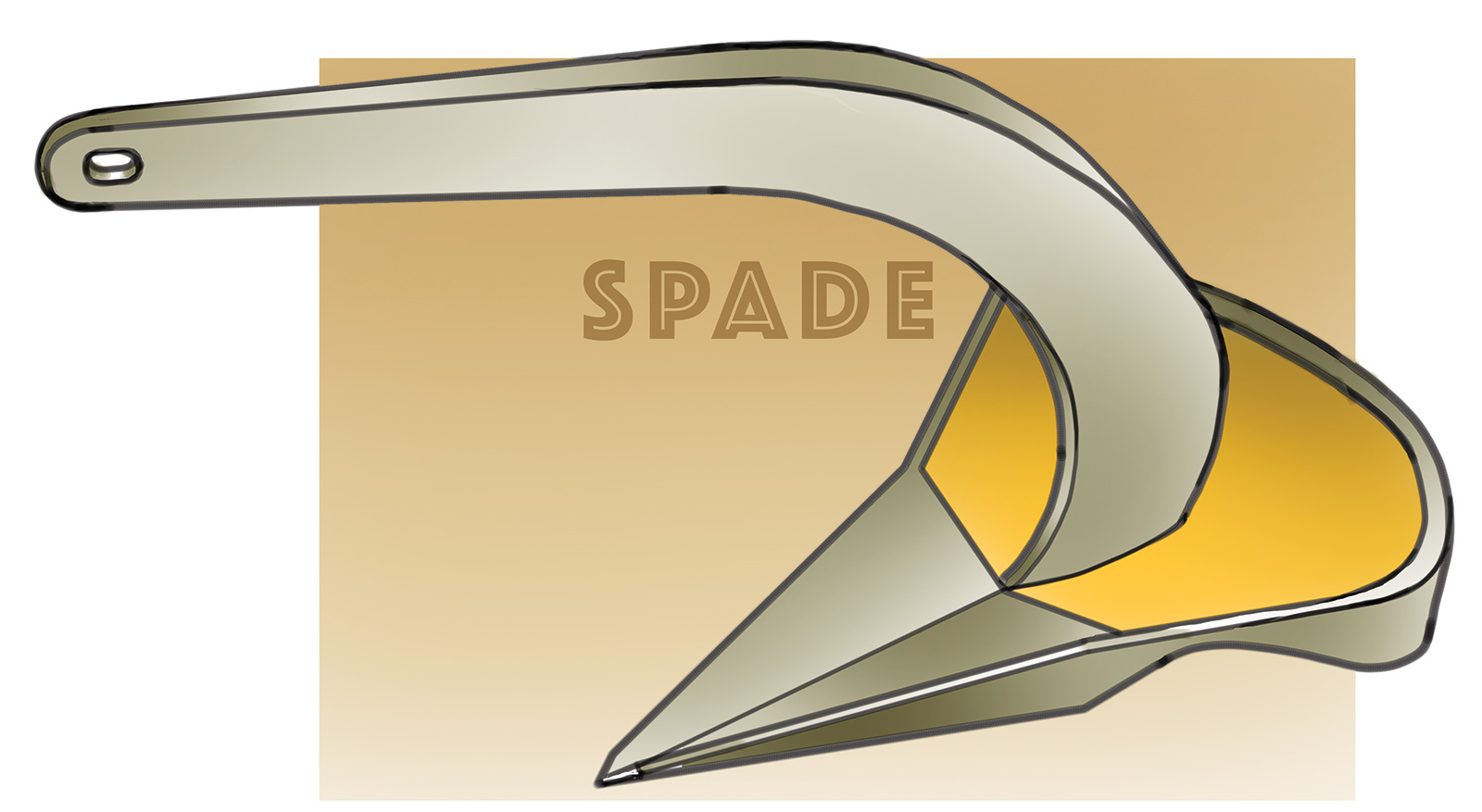
SPADE: a French design by Alain Poiraud in 1996, now manufactured in Morocco with a concave fluke and a sharp chisel tip. Its shank is hollow (and demountable), which shifts balance to the lead-weighted tip. The spade has remarkable holding power in mud, sand, and weed.
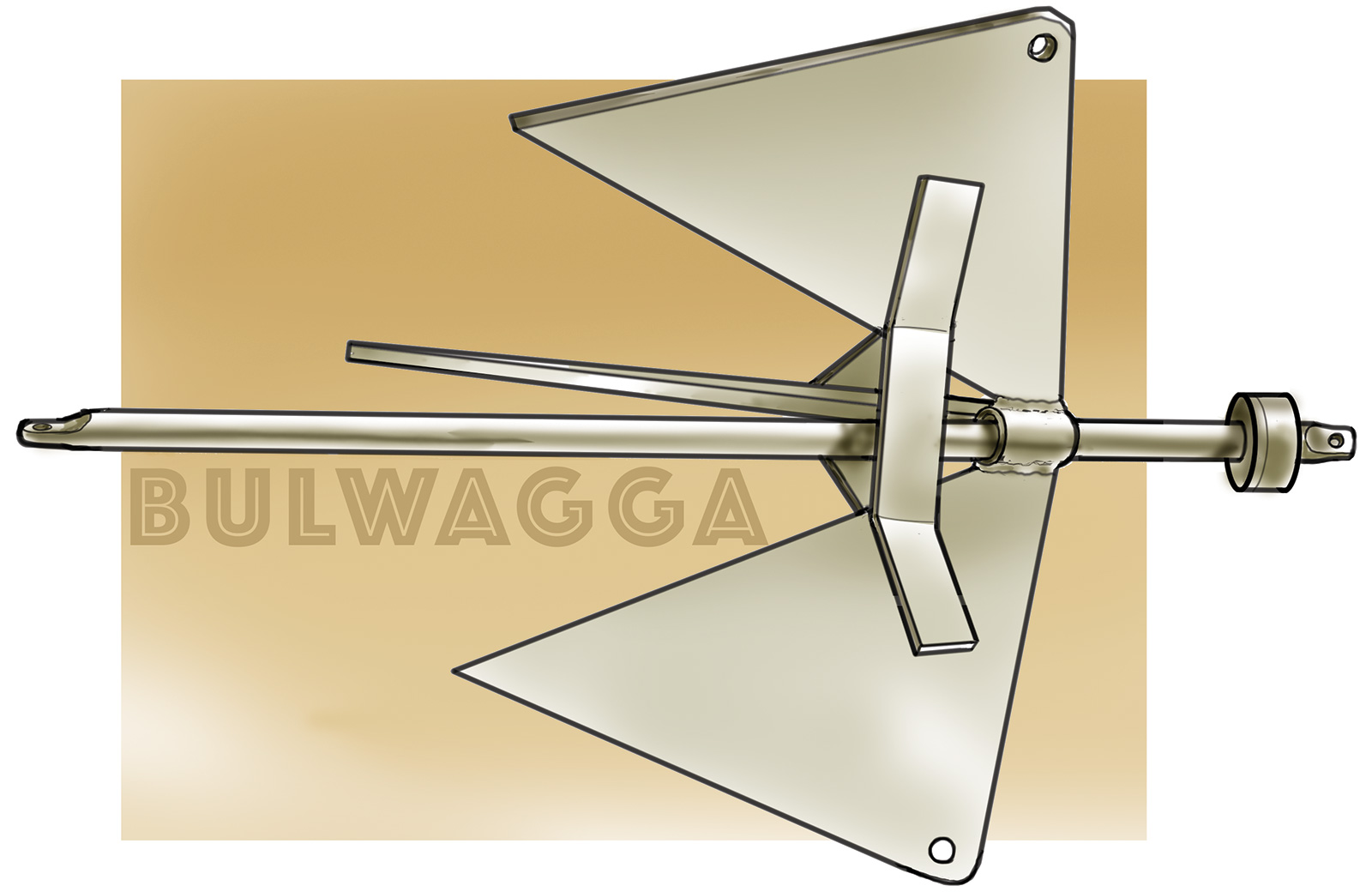
BULWAGGA: occasionally a designer takes a fresh look at a problem, as Peter Mele did in 2000 while working on an anchor for Bulwagga Lake in New York State. He invented a three-fluke star with a pivoting shank within the flukes’ centers. No, we don’t think it looks like an anchor, either, but it performs heroically in mud, sand, weed, and grass. It’s bulky, hard to stow, inimical to most bow anchor fittings, and one fluke is always vertical and prone to fouling a line. But it resets itself with a shrug and holds like a barnacle.
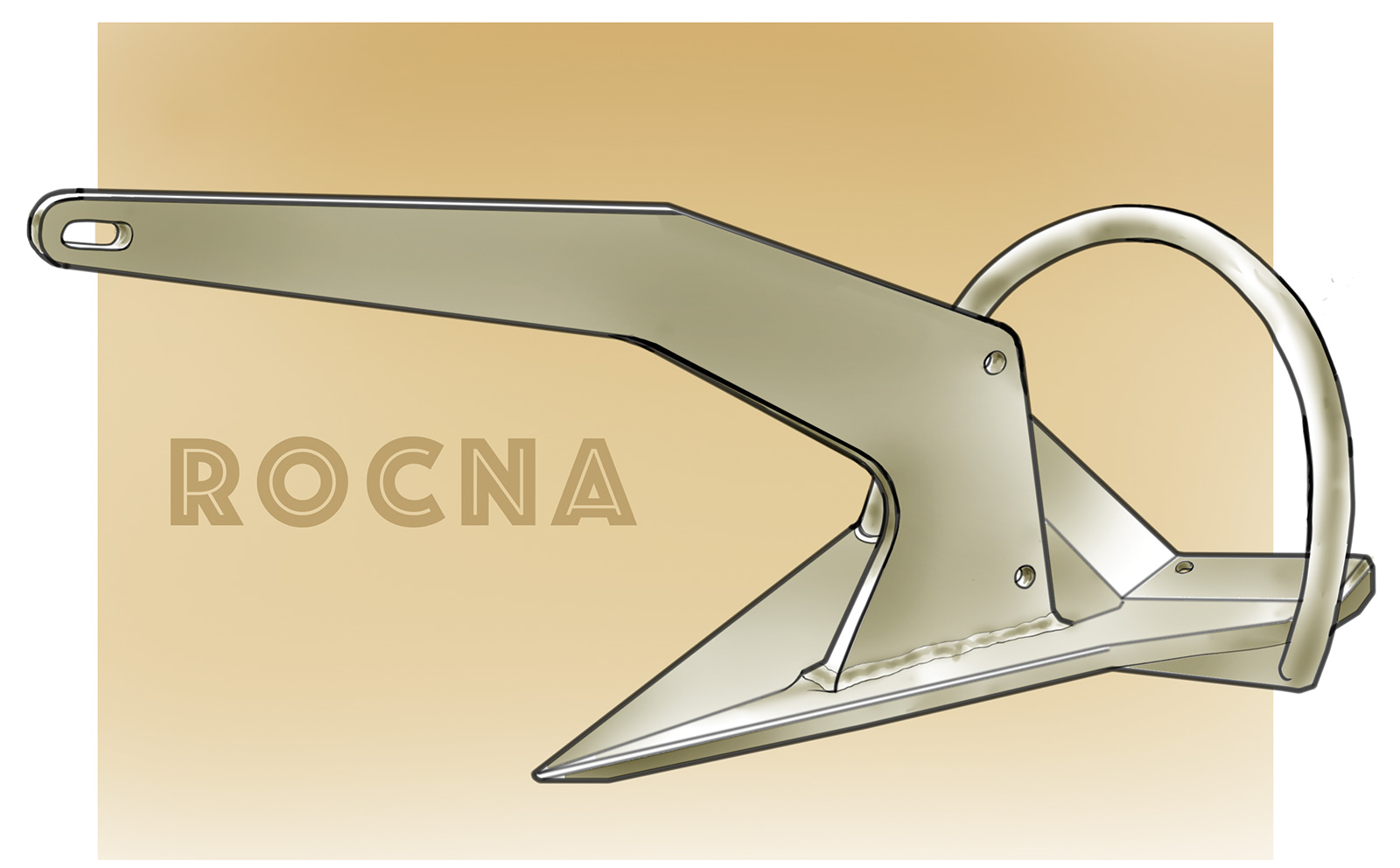
ROCNA: designed by Peter Smith of New Zealand around 2004 and developed over 20 years to its present form, a V-shaped fluke with a sharp tip angled in 3D and a prominent self-righting roll bar. The Rocna has been rated among the best anchors in most recent tests. It is well suited to mud, sand, grass, and even kelp.
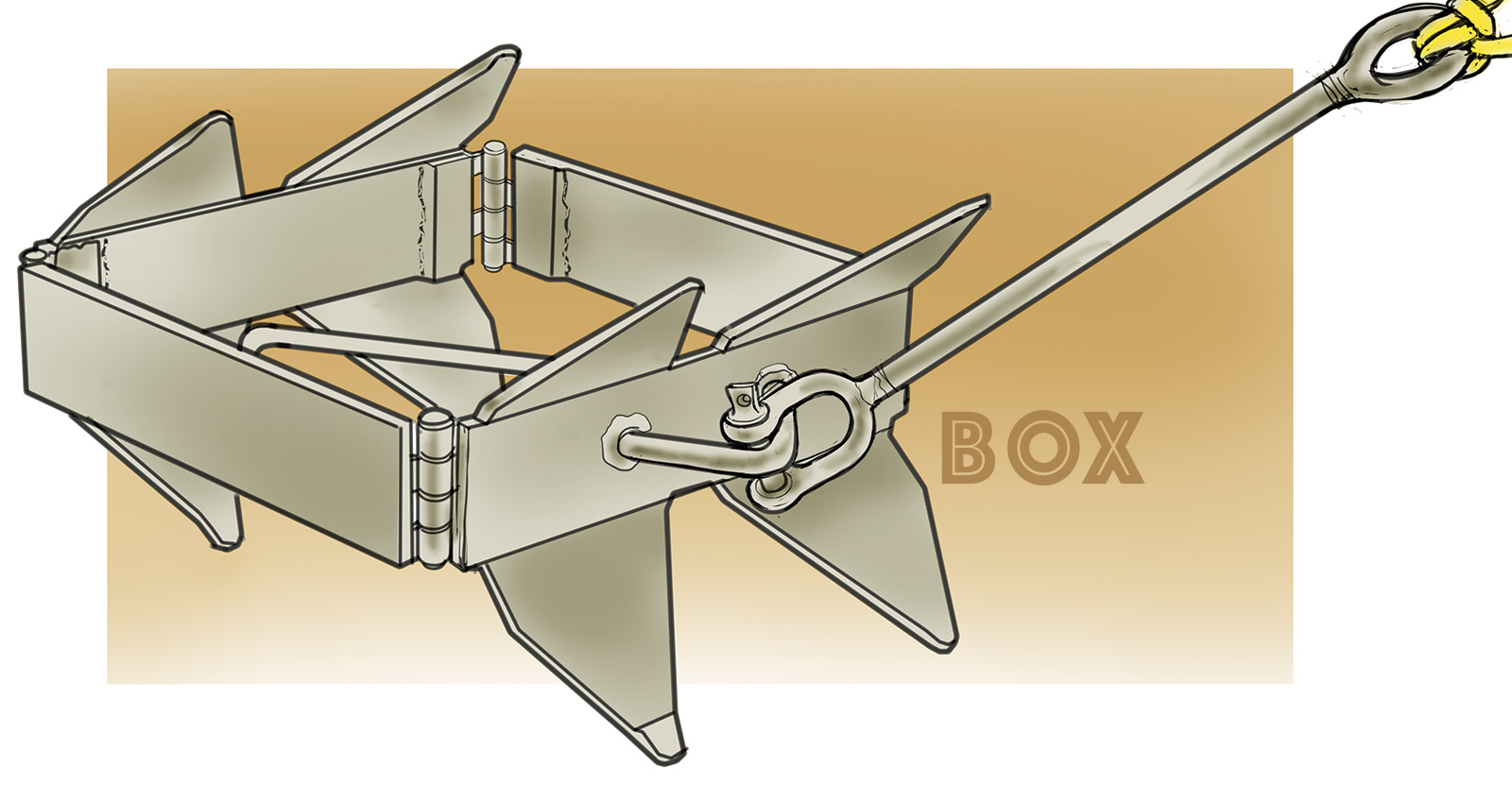
BOX: more like an engine of war than an anchor, this item has been touted for its strong sand-holding virtue and its “self-righting” nature, since both sides are identical. Its makers call attention to its folding geometry for stowage and to its short-scope hold, without the necessity of chain, since a swiveled rod lifts the rode from the bottom. This is a small-boat anchor for runabouts and fishing rigs, not a deep-hold overnight anchor.
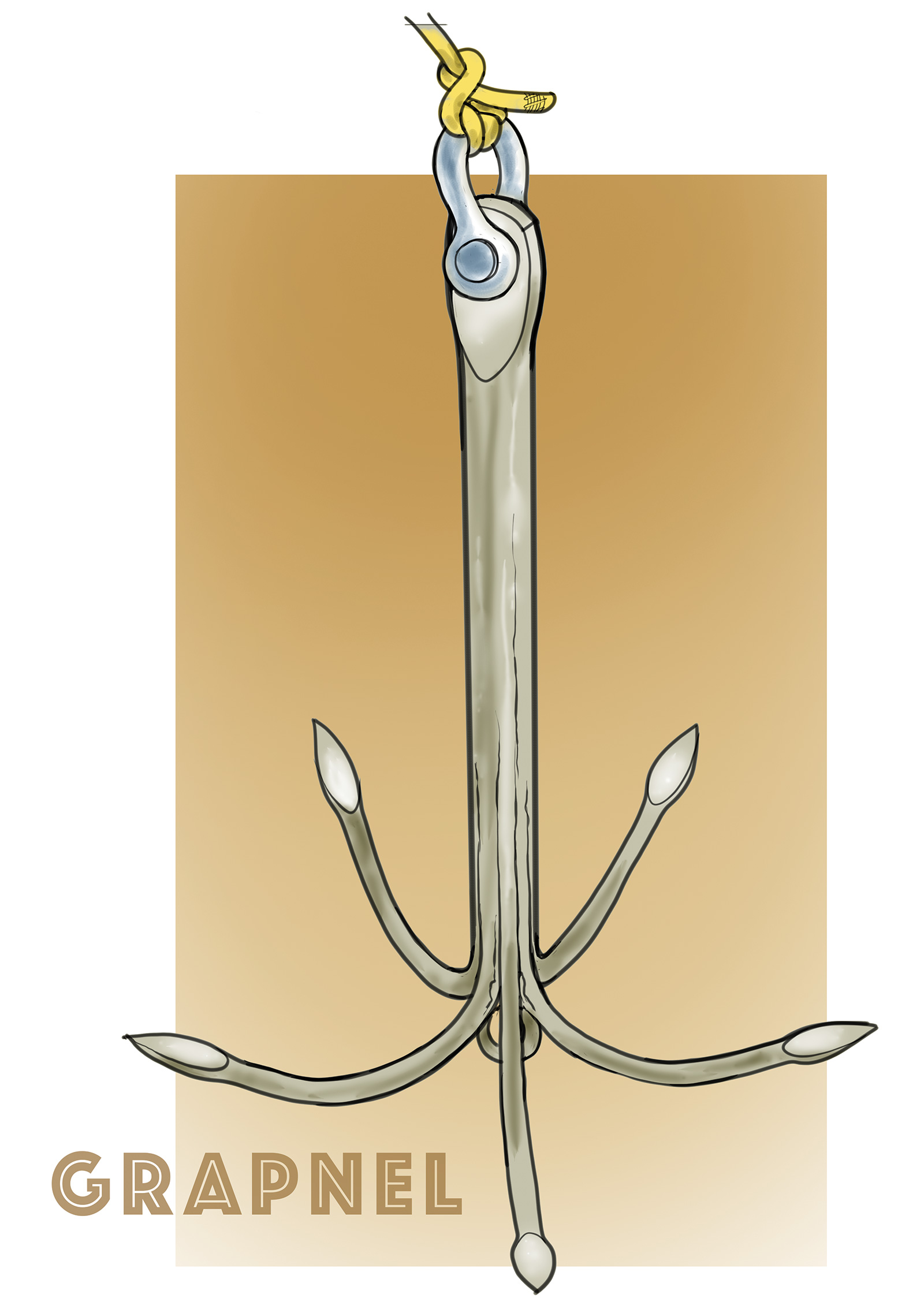
Grapnel: another lunchtime or fishing solution. The grapnel—it comes in a folding variety, too—can be useful on good days blessed by gentle winds. A vinyl-covered mushroom falls into the same category.
Your anchor is a holy maritime object demanding respect and special attention, careful deployment, and devoted monitoring. Choose wisely and set your anchor with every advantage you can offer it. 
Jan Adkins is a regular contributor to WoodenBoat. Visit his blog, Dockwolloping (www.dockwalloping.boats), for more insightful illustrated discussion of all sorts of maritime matters.