
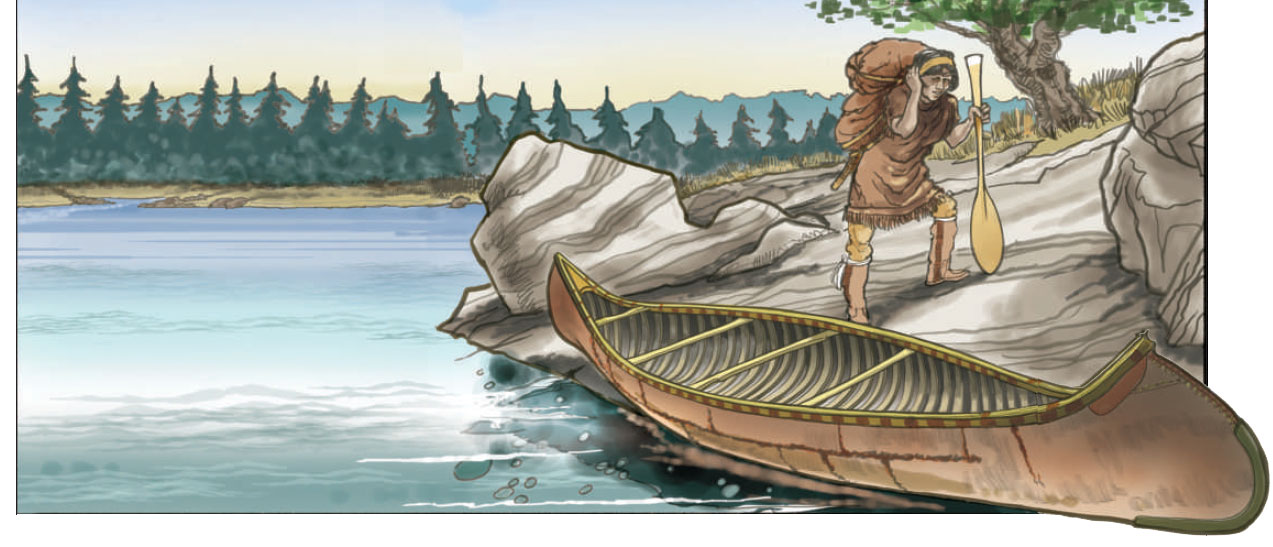
What Is the Eastern First Nations Canoe?
The Eastern First Nations canoe is a textbook of native material use, employing large sheets of birchbark wedded to thin bent white-cedar ribs, held in a tension structure by stem and stern arcs and robust thwarts, stitched together with woven spruce roots, and waterproofed with native spruce gum seeps. It was constructed from the outside in, beginning with carefully driven stakes defining the length, plan-view outline, and beam of the craft.
The birchbark sheets were laid in the resulting “cradle,” and cut to create a fair shape. The seams, like all the other elements to follow, were stitched together with spruce roots. Thin ribs soaked into suppleness were then laid into the bark envelope and stitched into the gunwales, stems, and thwarts. Pitch was used to waterproof seams and knot holes.
When winter was closing in, the Ojibway covered their canoes’ interiors with clay and sank them in shallow water, weighted down with stones. Resurrected in the spring, they were ready for another season after drying out for a few weeks. Beyond knapped flint and the later addition of the multiuse “crooked knife,” few tools were employed in the construction of a canoe.