
 Harry Bryan
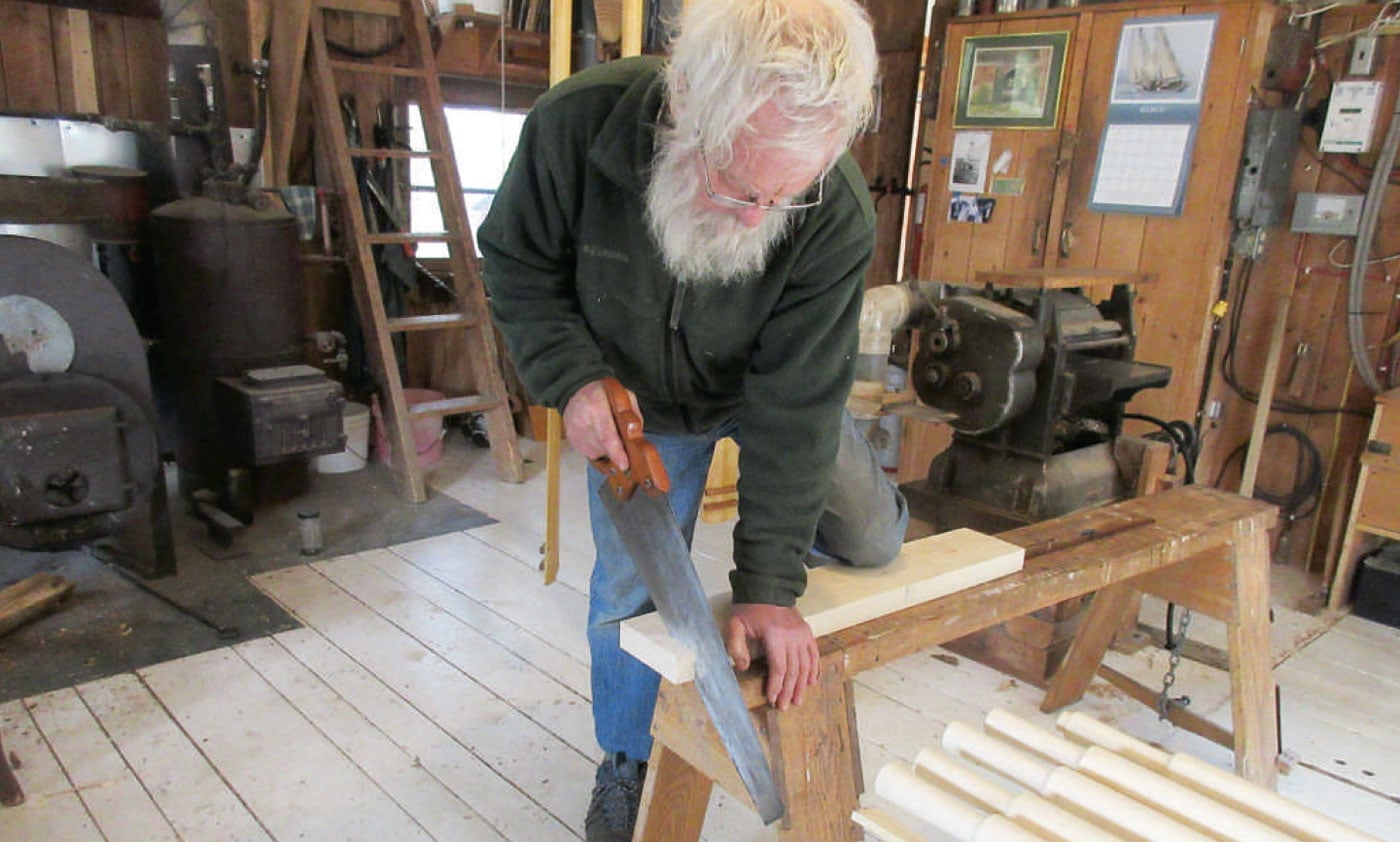
Western saws have the advantage of being easily resharpened. For boatbuilding work, author Harry Bryan prefers ten- to twelve-point saws 20” long, and he has modified and tuned vintage saws—including the one he is using here—to those specifications.
According to R.A. Salaman’s Dictionary of Woodworking Tools, “hand saw” is the term given to a group of saws with blades that are wide, vary from about 10" to 30" in length, and usually taper in width from the handle to the toe. Improvements in steelmaking technology in the early 17th century introduced saw blades that were wider and thinner, yet stiffer, than their predecessors, allowing toolmakers to dispense with the cumbersome wooden bowsaw frames that were needed to tension earlier blades. By the mid-18th century, English saws, usually made of Sheffield steel, looked very much like the saws we know today. For more than 200 years, this style of saw, which cuts on the push stroke, was the most common among woodworkers following European traditions. Only recently has the Japanese saw, which cuts on the pull stroke, become so popular in western countries in both sales and usage that it has nearly eclipsed what is today called the “western saw.”
What caused this shift? I do not think that western craftsmen finally discovered a superior style of saw of which they were ignorant before. I believe that the near-demise of the western crosscut saw can be traced primarily to the introduction of handheld power saws and, more recently, chop saws. For crosscutting, both of these classes of power tools do what was formerly the province of the ubiquitous eight-point handsaw. As the use of hand tools declined, so did both the knowledge of how to maintain them and the availability of professional sharpening services. Thus, through use and abuse, the western saw became that tool hanging on the wall that could cut only inefficiently, if at all.