
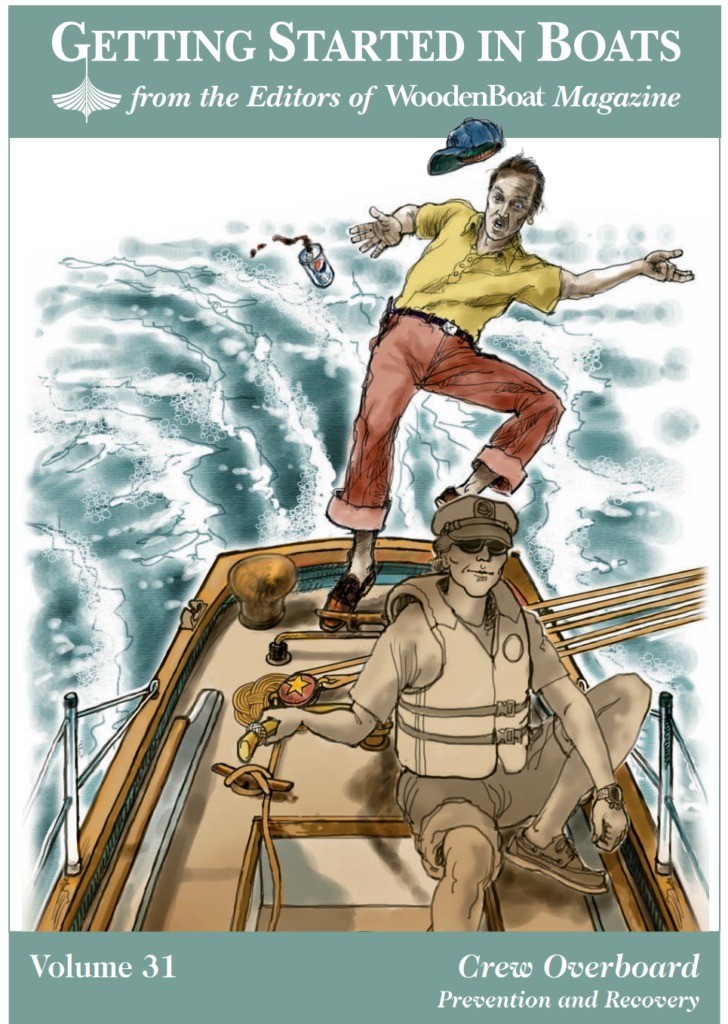
A Beginners Guide to Overboard Prevention and Recovery
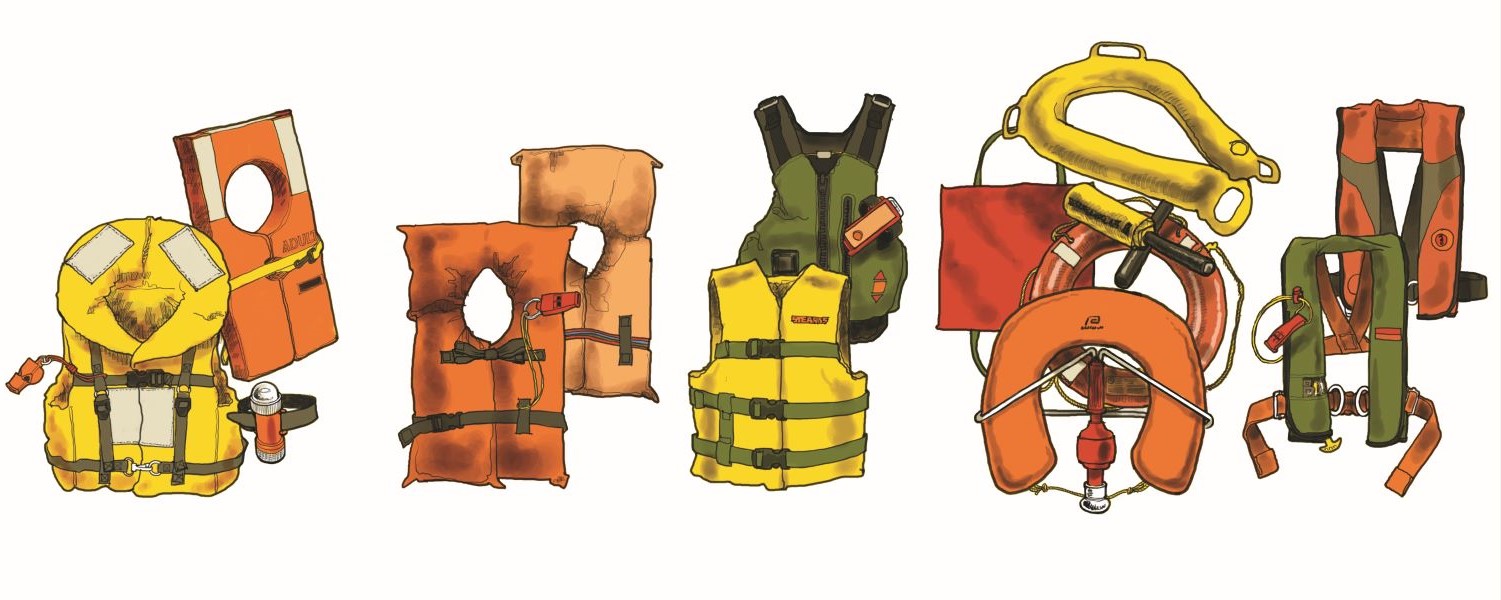
The range of lifejacket types, as defined by the U.S. Coast Guard. Type I is the offshore lifejacket, which provides the best floatation but is also the bulkiest and most uncomfortable. Type II is the near-shore buoyant vest, which is not as effective as a Type I, but is more comfortable; it’s used in situations where quick rescue is likely. Type III comprises a range of specialized jacket types, such as those often seen on kayakers and dinghy sailors; these vests are meant to be worn continuously while on the water, but are not for extended survival in the water. Type IV includes a range of throwable devices. Type V PFDs are special-use devices, and include the now-ubiquitous inflatable vest.
Falling overboard is, statistically, the most deadly accident afloat. The fact is that no human is at home in the water. It has been proved many times over that only the very rare human can swim more than a few minutes in rough water. All it takes to transform a dry, comfortable boat into one that’s soaking wet and wildly rolling is one medium-sized wave that could have been kicked up by a passing powerboat.