
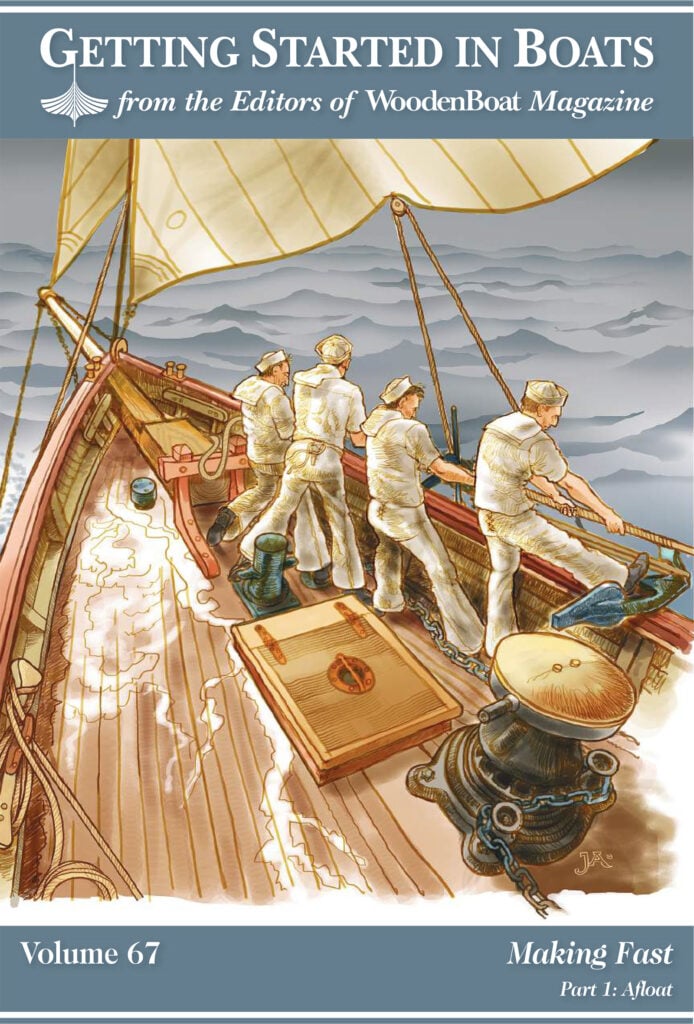
Even in a small boat there are many lines, sheets, halyards, rodes, pennants, and mooring lines, quivering with tense force to power or secure the boat. Sailors haul away, and when all is a-tauto they gratefully belay to lock in their hard-won tension, praying it won’t escape.
Wherever you find a tense line, you’ll find a holdfast. In this issue, we’re exploring those obdurate devices, these misers of tension: cleats, belaying pins, bitts, clutches, bollards, and Jonesport cleats.
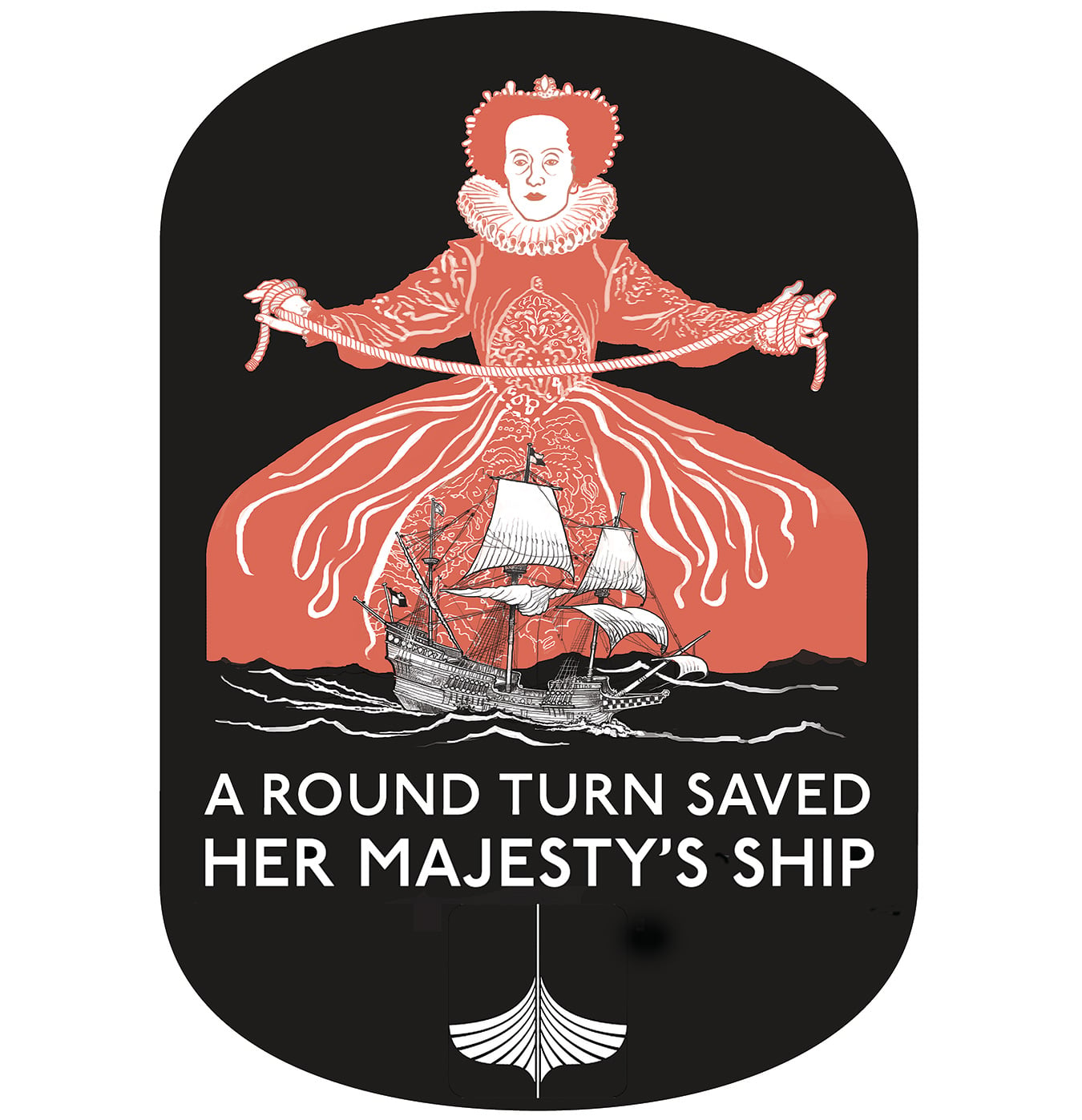
“A Round Turn Saved Her Majesty’s Ship”
A holdfast such as the humble cleat does so much more than fasten a rope’s end. It allows you to slack away, to reduce a line’s tension without letting it whip out uncontrolled. Your tool is friction: multiple turns controlled by simply holding the line in concert with the cleat’s geometry allow you to ease out a foot or a fathom in complete control. Like all good holdfasts, the cleat is simple, easy to use, requires little of the line’s length to operate, and, when properly installed with gentle turn-angles, won’t overstress a line’s core. The ubiquitous cleat is an ancient, subtle, indispensable working tool.
Friction control is the theme of the Royal Navy’s immortal injunction: “A round turn saved her majesty’s ship.” In practice, this means that the smallest shipmate can lay turns around a stout timber and resist the pull of half a dozen mateys and a moose. It’s an impressive phenomenon.