
Drilling Basics: the truth of the hole
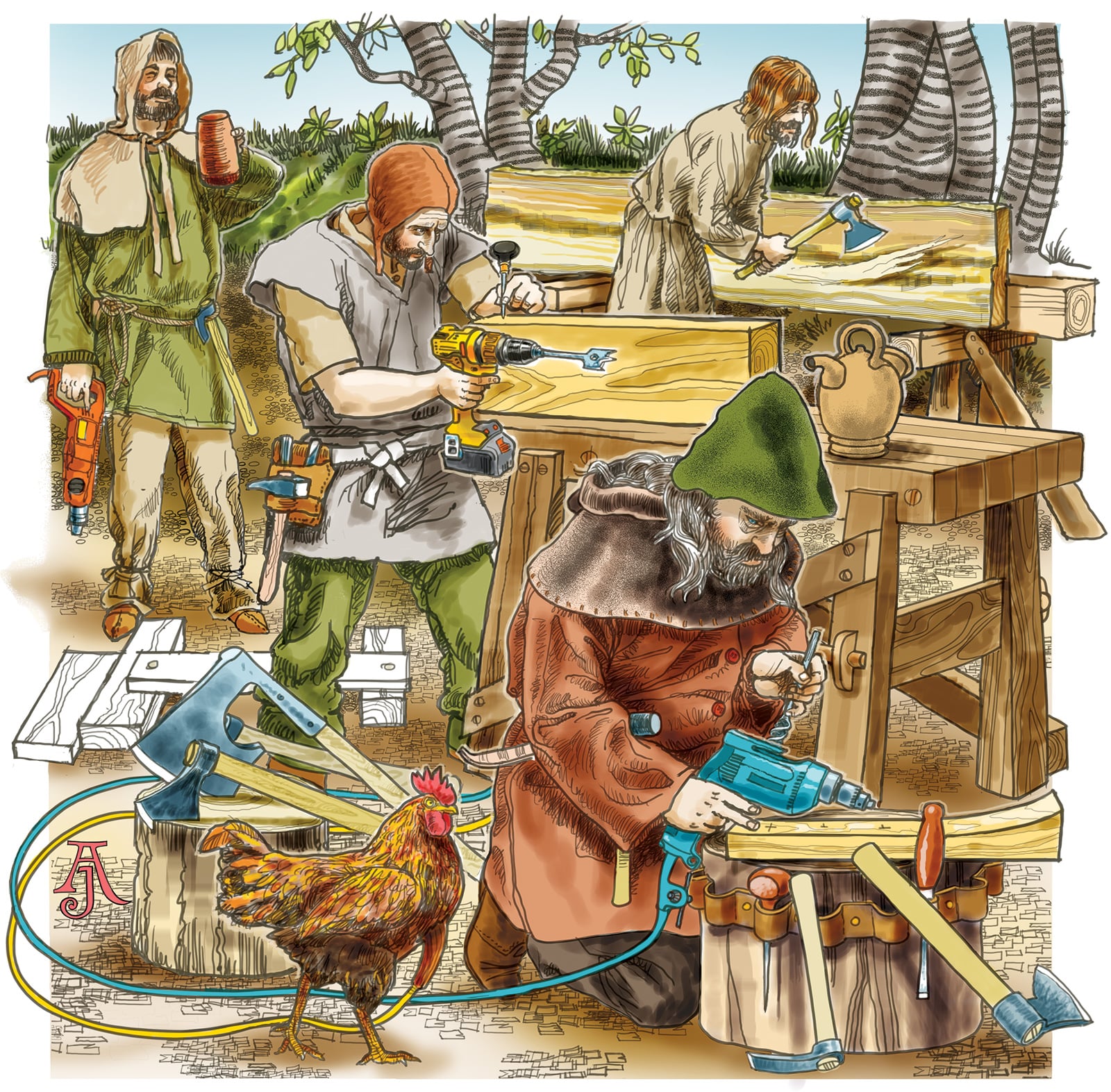
Holes are basic to building, maintaining, and upgrading a boat. Carving out the ideal hole for your task is no small accomplishment. Bolts, screws, drift pins, and even some nails aren’t merely driven into wood like the stick in a kebab, but are installed in a well-thought-out, precisely placed, custom-made hole. In the previous issue we looked at manual augers and drills. Now we plug in, power up, and drill to depth.
Using a drill is an acquired skill, not a natural ability. It looks easy but demands focus and technique. You can only learn it by drilling—a lot. The task requires focus on the drill and its bit. Are you drilling along a plumb line or at an angle? Are you through-drilling or preparing a hole of given depth for a fastening?
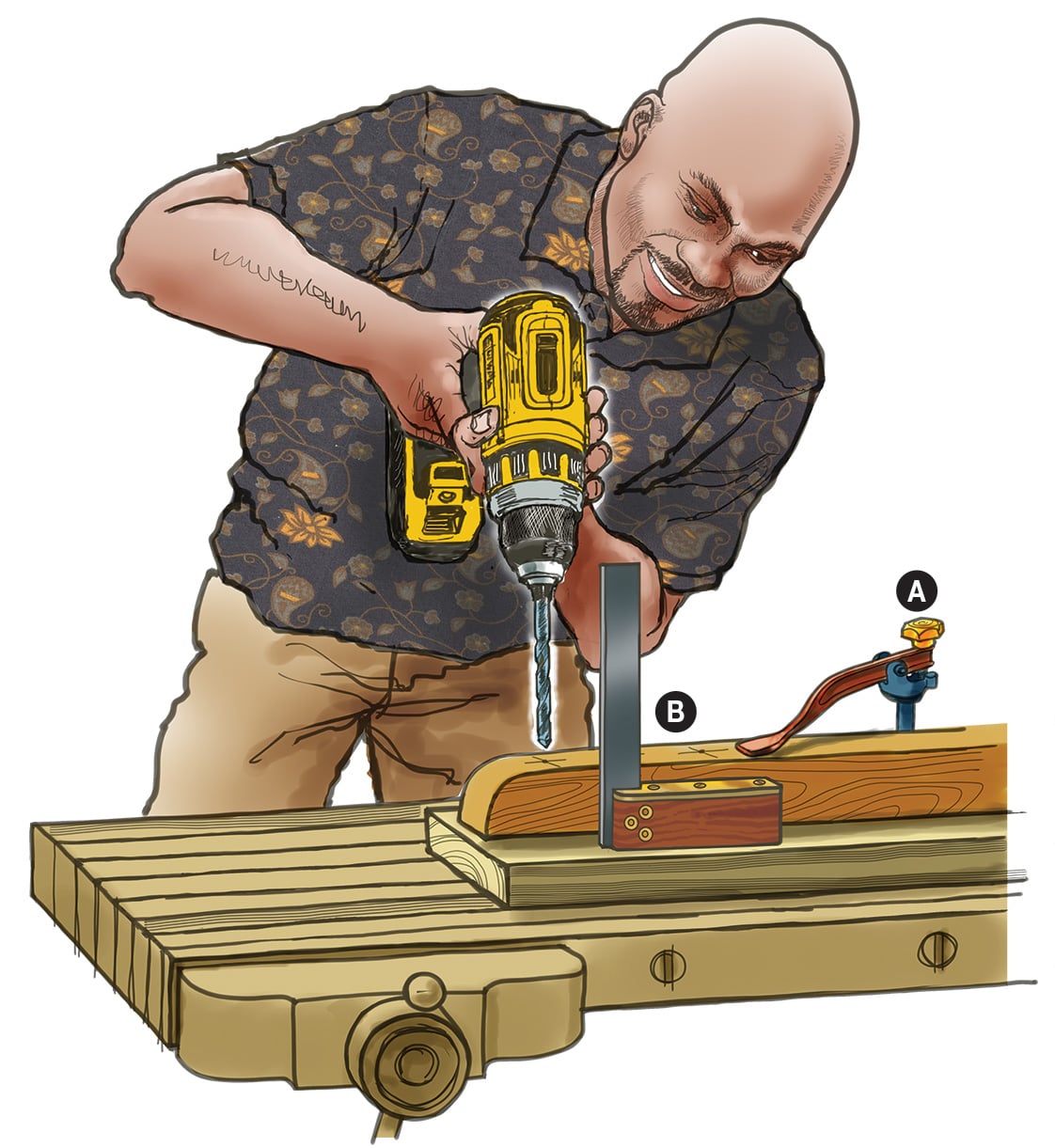
Clamp your workpiece securely (A). You may need a “preacher.” This was what the old craftsmen called anything that “kept them straight” or “true.” A try-square or true-squared block of wood can help orient your boring (B).
Don’t drill directly down but instead withdraw the bit frequently, especially when boring deep holes. This clears particles of wood or metal, called swarf, that cause friction, overheating, and slow cutting. Let the drill do the work; too much pressure on the bit can misalign your bore and increase friction. Some pressure is good, but listen to your drill and the wood.