
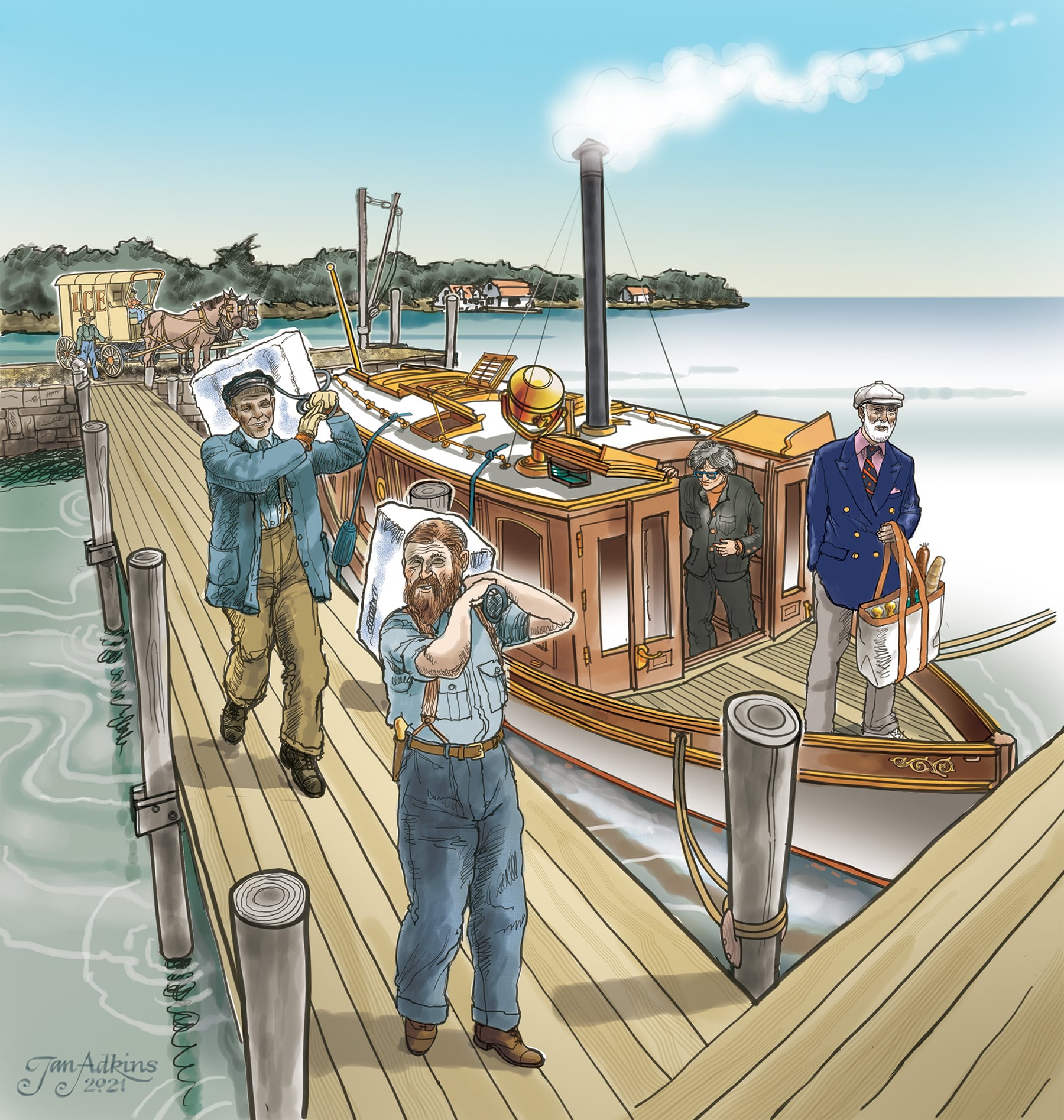
One of New England’s most precious and profitable exports was its winter. Or, rather, its winter product of frozen lake water. Armies of swathed and bundled workmen dispatched tons of “white gold” bound for Southern states to cool juleps and refrigerate produce. Ice changed everything: Chicago beef and pork appeared on tables across the country, unfamiliar fruits and produce appeared in distant places, fish from the coast were shipped inland. Icehouses in the deep South sold New England ice right through the summer, and commercial ice supplies allowed shipment of oranges, grapefruit, and lemons back to the North.

Later, Civil War steam engines could be tasked to compress ammonia. When it expanded in a closed-cycle array of tubes running through brine, the endothermic reaction lowered the temperature. Soon, fresh local water in molds similar to giant ice-cube trays was set in the brine, and the result was factory ice. Refrigeration improved health and reduced waste.