
Glue in the Boatshop
Glue is an essential tool, basic, necessary, and nearly magical. It’s the whisper of goo that makes one thing stick to another. Using adhesives is an entire skill set that will help you keep your boat afloat and functional.
Glue has an advantage over “mechanical” fastenings such as nails and screws. It provides consistent load bearing: when your boat is stressed, nails and screws tend to concentrate the load, while a well-bonded glue joint distributes the load evenly. Both of these fastening types have their places—as do the variety of glues on the market.
What is the best glue? That’s a trick question. Just as there is no best knot, there isn’t a best glue. The one you choose from a spectrum of excellent adhesives depends on the purpose. Usually the decision is a balance of a glue’s abilities and drawbacks.
The Old Stuff
Hide glue was familiar to Babylonian woodworkers. It just doesn’t work for boats, but it provides a lesson in adhesive virtues and vices. Concentrated animal collagen made by boiling down animal hides and hooves (hence, an old horse was “sent to the glue factory”), hide glue is ancient technology, but it has remarkable holding power.
Two of hide glue’s vices for boatbuilders are virtues for instrument makers: it is vulnerable to shock and heat. These qualities make it a poor choice for putting a boat together, but an ideal one for bonding violins and guitars because its brittle grip can be released, for repairs, by a sharp shock or with a hot knife without damage to the instrument. This ancient goo is still used in assembling fine furniture. Universally used in marquetry—the intricate patterns of wood veneers on boxes and tabletops—hide glue requires minimal clamping and tends to tighten its own joint as it cures. Once cured, it forms a stable joint and won’t creep.
Hide glue is heated in small pots and smells as bad as you think it might. Two additional vices place it even farther beyond use in boats: it has poor moisture resistance and gap-filling abilities. Any boat joint bonded with hide glue would be doomed by humidity. As for gaps, let’s accept that your early attempts at wood joints may not be perfect. Hide glue won’t span gaps, but some modern glues, as we shall see, may fill what you’ve missed.
Why mention hide glue in a discussion of boatbuilding glues? Because it provides a baseline—a primer for choosing the best glue for a boat project. It illuminates the qualities that vary from glue to glue:
Strength of Bond: How stubbornly will a glue resist parting? This is not a simple numerical value, since results vary depending on bonds between wood-grain orientation (end-to-end grain is difficult), wood species (teak is oily and thus a challenge to glue), and bonding with other materials (such as cedar to polypropylene).
Gap Filling: How well and with what strength will a glue span the inconsistencies in joints?
Moisture Resistance: Will a glue resist a humid day? Will it resist an occasional shower? Can a glue really survive constant immersion in fresh or salt water?
Ease of Use: Must a glue be mixed? By volume or by the trickier recipe of weight? With what tolerance of ratio? How long do you have to place and clamp your joint before it begins to cure?
Shock Resistance: Will it resist blows and shocks without failing?
Creep: Some glues have a slow plasticity: constant pressure may cause them to move slightly but significantly.
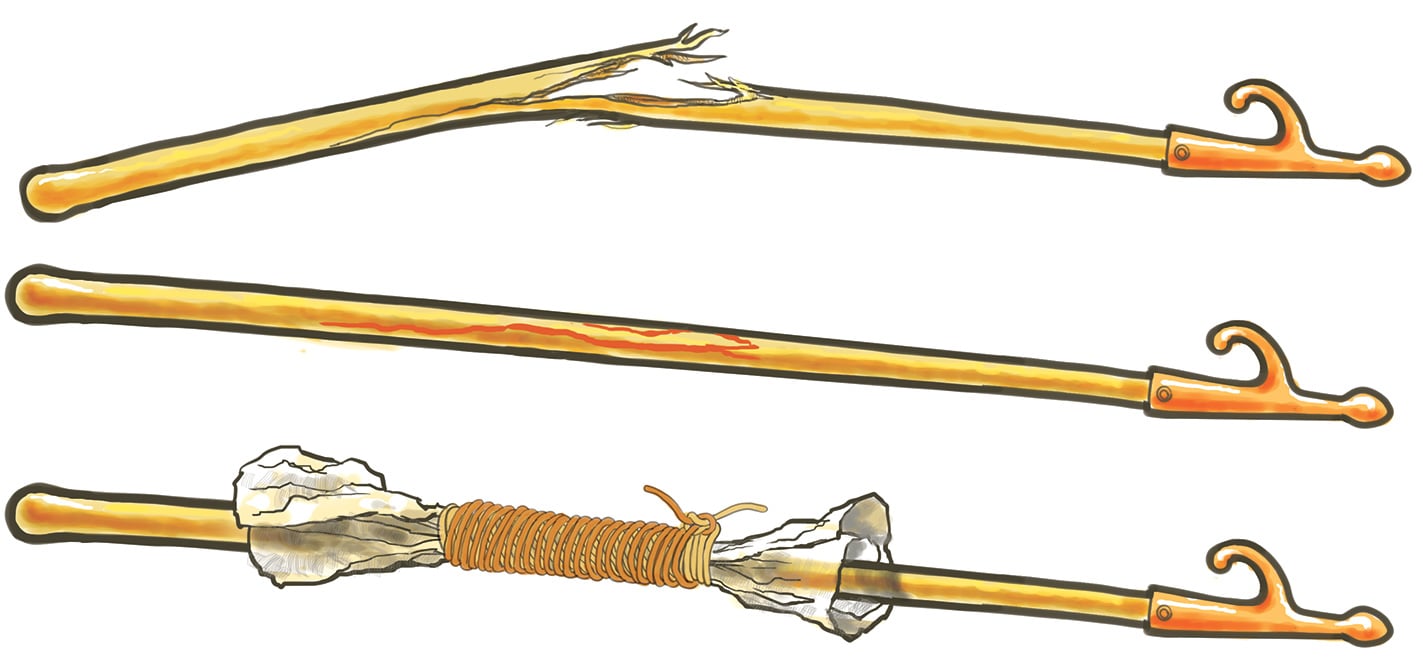
A clean break along the grain can sometimes be repaired quickly by gluing and strategic clamping—and with no cutting required.
Glue Science
What makes glue stick? Some adhesives work at a molecular level, beginning with their ability to “wet” the surfaces of the material to be joined. Bonding different materials to form a stable glue joint requires an adhesive that reacts electrochemically with both surfaces. Some adhesives work by adsorption, making an electrochemical molecular bond with adjoining surfaces. Some work by absorption, diffusing into porous materials to share their structural matrices; this mechanical interlocking is obvious when a glue saturates the grain of two wood surfaces. All synthetic glues and many natural glues are polymers, big compound molecules that cure as even longer and stronger chains.
Common Glues
You use hundreds of types of glue every day. Lickable gum arabic sticks envelopes and stamps, blood albumen glue bonds interior plywood, starch and dextrin adhesives bind corrugated cardboard. In this issue, we’re focusing on important marine adhesives. Every glue choice is a balance of factors: How to ensure a good joint; how to prepare the adherents (stuff to be joined); what the joint in progress needs (clamping, temperature, humidity); how to clean up squeeze-out; how to protect yourself from toxic fumes (several excellent synthetic glues are dangerous to use).
Epoxies
These synthetic superpolymers have changed boatbuilding by offering continuous solid bonds between light plywood components and thin layers of solid wood without requiring point-critical mechanical fastenings such as nails and screws. Mixed with strong filament fillers, epoxy creates hitherto impossible joint strength, can be formed into fillets, and fills gaps. The results are ideal; the application is challenging. The adherent areas should be dust-free, clean, and free of oils.
Marine epoxies are temperamental about the mix ratio involving a long-chain molecule resin, a hardening agent, and often a structural strengthening additive. The job of mixing it is eased by proprietary pump dispensers, which squirt out proper ratios of resin and hardener; the two are then mixed before the chosen filler is blended in. Epoxies are vulnerable to ultraviolet (UV) light. If not properly painted, varnished, or otherwise protected, they degrade in sunlight and become structurally brittle, leading to joint failure.
Uncured epoxies are dangerously toxic, with vapors that can be inhaled and molecules that can be absorbed through the skin. For some with marked allergies to epoxy components, gloves, protective skin cream, and ventilation may not be enough. Once cured, epoxy is an inert solid that is reliable and waterproof.
Resorcinol
For many years this phenol-formaldehyde adhesive was the primary boatbuilding glue because it is water-resistant. It was the original form of “plastic,” the material in Bakelite, and was the basis for generations of billiard balls. Resorcinol-saturated layers of linen form a material familiar to us as Tufnol, which was used in knife handles and in 1950s- and ’60s-vintage boat blocks, deck fittings, and even winch heads. Resorcinol is commonly used as the glue in exterior plywood. It’s a strong adhesive and resistant to UV light damage. It’s bombproof, but it’s also relatively difficult to use. Its resin and hardener require careful mixing, usually by weight. Resorcinol has little gap-filling virtue, so a good bond requires close-fitting surfaces and high clamping pressures. Its fumes are toxic and it cures with a distinct dark-red glue line.
White and Yellow Wood Glues, Polyvinyls
Elmer’s White Glue (a school favorite), Titebond Wood Glue, and many other general woodworking adhesives are polyvinyl acetates (PVA) with various additives. They bond porous surfaces such as wood and fabric and shun plastics or metals. Specially formulated PVAs, such as Titebond III, have fair moisture resistance. If your bond is not fully immersed, these wood glues are strong medicine. They have poor gap-filling qualities, requiring close fits and firm clamping, and their working time is short; they grab quickly. They are forgiving of shock but may tend to creep under constant pressure. Squeeze-out can be cleaned up with water before the glue cures, and PVAs seem to be blissfully nontoxic.
Polyurethane
Polyurethane (PU) is a relatively recent entry to the American adhesive market. Its bonding process is activated by water, meaning that both faying surfaces (the faces to be joined together) must be lightly coated with water before applying the glue and clamping. Remarkably, it sticks to nearly everything. It’s powerfully strong and handsomely water resistant, but its resistance to UV light varies from brand to brand. Check with the manufacturer. The volatiles in polyurethane are toxic, so work with good ventilation. Wear gloves and long sleeves when applying it, because any film will cure tenaciously on your skin. Ingesting PU is a serious health hazard and would involve a call to the poison control hotline. Its gap-filling abilities are exceptional: the adhesive expands as it cures, filling inconsistencies while the squeeze-out appears along joints as a sandable foam. Wear a well-fitted mask when sanding PU. For spills or missteps, polyurethane demands quick cleanup with acetone, a toxic and highly flammable volatile. Many woodworkers find it best to remove polyurethane squeeze-out by cutting and scraping just after the adhesive has set up but before it cures thoroughly.
Epoxy Sticks
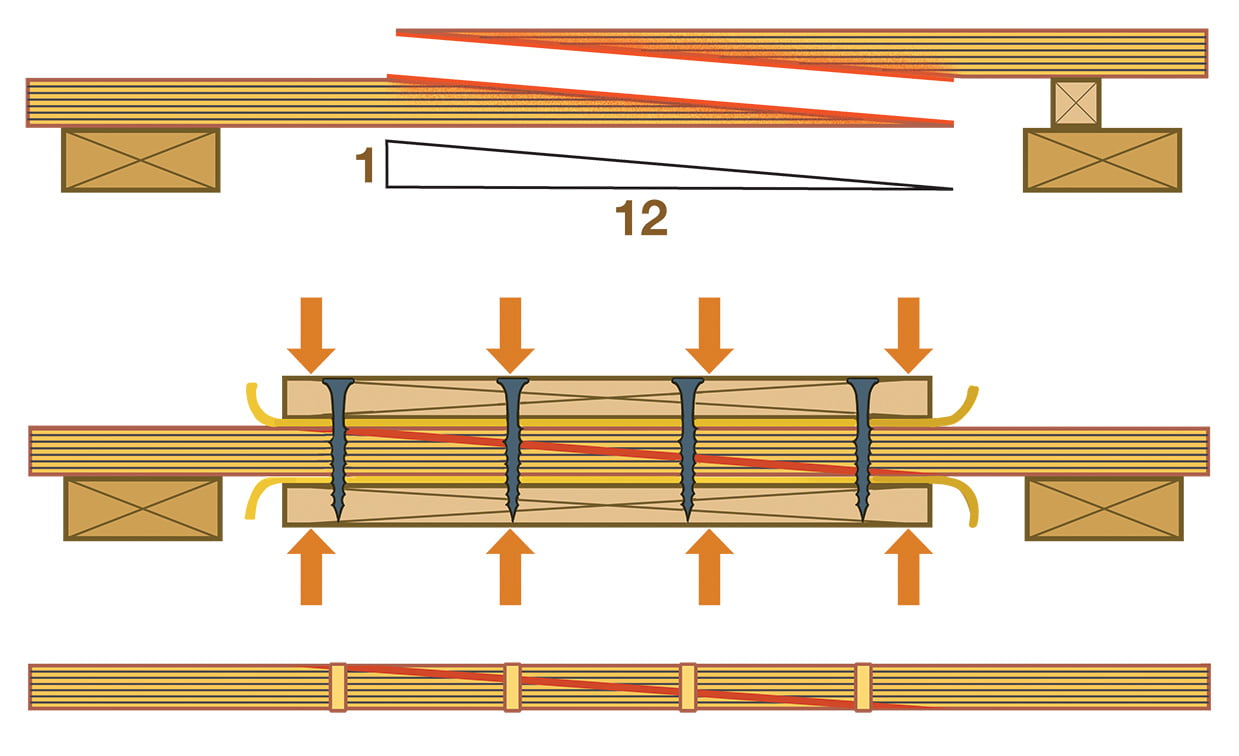
The scarfing together of standard-sized plywood panels with epoxy allows for the creation of full-length planks. The screws are temporary.
These easily applied epoxy “sticks” make good sense for repairs, small installations, and emergencies. They are semi-solid putties in layered form: doughy resin composes one layer, hardener another. Kneading the two together for a minute forms a ball that can be pressed into place to stop a leaking hull gap or repair a broken fitting. Miraculously, it sticks and cures underwater. It can be filed and sanded fair after curing. The stuff is nearly as simple as chewing gum, and the results are commendable.
The sticks are available in dozens of formulations, some of them metallic, some brightly colored. Though pigment will slow UV degradation, sunlight can still deteriorate unprotected polymers.
Hot-Melt Thermoplastics
Don’t discount these sticky expedients as craft-project lightweights. They may not be structural standbys, but they’re quick and handy for making jigs and templates or for holding clamping blocks in place. Hot-melt glue creeps, has little temperature range, and is not resistant to much. But it’s a dandy stopgap and a helpful tool.
Adhesive Sealants
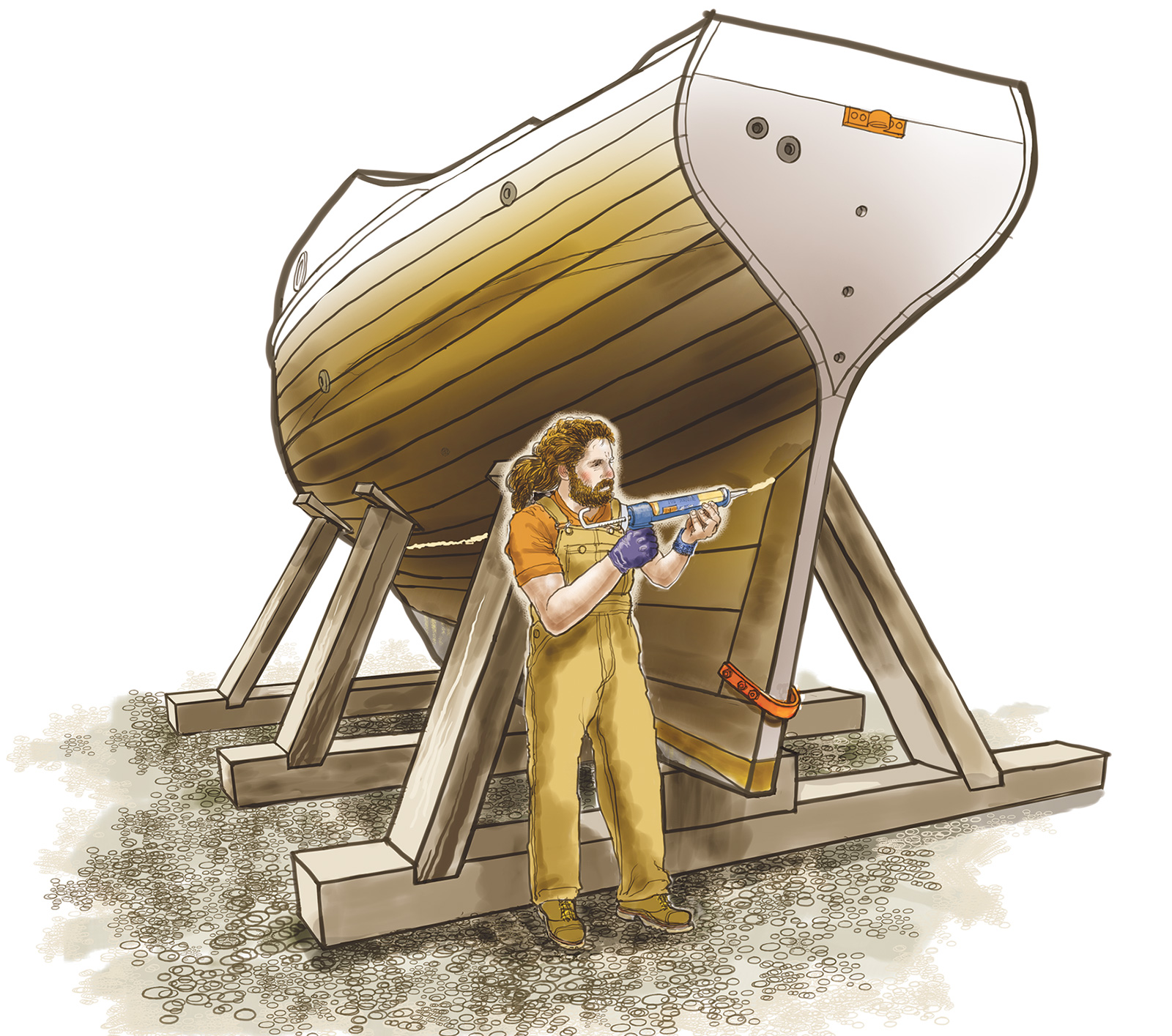
There are dozens of adhesive sealants on the market. Some are designed to seal more than adhere, and these fall more into the category of bedding compounds than adhesives. Others are designed to adhere tenaciously. These products are usually dispensed from a caulking gun and cure with exposure to air.
Common Glue Joints
Glued-lapstrake plywood plank seams
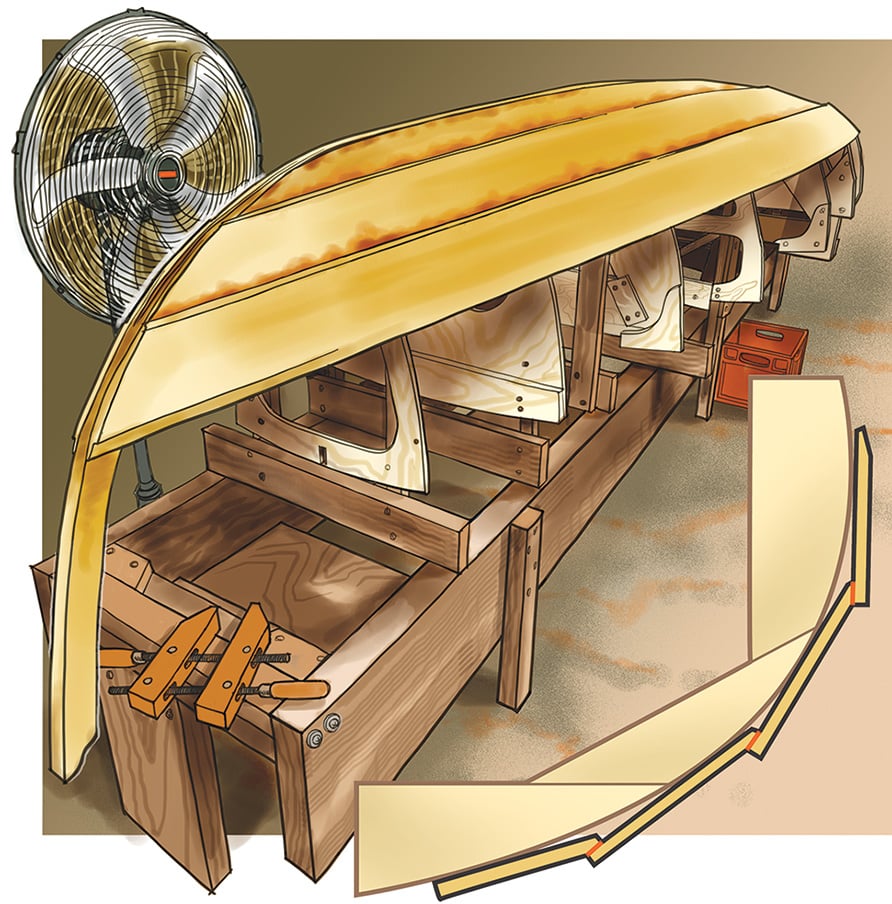
This boatbuilding technique is a contemporary spin on the age-old process of lapstrake, or “clinker,” boatbuilding, in which the edges of planks overlap instead of abutting. Quite simply, it exchanges glue—epoxy, typically—for copper rivets as the fastening that holds planks together. Glued-lap became possible with the advent of reliable epoxies and high-quality marine plywood, and is now one of the prevalent methods of wooden boat construction.
Lamination
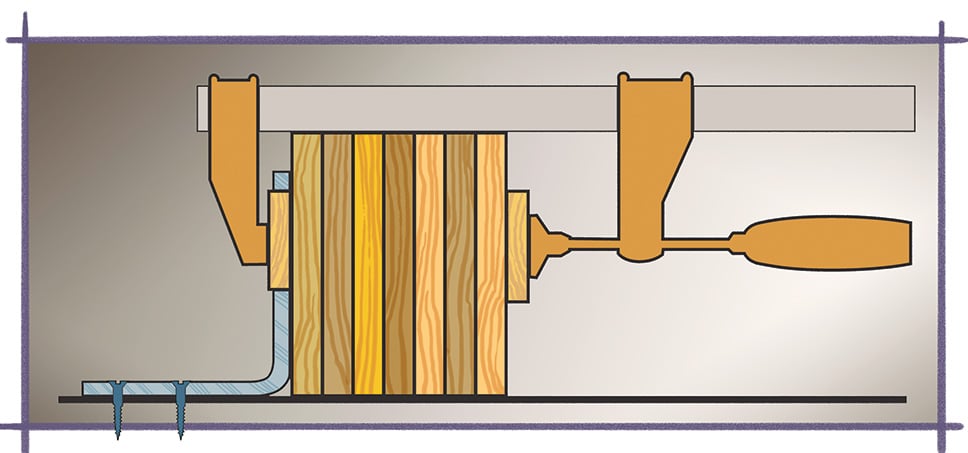
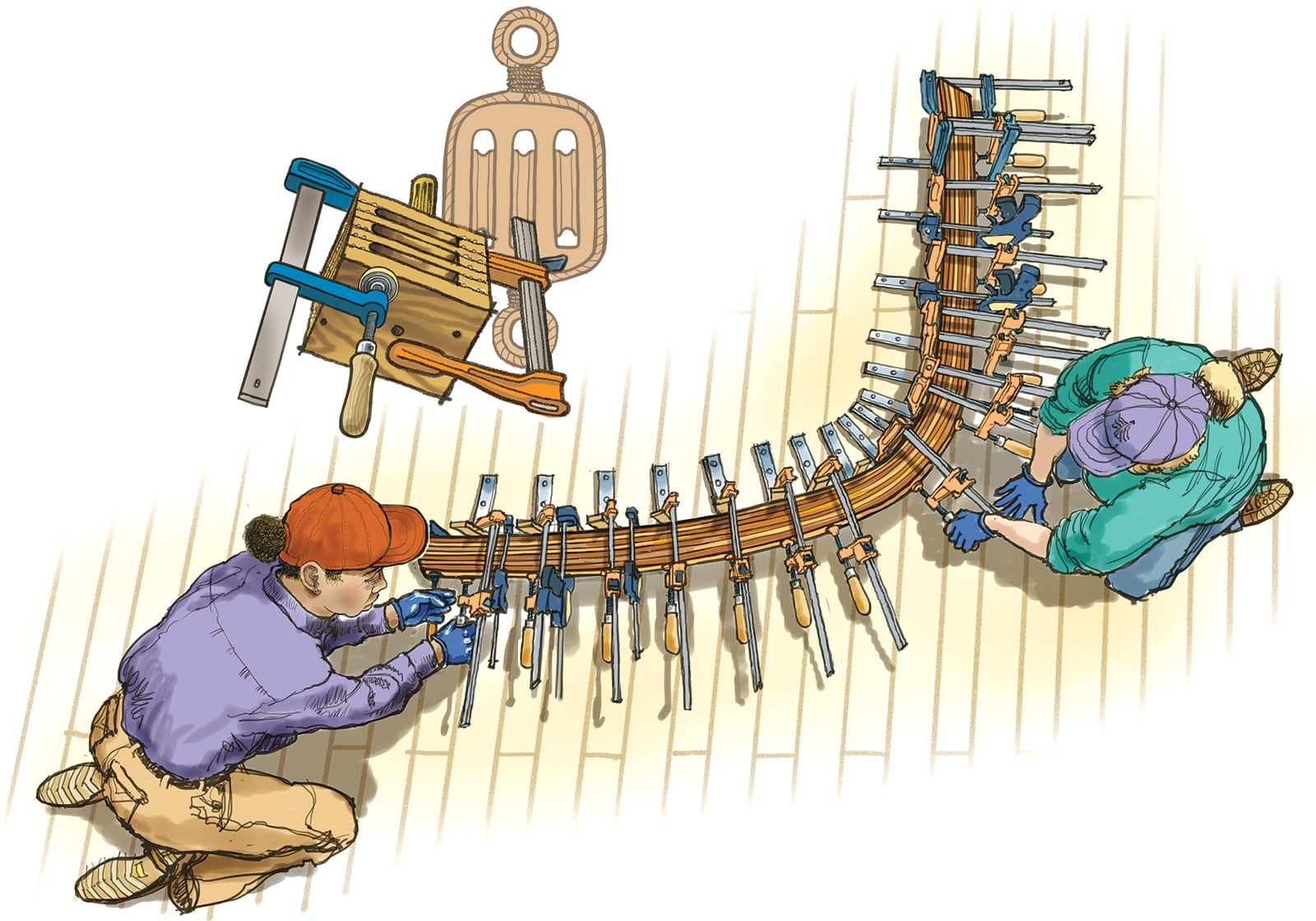
Lamination is the gluing together of numerous thin pieces of wood—typically to a curve—to create a more robust timber. It can be used for a boat’s frames, stem, keel, deckbeams, and many other timbers. Typical laminating glues include epoxy and resorcinol.
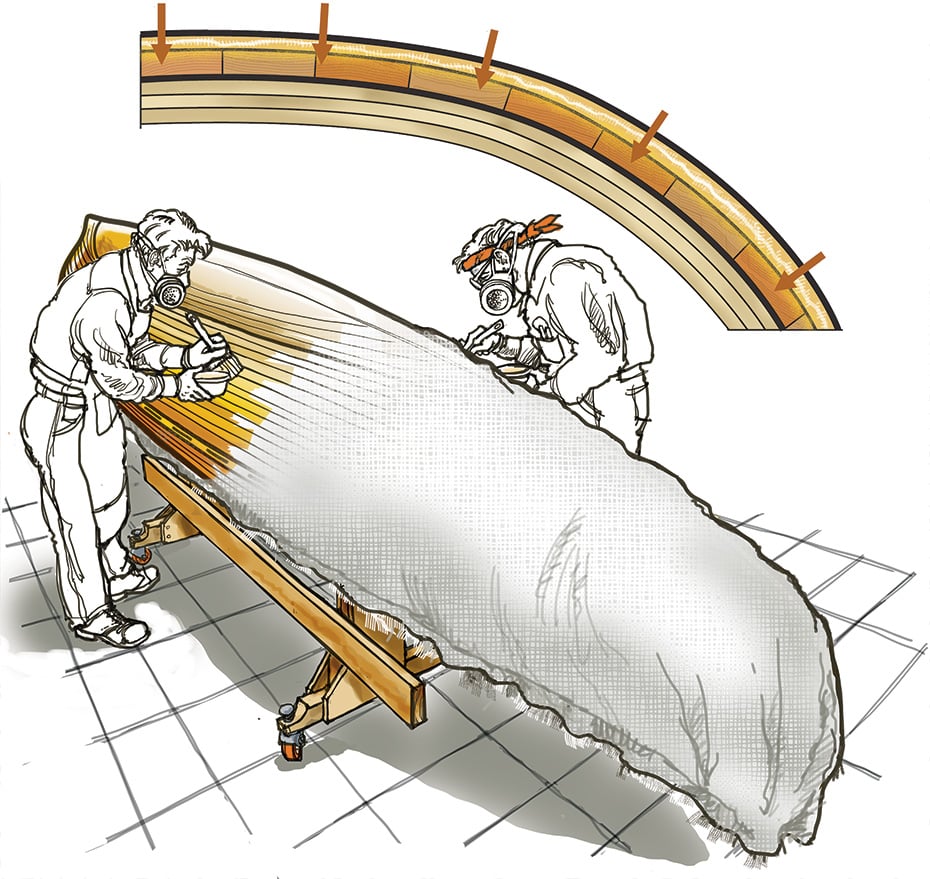
In plywood or strip-planked construction, the completed hull is often sheathed in fiberglass set in epoxy. This is done either to create an abrasion-resistant surface or to add structural strength to the hull—or both. The elegant and ubiquitous cedar-strip canoes and kayaks that are built in so many garages and basements would not be possible without fiberglass sheathing; the wood alone in these boats is not sufficiently robust to carry the load, and non-waterproof glue is often used to hold the planks together before sheathing.
Bead-and-cove strip-planking
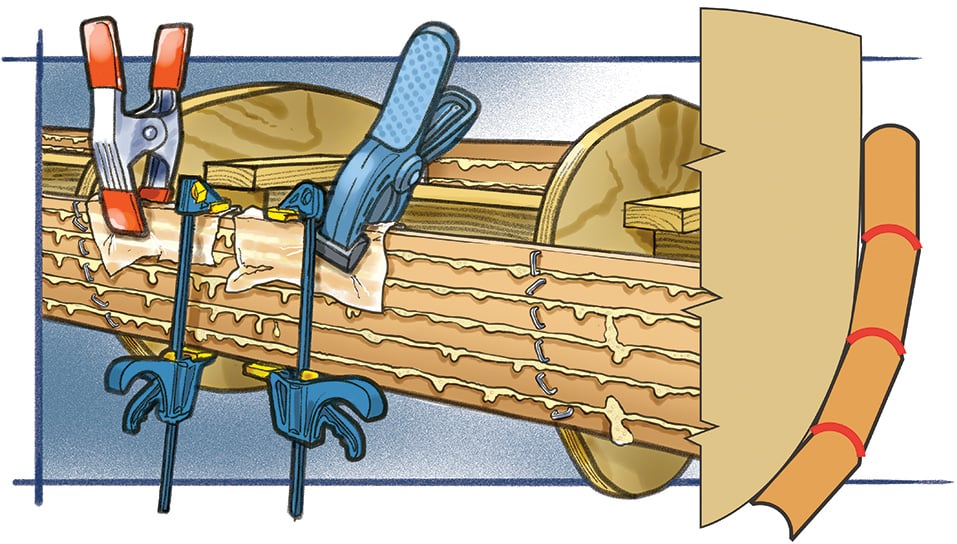
Before a canoe or kayak of the type mentioned above can be sheathed in fiberglass, the strip planking of its hull must first be glued together. PVA is often the glue of choice for this operation. While such glue would not be appropriate for an unsheathed hull, the matrix of fiberglass and epoxy, once applied, takes over the job of holding everything together.
Box-section mast
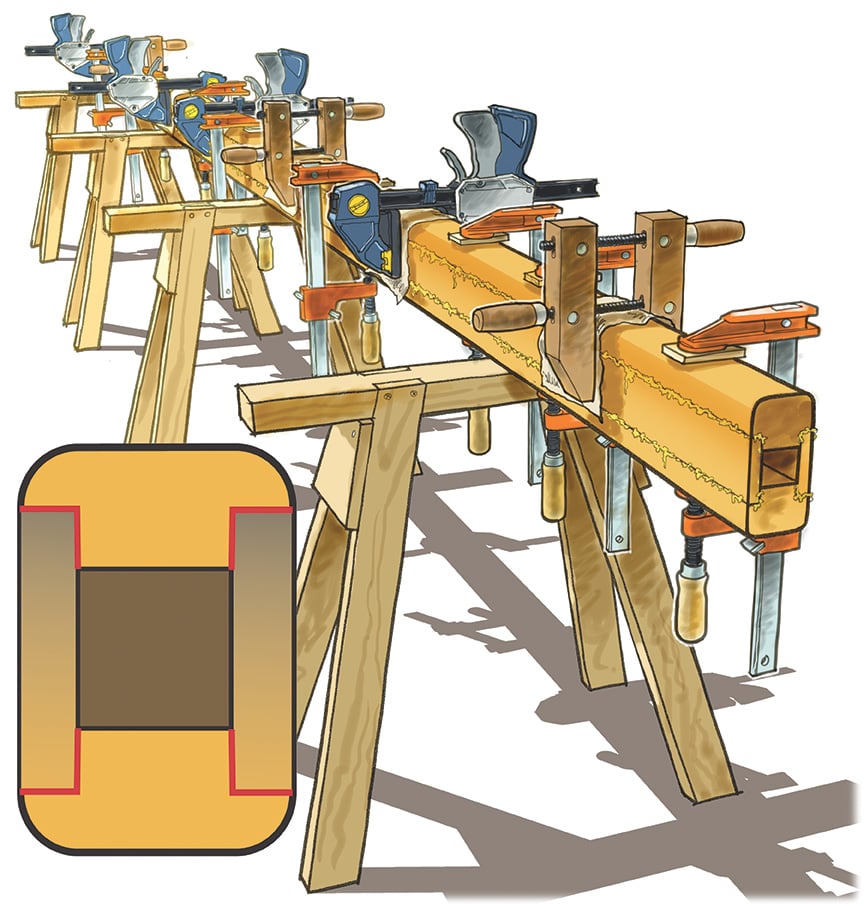
Basic hollow masts made up of individual staves—typically of Sitka spruce or Douglas-fir—are glued together with epoxy or resorcinol. These joints must be reliable and strong in this critical application, though occasionally old masts with compromised joints can be opened up for regluing or to access their internal wiring.
Patterning
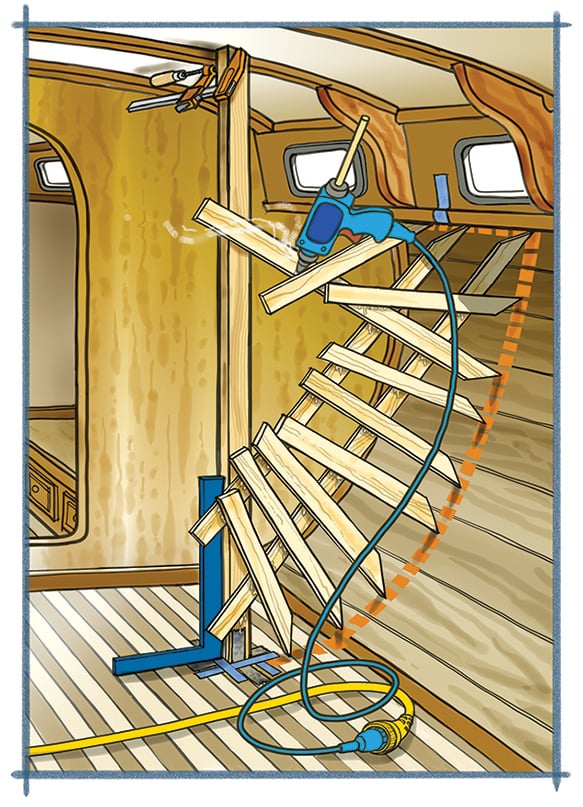
Patterns composed of strongbacks and a series of pointer sticks are handy for picking up the shapes of bulkheads and other curved items. Pointer sticks can be glued in place securely and quickly with hot-melt glue.
Interior joinery
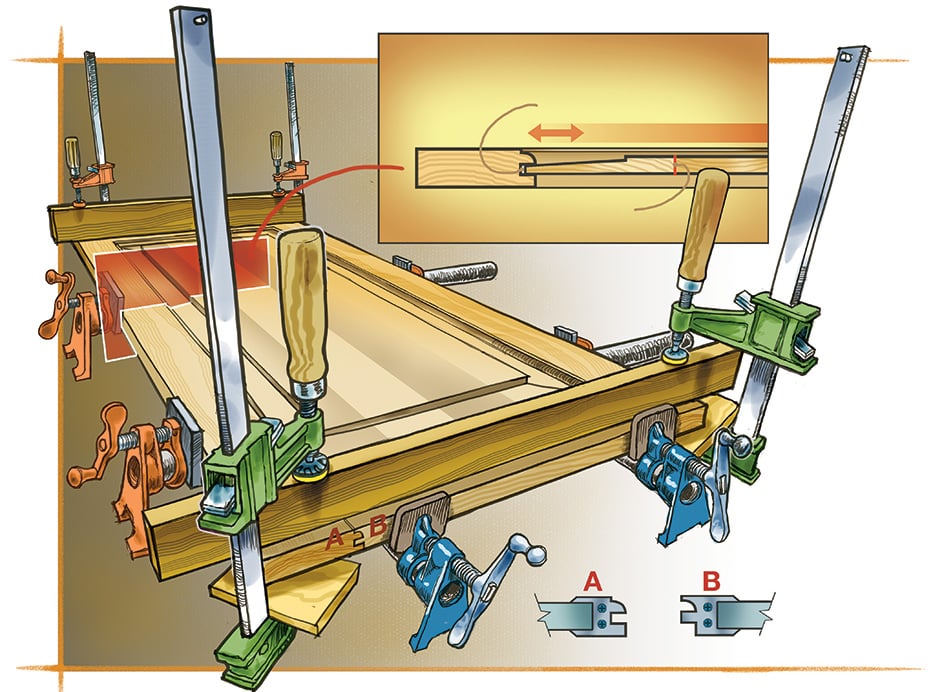
To reduce weight and eliminate bungs, interior joinery is sometimes glued together, and it can also be glued in place. But be aware that gluing joinery in place can make eventual repairs to the structure behind it very challenging.
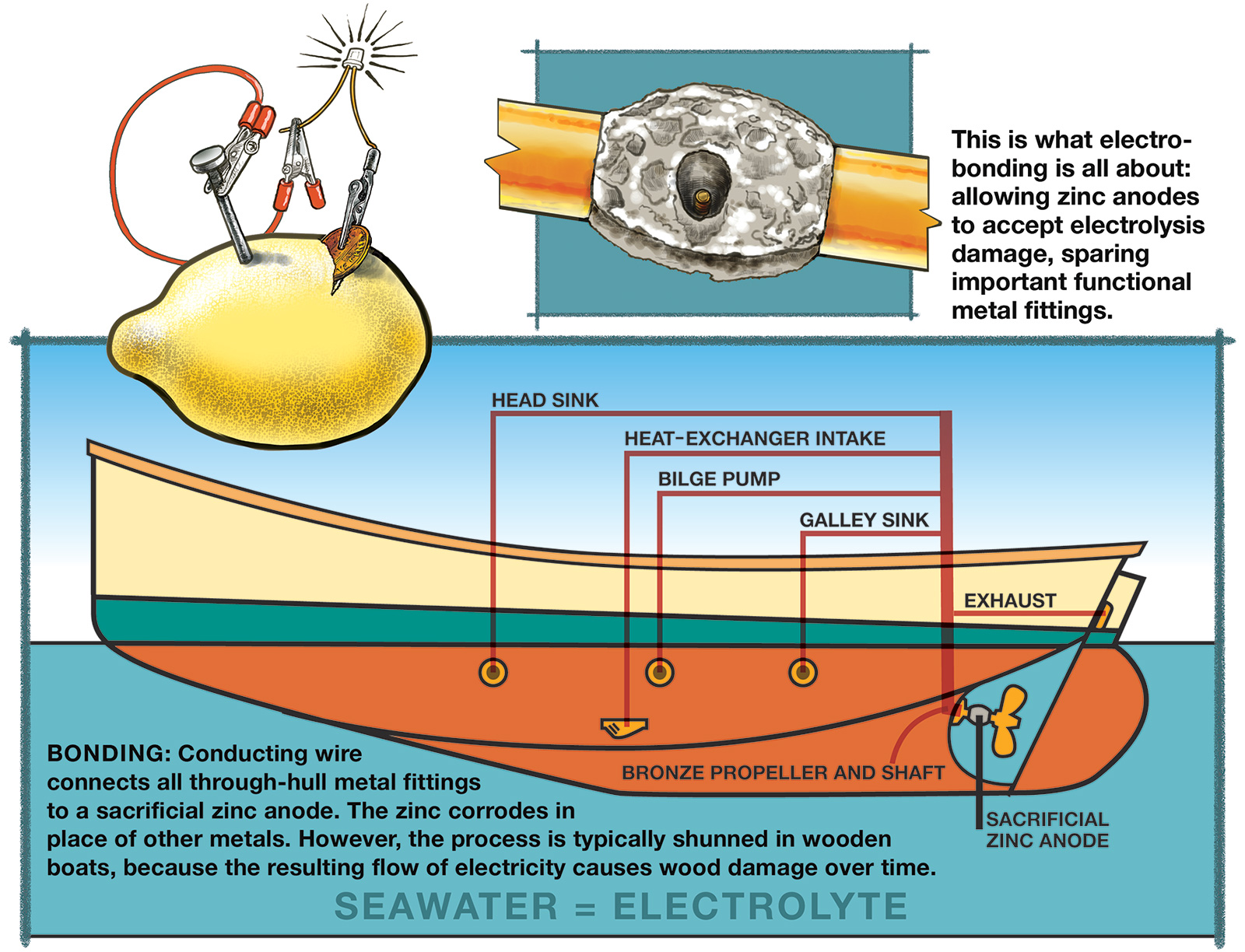
We need to make a distinction between glue-bonding and electro-bonding—the latter being a careful matrix of electrical connections among the metal fittings in a boat’s hull.
In elementary science class, you probably stuck a copper tab and a zinc tab into a lemon and measured the current flowing between them. Like lemon juice, salt water is an electrolyte: it conducts current between dissimilar metals. The problem is that current flows to one metal from another in a predictable, hierarchical order of “noble” metals. The less-noble metal loses electrolytic bonds and degrades. Over a remarkably short time, this physical phenomenon can destroy robust metal fittings.
By connecting all the fittings together electrically, and then wiring this daisy chain of fittings to one or more sacrificial anodes, the life of metal in a boat can be prolonged while the sacrificial anode decays. This system is separate and distinct from a boat’s AC and DC electrical circuits.
Wooden boats present a special challenge. Electrolytic current flowing to or from metal hull fittings can deplete adjacent wood of its lignin—the very glue that holds it together. Many wooden boat owners and surveyors reject the concept of electrical bonding for this reason (see WB No. 115 or the U.S. Coast Guard’s circular on wooden boats at bit.ly/ CGWBcircular).
Electrical bonding is a big subject. The point in bringing it up here is to caution you that there are two distinct definitions of the word “bonding,” and you are very likely to encounter both when reading brokerage advertisements and other boat descriptions.
Gluing Basics
A lasting bond depends on you as much as the glue you choose. Oil, dust, and boatyard grime don’t help. Both adherent surfaces must be clean. A wipe-down with mineral spirits or alcohol can clear away invisible oils that might compromise chemical bonding.
“Smooth” is a relative term. Two shiny surfaces aren’t promising adherents. For some glues, “roughing” a surface with sandpaper may improve the bond.
All joints require clamping. Compression reduces surface irregularities and squeezes out excess glue for a thin, consistent bonding film. Before you glue, have a smart plan for clamping and lay out all of your clamps and compression-spreading blocks.
Don’t glue your clamps to the joint, especially if you’re using wooden clamps or a glue that will bond dissimilar materials. Use waxed paper or plastic film between your joint and the blocks and clamps that will compress it.
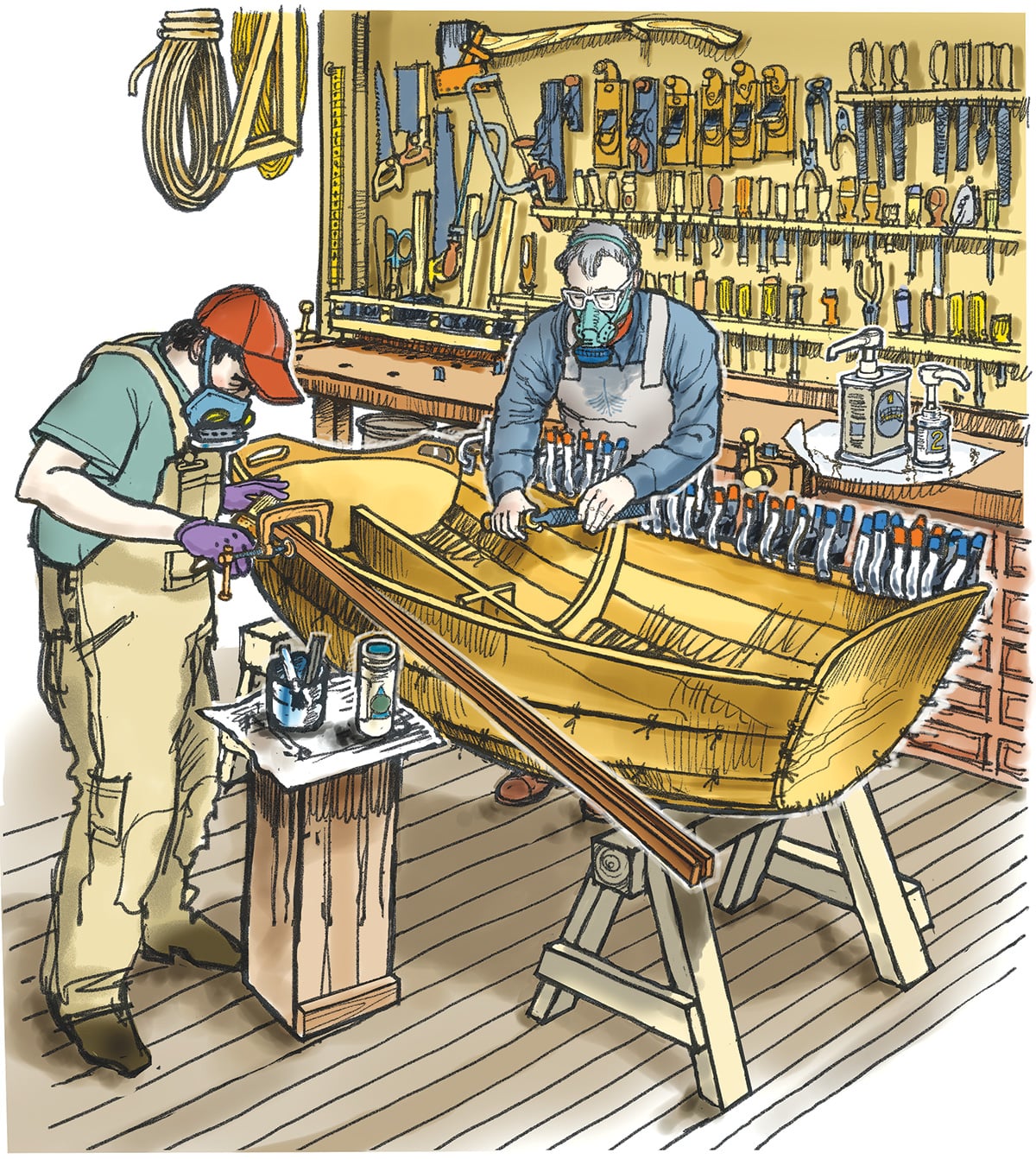
Protect yourself. Many of these glues contain toxic volatiles: If you’re working in a bilge, move the air around you with a fan. Wear nitrile gloves, use artist’s protective hand cream, and scrub your hands and arms promptly with a good garage grime soap. Protect your eyes with safety glasses or a safety visor.