
WOOD PLANES: A PRIMER
The holy edge is the basis for virtually all our woodworking tools, the edge so keen that tough wood fibers yield to it. But sometimes we lose faith in the edge. We have shops full of snarling power tools, after all, and these sometimes seem more powerful and precise than we are. Yet we occasionally see a rocking chair, a paneled door, an exquisite boat hull from another century and wonder how our ancestors created such grace. They were not a race of heroes. They were people like us.
In the next several issues of Getting Started in Boats, we’re concentrating on hand-tool basics. We won’t wander into advanced technique. Our aim here is to convey the entry-level concepts we hope will encourage you to experiment with and refine your own skills. In this issue, we’ll focus on the plane.
The wood plane is as ancient as the Bronze Age, and we’re fairly certain that the Nazarene carpenter used a dozen variants of it. Its purpose is in its name: a plane is an evolved form of an adze or broadaxe, developed to carefully and gradually reduce a split-wood surface into a flat plane. It relies on the rigid, adjustable depth of its cutting iron below the true plane of its sole. There are some mechanical niceties that will help it to function, but that’s about the extent of a plane’s purpose.
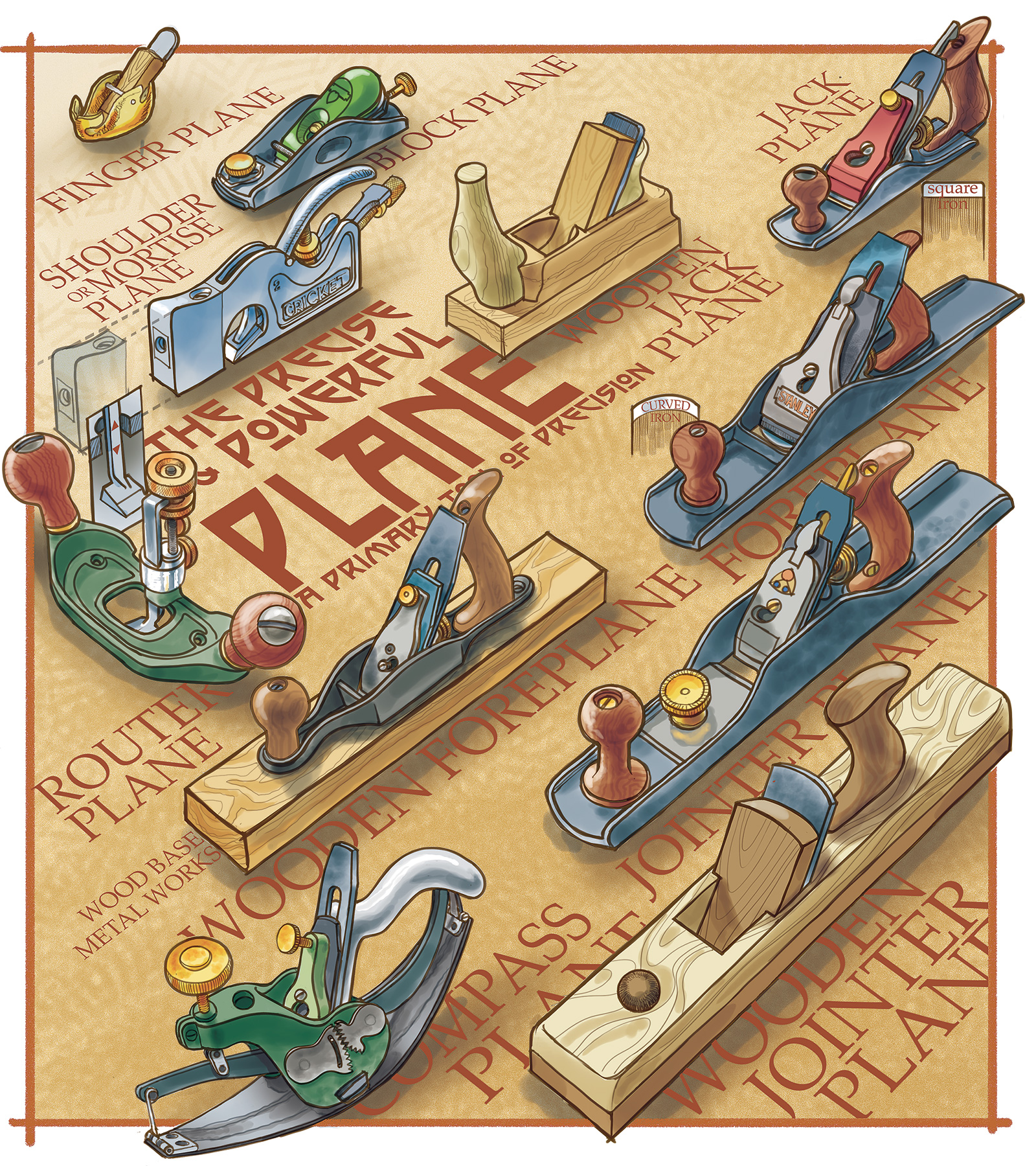
In this simple introduction to this indispensable boatbuilding tool, we’ll address three basic types: the jack plane, the block plane, and the fore plane.