
 Benjamin Mendlowitz
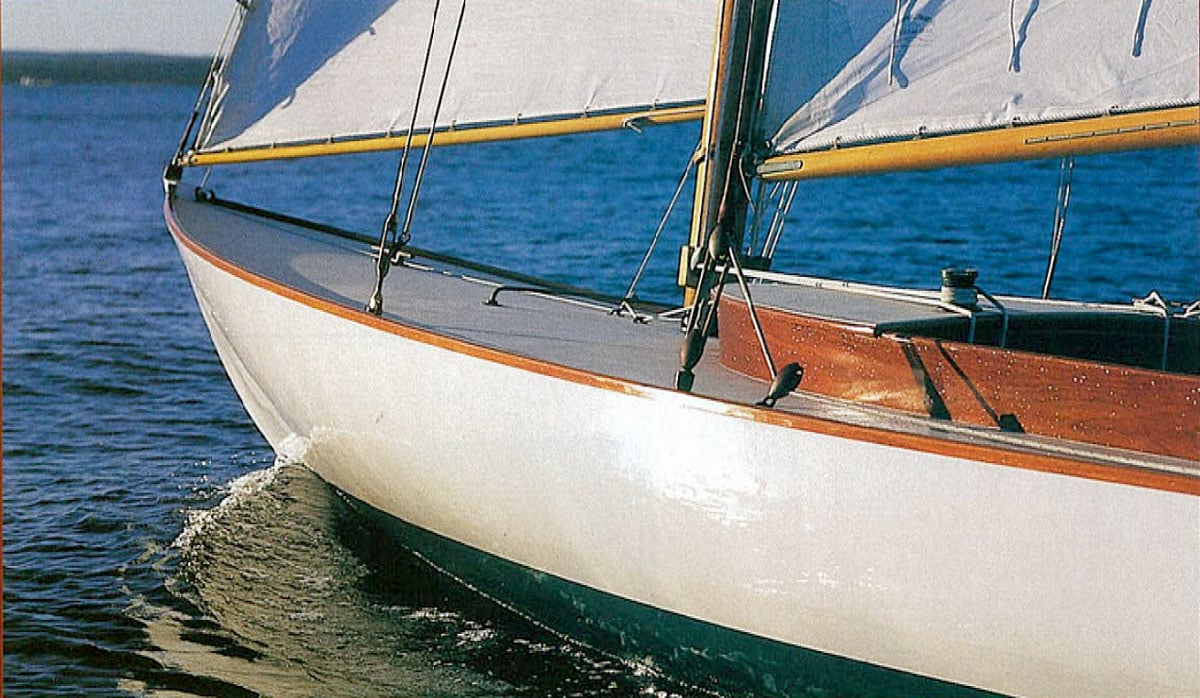
BAGATELLE, a 1914 Herreshoff Buzzards Bay 25, was rebuilt by the author's shop (see WoodenBoat No. 148). The hull received a treatment similar to the one described in this article.
The use of epoxy on a carvel-planked hull is a contentious issue. Well-meaning owners often slather their hulls and/or interiors with epoxy, believing that such treatment — often called “encapsulation” — will extend the life of their boat when, in fact, in some cases it may actually hasten its demise. However, our shop has developed a method of fairing hulls that relies heavily on the use of thickened epoxy, and we believe this method, used on single-planked cedar hulls, yields both a superior finish and the incidental benefit of stabilizing the planking.
The subject of fairing is itself a contentious issue. Not only do techniques vary, but so do philosophies. Although it is conjecture on our part, we believe that the degree of finish and paint quality expected and produced today are significantly higher than when many classic (generally, pre-World War II) yachts were first built. Spectacularly finished yachts are not a modern invention, but the best were typically built with stable planking such as teak or mahogany, or were double planked. Moorings and docks today are filled with the smooth shine of modern boats, and the owners of restoration projects, understandably, sometimes desire the same level of finish. Achieving and retaining a smooth and stable surface on a single-planked cedar hull, however, is a challenge and a commitment.
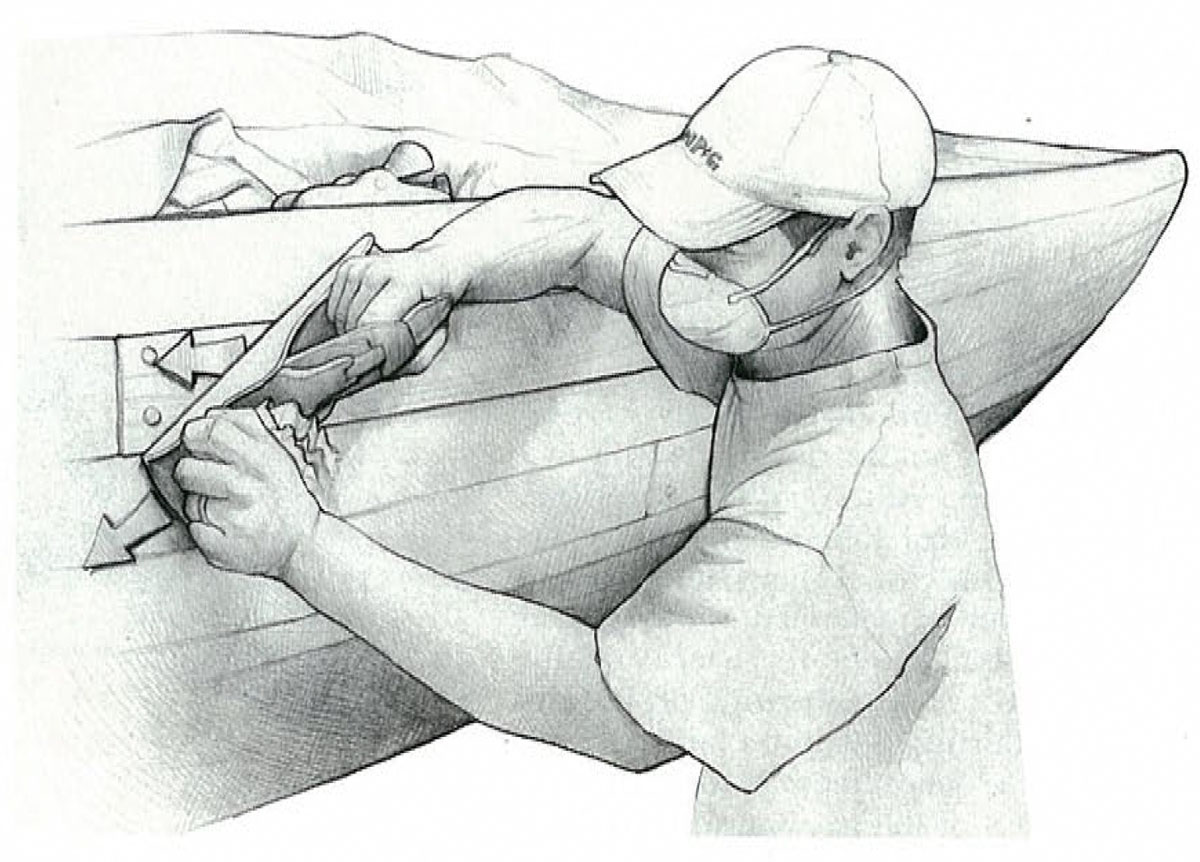
The first step in fairing new planking is to break out the planes. In the illustration, a new plank is being faired into the old, using the old as a guide.
Fairing the Rough Hull
The ultimate goal of fairing is to reach a point where a boat-length batten placed against the hull will touch everywhere, without showing any unfairness. In reality, the project's budget and schedule, and the worker's sanity, will limit the result to one that is pleasing to a critical eye.
We start the process conventionally with planes of varying shape and length. Backing-out planes are used in the hollow areas of the garboards, broadstrakes, and the bow near the waterline. Bench planes and block planes are used on the rest of the hull.