

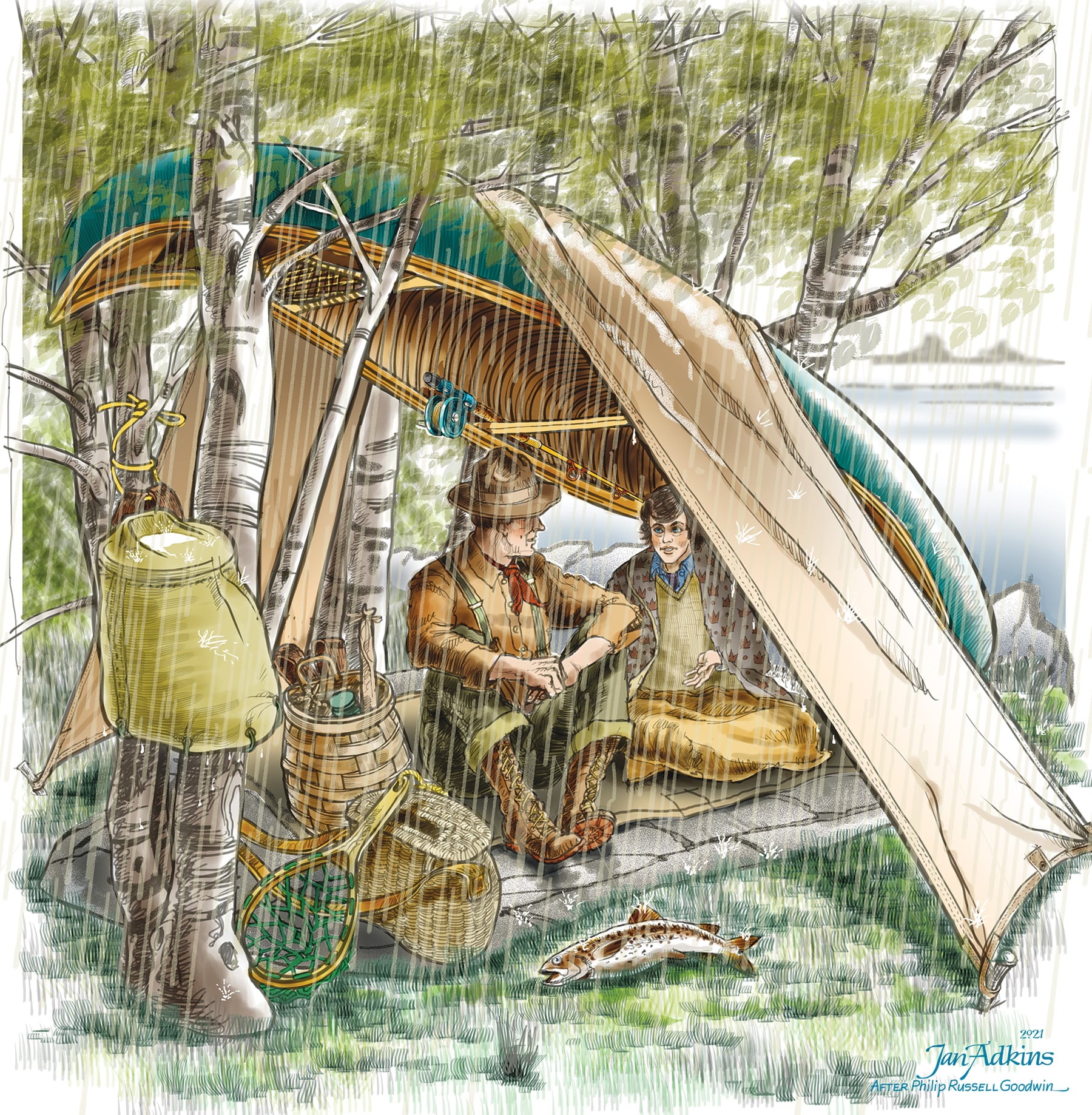
For centuries, canvas has been the tool with which we use wind for motive power. Even after the Age of Steam and the advent of the internal-combustion engine, canvas has comforted, protected, driven, and rescued us.
The word canvas comes from old northern French canevas, a variant of Greek cannabis, or hemp. Hemp is among the strongest natural fibers, remarkably resistant to stretch; shrouds of traditional sailing vessels were hempen to minimize sagging. Linen or cotton woven in a close, plain pattern could also be canvas. Cotton canvas was the sovereign material for tents because its fibers swell when wet, closing the weave, making a water-resistant barrier. Sailors painted used sail canvas worn thin and supple with a mixture of linseed oil and wax to make foulweather gear: “oilskins.”
Your great-grandpa’s canvas was natural. This sounds good in the produce section of the supermarket, but it translates as vulnerability to attack by ultraviolet-light (UV) degradation, bugs, mold, and mildew. The canvas you meet aboard any contemporary boat will be woven of synthetic fibers, superior in every way—stability, strength, resistance to rot, and indigestibility to hungry insects.