
As I prepared for a recent Chicago–Mackinac Race, my skipper asked me to take a look at his medical kit. His boat regularly races with a crew of 10 for anything from daysails to crossing Lake Michigan. Imagine my surprise to find that the “kit” consisted of two Band-Aids and an Imodium. If a third person got cut, or a second one pooped, we were going to be in trouble!
Not all kits are in that condition, of course, but I’ve found many cases where there are outdated and expired products and items inappropriate for a shipboard emergency.
The first step to handling medical emergencies on the water with confidence is having the right tools for the job. Building a medical kit customized to your unique needs starts with identifying what kind of sailing you do: daysailing, coastal cruising, or offshore passagemaking.
Next, consider your potential “patients” and their needs—are you frequently sailing with children, older adults, or someone with a diagnosis such as diabetes or other chronic illness who may require specialized supplies?
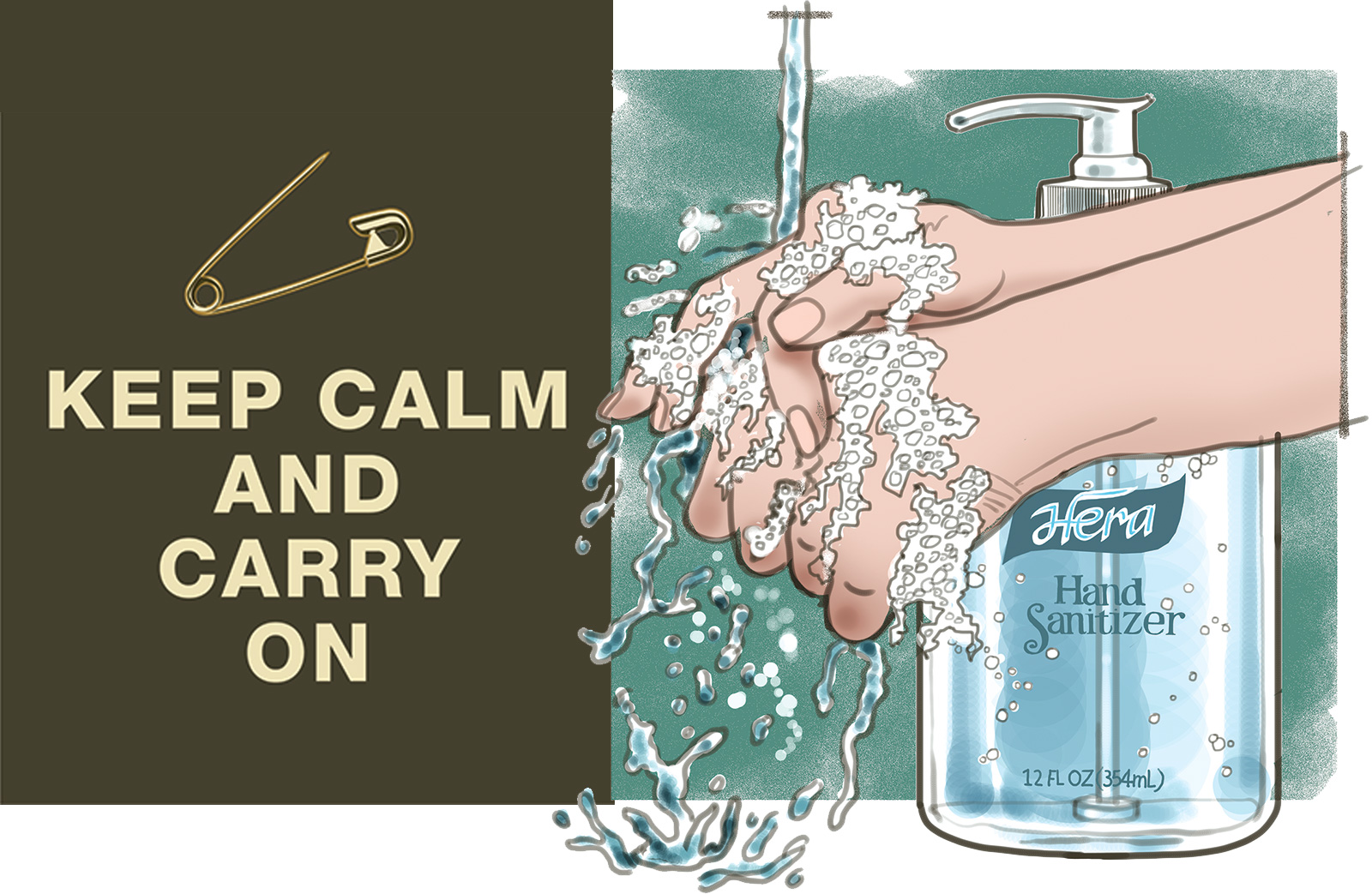
Wash your hands before treating your patient if possible. Wear gloves, and after removing them wash hands with either soap and water or hand sanitizer.
Building Base Kits
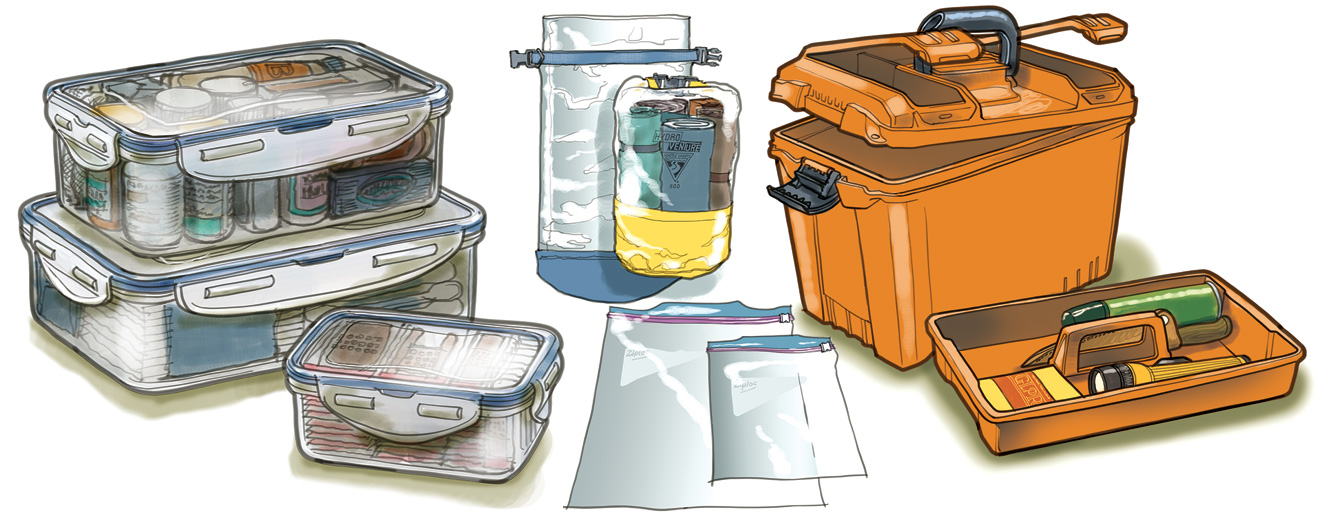
The bones of your kit are the same no matter what type of sailor you are. They consist of basic necessities that perform well in the marine environment, organized into heavy-duty zippered bags, grouped and labeled by how they will be used, and placed in an appropriate waterproof container.
Skin and Wound Care

Into a bag designated Skin, stock heavy-duty, fabric adhesive bandages and waterproof adhesive bandages of various sizes. Include a few larger bandages and also knuckle bandages for wounds over busy sailors’ hands.
Wound-closure strips are used to pull together wound edges without sutures, and on the water they are the preferred way to prevent bacteria from getting trapped and to allow wounds to drain. Stock several sizes if budget allows, or opt for the longer size, then cut them to fit. Benzoin swabs, which contain a liquid adhesive that makes bandages and wound-closure strips stick better, are a must-have on a boat.
The words “dressing” and “bandage” are often used interchangeably, but actually a dressing is used in direct contact with a wound while a bandage is used to secure a dressing or splint in place or to apply pressure to a wound. Stock several of each type. Carry various sizes of Tegaderm, a transparent, breathable, waterproof film for covering minor wounds and burns.
Woven gauze pads, commonly known as “4×4s,” are the essential workhorse for cleaning, scrubbing, absorbing, covering, and padding wounds. Carry plenty of them. Non-stick pads, sometimes called Telfas, are a dressing placed directly onto a wound. If budget allows, stock two sizes. If not, carry a medium size, and use two or cut them to size. Include two types of rolled bandages, Kerlix and Kling. Both will hold gauze or Telfa dressings in place. Use Kerlix when bulky padding and absorbency are the priority and Kling when putting pressure on a wound is paramount.
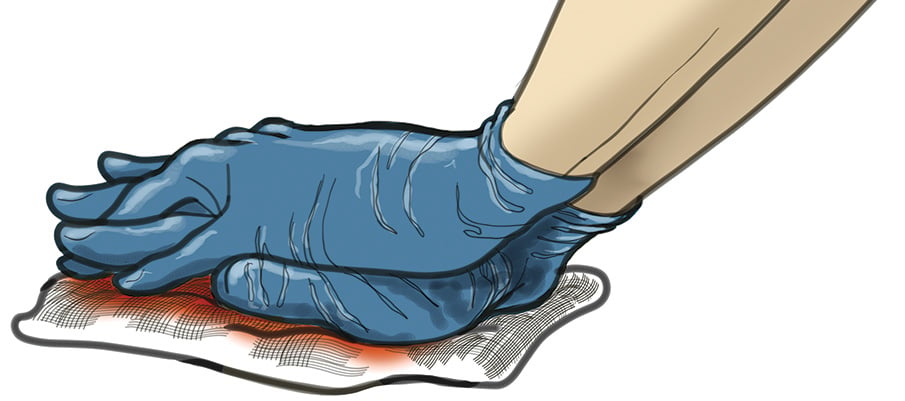
Coban (or vet wrap), a self-adherent, water-resistant, lightweight, breathable wrap, is the duct tape of the medical world, and I wouldn’t leave the dock without it. Stock 2″ and 3″ sizes. It’s super versatile for holding dressings in place; for pressure dressings; for holding splints or ice packs in place; as a water-resistant layer over Kerlix or Kling; and to support, secure, and protect sprains and strains. Stock a roll of 1″ silk tape, and 2″ is also handy. Also stock a roll of waterproof, cushioned, and elastic fabric tape that will stick in our challenging world. Finally, have a large, catheter-tipped syringe on hand to irrigate bacteria and debris when cleansing wounds.
“I don’t know how to use this stuff.”
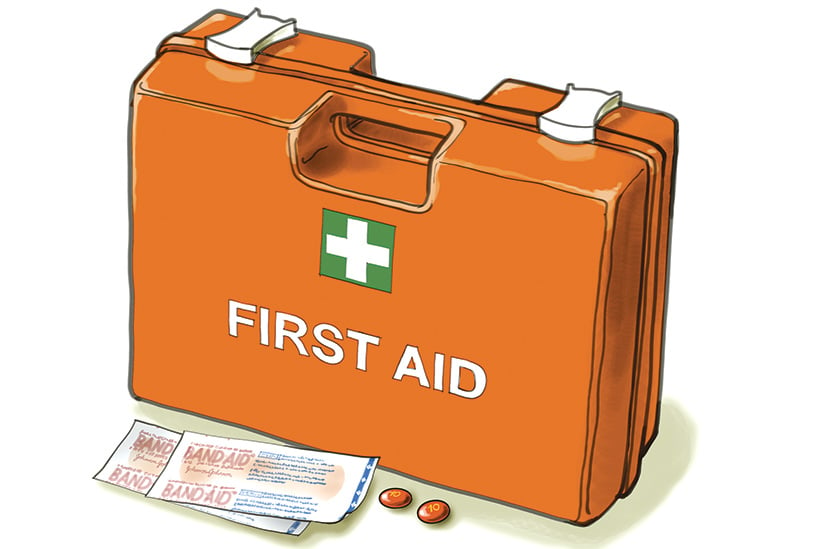
This is going to seem like a big list. The feeling might be partially attributed to our past experiences with pre-assembled kits, which can be woefully equipped, both in terms of the items they contain and also in those essentials that are missing. It’s important to have a well-stocked medical kit and learn how to use the items contained within. Medical kits can be daunting, as can the idea of handling medical emergencies at sea. Take a Wilderness First Aid course, and consult the sidebar of “Manuals to Complete Your Kit.” With some education and practice, you’ve got this!
Stop the Bleeding
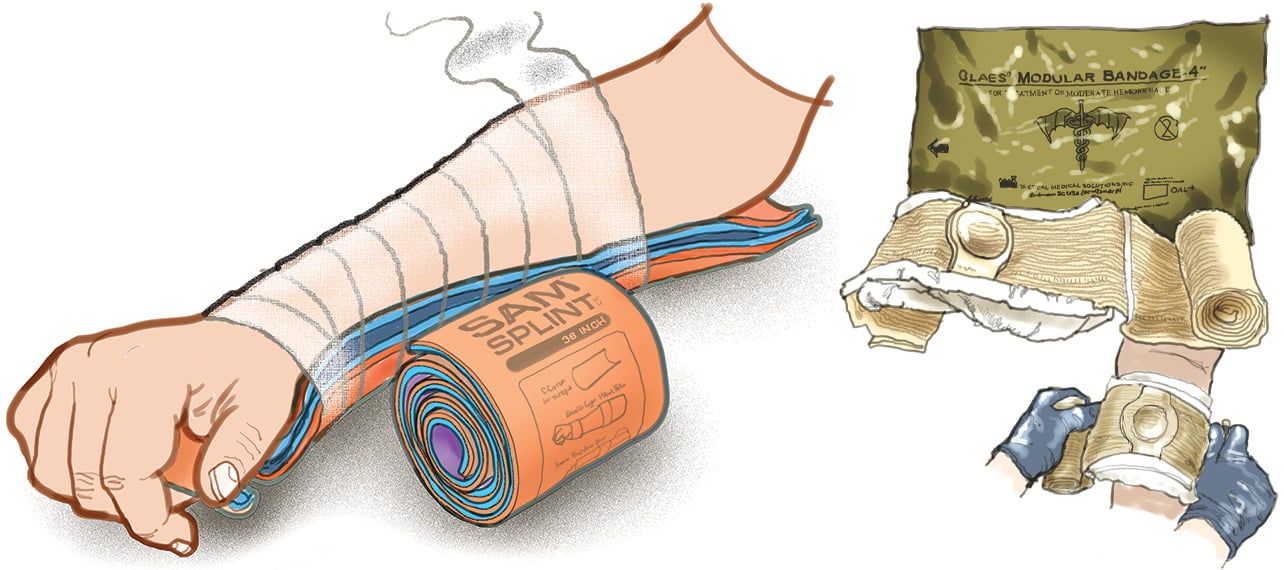
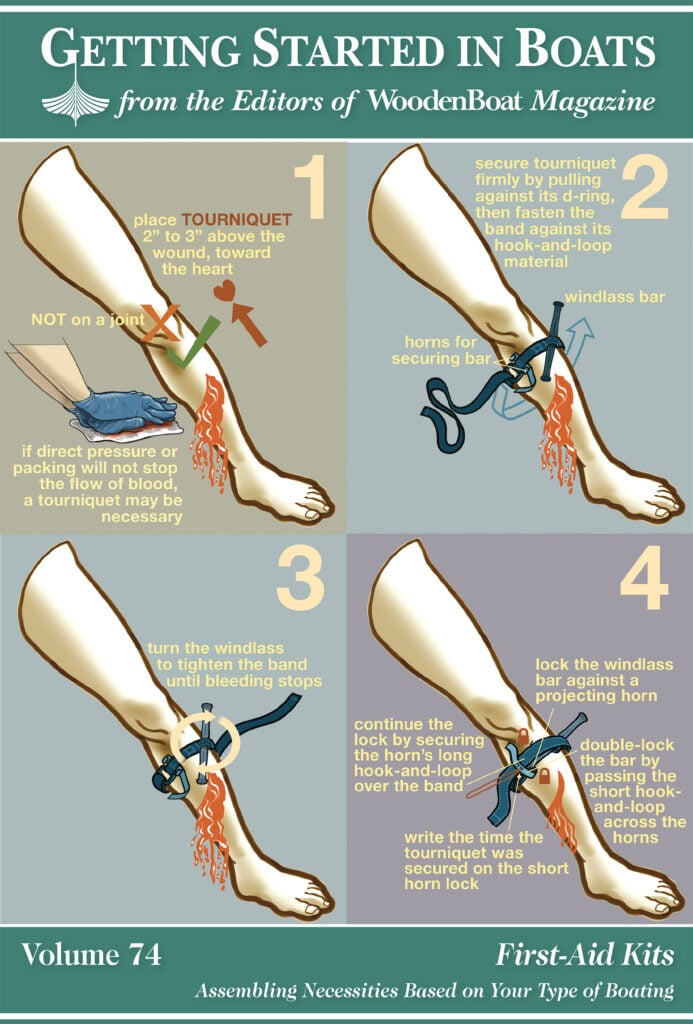
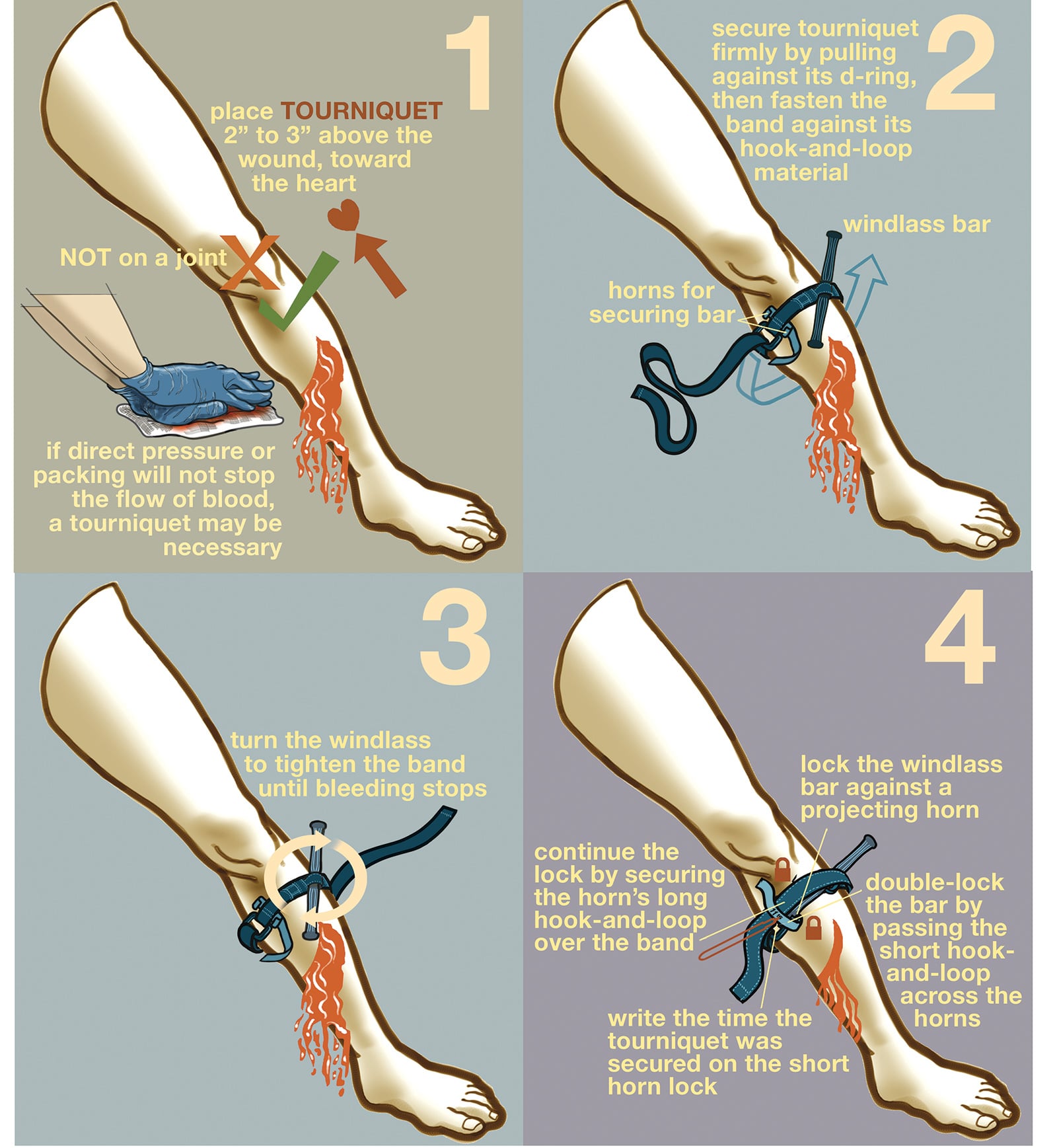
In the case of severe bleeding, when the situation is heading south, having specific equipment in its own Stop the Bleeding bag simplifies the response to life-threatening emergencies. Include trauma pads, a thick dressing that can absorb serious amounts of blood, a commercial pressure dressing such as an Olaes bandage, a commercial tourniquet, a roll each of Kerlix, Kling, and Coban, and some 4×4s. Depending on how you think your mind will respond to a crisis, a CPR barrier device could go here, too.
Muscles and Bones
Into a bag marked Orthopedic, put the equipment to stabilize and treat injuries to muscles and bones. A triangle sling bandage can be used to splint any injury from the collarbone to the wrist. Ace wraps, 3″- and 4″-wide for sure, and a 6″-wide one if the budget allows, will provide support and comfort for mild, stable orthopedic injuries. They constitute the “C” in the widely used RICE acronym (Rest, Ice, Compression, Elevation). SAM, the brand name for a padded-roll splint that can be shaped and cut to fit, is a must-have along with either SAM or commercial finger splints. Rolls of Coban, Kerlix, and Kling could also be added here if you don’t mind a little redundancy.
About Ice Packs
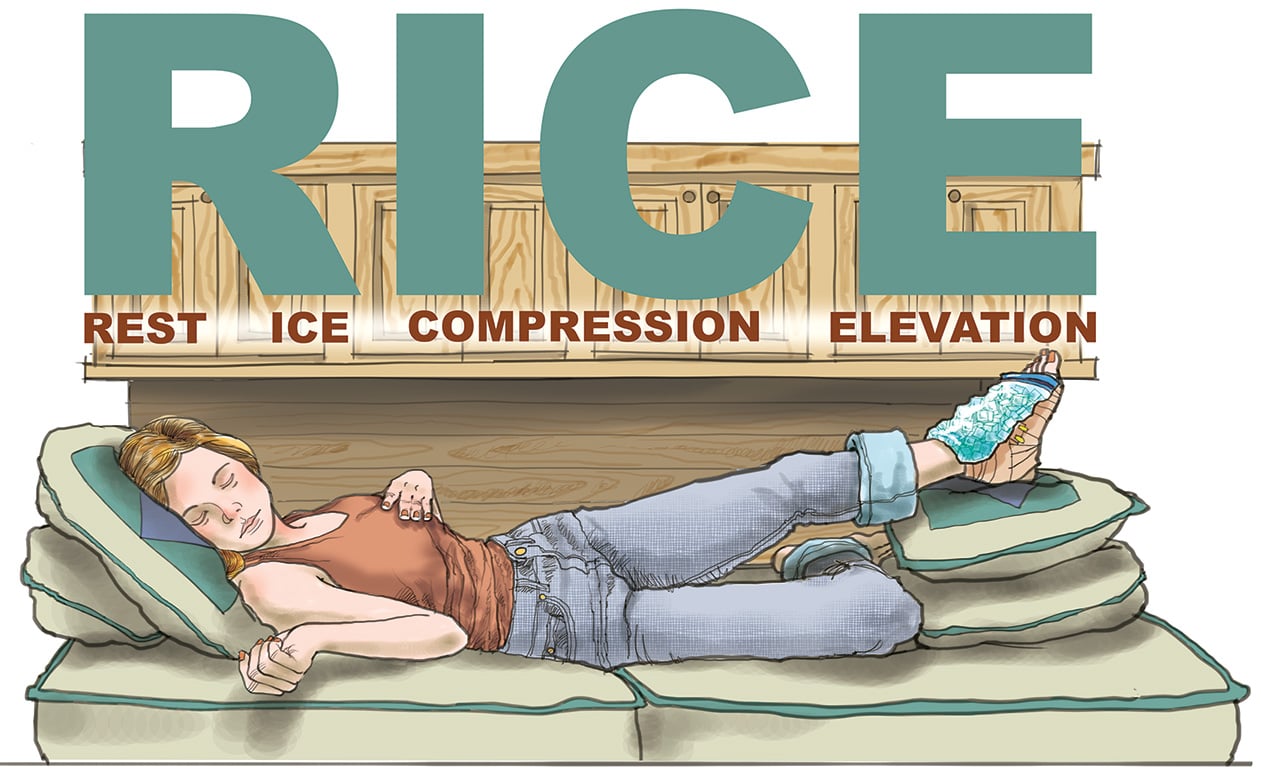
I’m not a fan of the instant variety of ice packs. First, because they don’t get very cold, they are perhaps only useful for taking one’s beer from 72 to 71 degrees. In addition to that, they often break and leak or just don’t get cold when needed. A handful of ice cubes in a zippered plastic bag, wrapped in a cloth, are far more effective both practically and financially. In addition, a bag of frozen corn or peas will work just great in a pinch. If you choose to stock instant ice packs, they need to be kept in a hard-sided case with padding to prevent impact, or they will fire off in storage.
Manuals Complete Your Kit
The author recommends the following first-aid guides for methodology: Wilderness and Rescue Medicine, Sixth Edition (this edition is hard to come by at the moment, the next will be out soon); Marine Medicine: A Comprehensive Guide; First-Aid Afloat; Dangerous Marine Animals; and American Heart Association Heartsaver First Aid, CPR, and AED Student Workbook.
These are suggestions more than recommendations. Look over each guide and choose those you like and are comfortable referring to and become very familiar with them. —Eds.
Tools
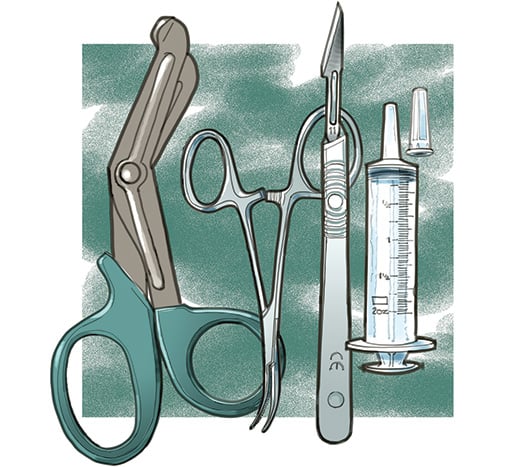
Tools like to hang out together, so give them their own bag, labeled Tools. Stock cotton swabs for gently removing a foreign body from the eye or applying ointment from a multi-use tube. A nasal clip is handy for putting hands-free pressure on a nosebleed. Non-latex gloves are great if the budget allows; otherwise, use a sturdy pair of dishwashing gloves that can be reused if thoroughly scrubbed and if you’re confident of your sailing partners’ immune-system status.
A sturdy pair of trauma shears, tweezers, toothbrush, hemostat (medical, locking precision pliers), and nail clippers will be useful for everything from cutting bandages to cleaning wounds to pulling out slivers. Add a magnifying glass. A pen and paper (or, even better, the Wilderness Medical Associates SOAP Note book of tearsheets) will help track the details that we think we’ll remember—such as what a wound looked like yesterday and when the last dose of medication was—but, alas, we will forget.
Medications
The Medication bag can be tricky. If you ask 100 doctors what medications to pack, you’ll get 120 answers. Here is a list of over-the-counter suggestions to spark a conversation with your personal provider.
Topically, consider:
- A Polysporin-type antibiotic ointment to prevent wound infections.
- 100-percent aloe vera gel, diphenhydramine, and hydrocortisone cream for the pain, itch, redness, and inflammation of insect bites, minor cuts, burns, skin irritation, rashes, and cold sores.
- 2-percent viscous topical lidocaine gel to relieve the pain of burns, dental issues, and mouth sores.
For cleansing wounds, carry a mild soap such as Ivory or Dial antibacterial hand soap. To relieve pain, reduce inflammation, and reduce fever, stock acetaminophen and ibuprofen. For big jobs, they can be used together. Check in with your doctor for directions on how to safely combine them. Also carry low-dosage aspirin for suspected heart issues in adults.
For minor stomach annoyances, consider Pepto-Bismol or loperamide for diarrhea; psyllium, MiraLAX, or bisacodyl suppositories for constipation relief.
Always carry several types of relief for seasickness, which can lead to life-threatening dehydration. Consider electronic relief bands, ginger gum, Motion Eaze, and especially meclizine.
Phenazopyridine stops the misery of a bladder infection, buying time to get to a doctor for definitive treatment and for the antibiotics to work. For ears and teeth, carry natural tears and temporary dental filling material.
Medications Doing More Than One Job
Allergic reactions, although not terribly commonplace, are serious business, and you have huge power to intervene. An inexpensive fix is to carry diphenhydramine and famotidine. The bonus is that they each have other uses. Diphenhydramine can help with nausea and famotidine with heartburn. Sailors love small, inexpensive solutions to big problems, especially if they have multiple uses.
Additions for Farther Afield
Coastal Cruising or Wilderness River Trips
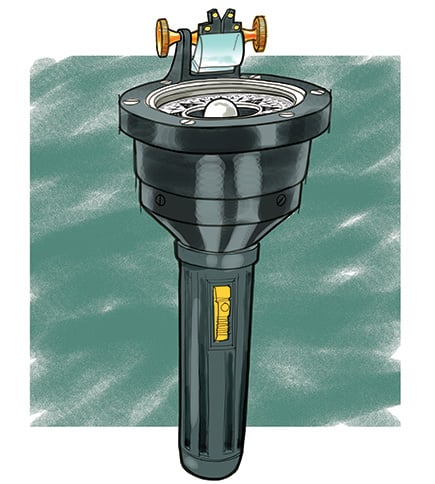
Cruising the coastlines of large lakes or oceans takes you far away from medical care, so some additions to the bones of your basic kit are necessary. Add both the recommended extra supplies and extra quantities of the basic supplies to care for injuries over long periods of time.
Make sure everyone on board who needs medications, either routinely or in case of a problem, has them. They should have a double supply if the route is offshore or the ailment could be life-threatening. I also ask people to bring aboard a medical history form in a sealed envelope along with any vital medications. That way, if someone is injured and can’t speak for themselves, the crew and later, the rescuers, have critical information to help care for the patient.
To your Skin bag, add more specialized dressings such as xeroform gauze, hydrocolloidal dressings, and Aquacel; larger packages of gauze; and a 30- to 60-cc catheter-tipped syringe.
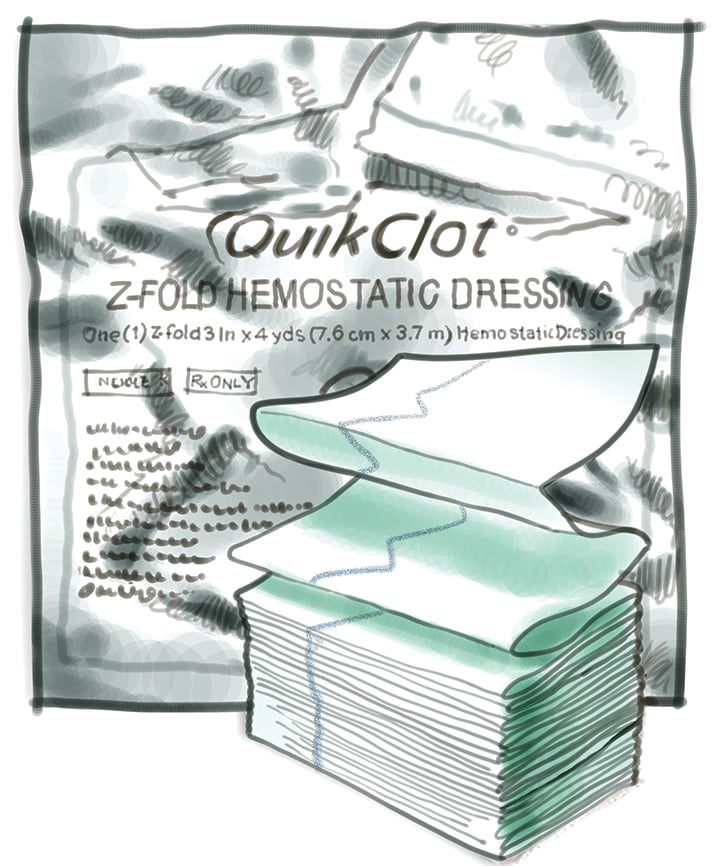
Add some QuikClot, an absorbent gauze impregnated with a substance that helps stop bleeding, to the Stop the Bleeding bag.
The Tool bag gets a 20-cc syringe with a catheter tip or similar system for irrigating waxy ears; a No. 11 blade and handle for trimming away dead, unhealthy skin from a wound or burn or for lancing a boil or abscess; and a thermometer.
For your Medication bag, add:
- Goop waterless hand cleanser for wounds contaminated with grease.
- Terbinafine antifungal cream for athlete’s foot, ringworm, and jock itch.
- Octyl cyanoacrylate skin glue.
- Activated charcoal tablets for stomach irritations, overdose, and “weird tropical stuff.”
- Miconazole vaginal suppositories.
- Isopropyl alcohol to prevent swimmer’s ear.
- Oxymethazoline nasal spray for nasal congestion.
Speak with a provider about an epinephrine auto-injector in the event of a serious allergic reaction. These save lives. I also recommend asking about the supplies to make your own. It’s cheap and easy. Epi auto injectors are pricey.
Hypodermoclysis Kit
Hypodermoclysis uses a smaller needle that is simply pressed into the skin and penetrates to the subcutaneous layer to deliver fluids beneath the surface of the skin. Common infusion sites for hypodermoclysis are the abdomen, thighs, and upper arms. Up to 3 liters per day can be given using this method. A traditional intravenous (IV) drip requires that a needle or catheter be placed perfectly inside a vein, which is a skill that requires training and practice. An IV would be almost impossible to insert in anything but calm seas.
Two-Kit System
Consider a two-kit system with a small “nitty-gritty” kit for the things used most often, and a second, more comprehensive “Oh sh*t!” kit, as I once heard it called. This way, the things you use most often are accessible to everyone, and no one is rummaging through life-and-death emergency supplies when they’re just looking for a bandage.
Heading Way Out
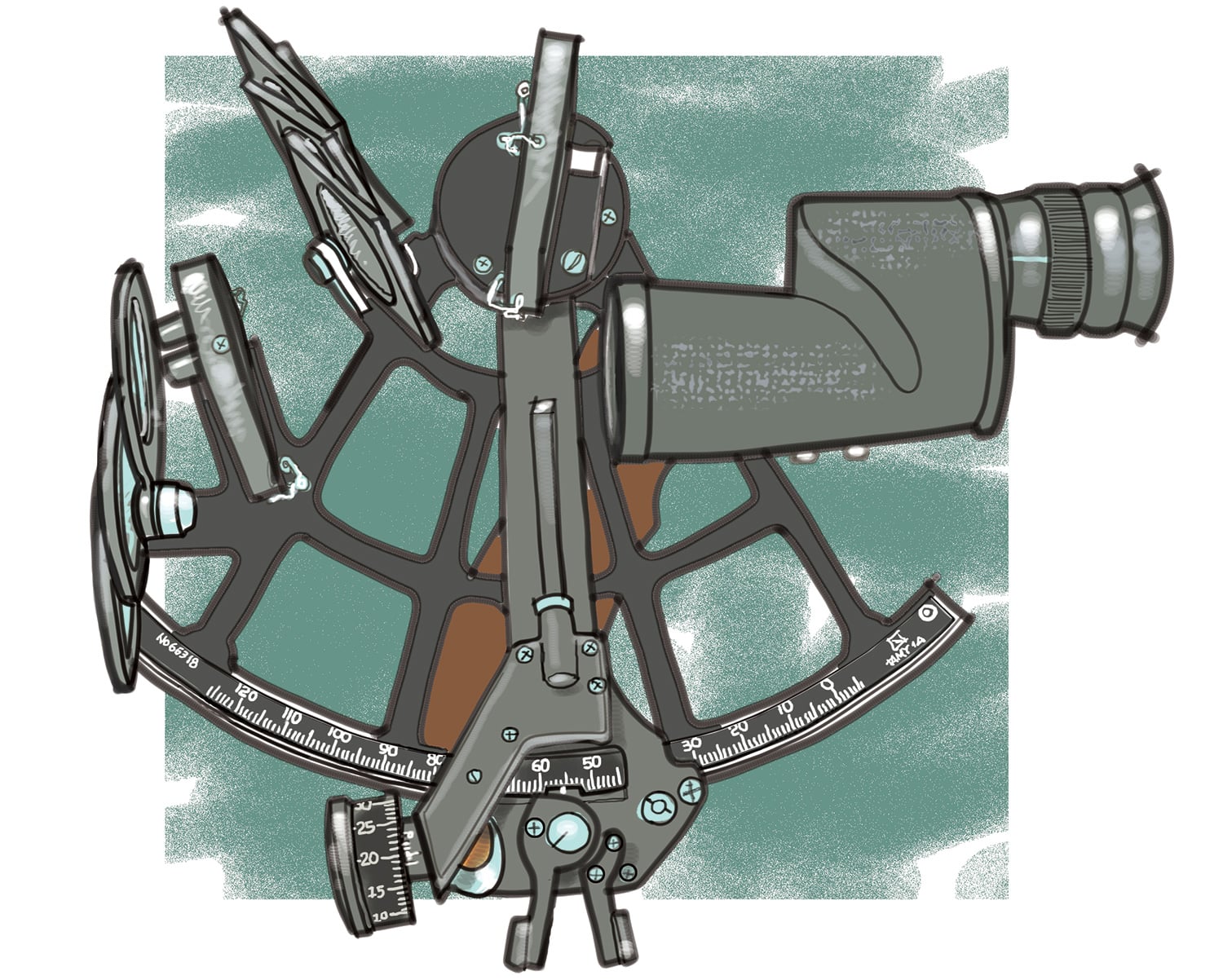
Leaving Coast Guard range, whether we call this offshore, bluewater, or ocean sailing, requires you to take the coastal kit and soup it up. Many of these suggestions will require further study and definitely require a conversation with a medical provider. There may be things on this list that you don’t understand or feel comfortable learning or doing, and that’s okay. For these things, please consider stocking them anyway, as they are important and someone else on your boat may be able to use them. My suggestions:
For wound care, consider adding a skin stapler, staple remover, and surface suture material (such as 5-0 and 6-0 nylon), and some vicryl (dissolving suture material for deep-layer sutures).
Carry urinary catheters for someone who can’t empty their bladder.
Pack a pregnancy test for unexplained abdominal pain in childbearing-age females.
Buy adult diapers for the long-term care of someone who can’t get to the head due to illness or injury.
For serious medical conditions, stock intravenous (IV) fluids, IV catheters, and a hypodermoclysis kit as a life-saving alternative to a traditional IV.
Include syringes and needles of various sizes for giving medications.
Oral and nasopharyngeal airway devices of various sizes are easy to use and will help maintain an open airway in an unconscious person.
To your Tools bag, add a needle holder or suture set, nasal atomizer, blood-pressure cuff, otoscope, and stethoscope.
Your Medication bag can use over-the-counter permethrin for lice and scabies and K-Y jelly for lubricating catheters and airways. A variety of prescription medications that will cover a wide array of issues are necessary. Start the conversation with your provider or a travel medicine specialist with the following possibilities:
- Topical: Mupirocin antibiotic skin cream
- Pain: a prescription pain reliever and a local anesthetic
- Allergic reactions: epinephrine auto injector; injectable diphenhydramine
- Nausea: Ondansetron, Promethazine in injectable or suppository form, and scopolamine patches
- Eyes: erythromycin or gentamicin ophthalmic ointment and ciprofloxacin drops for infection, and tetracaine drops for numbing
- Infections: amoxicillin, Augmentin, azithromycin, ciprofloxacin, ceftriaxone injectable, cephalexin, metronidizole, trimethoprim sulfa ds, fluconazole, and valacyclovir
- Miscellaneous: lorazepam, albuterol inhaler, prednisone, and naloxone.
Many of these drugs require guidance before administering. If you end up in a situation where medication might be needed, make a call via satellite phone to contact a professional. The Coast Guard may be able to get a medical control officer to give medical advice; however, I would suggest researching a telemedicine service or concierge doctor.
When You Are the First Responder
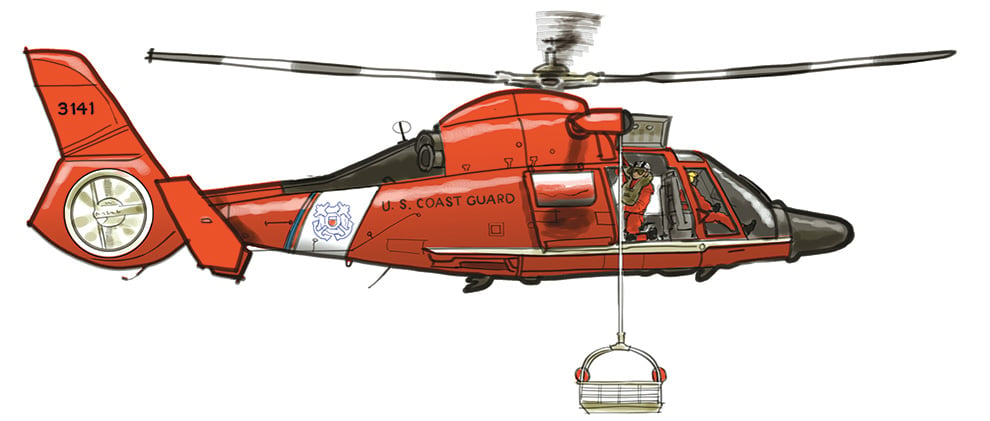
The farther away we are from medical care or rescue, the more we need to be prepared to be on our own as the sole source of medical help for the injured. Depending on conditions, sailing your patient into port, even if it takes days, may offer more benefit with less risk than calling for a Coast Guard medical evacuation in high seas and strong winds. Consider taking an offshore medicine or wilderness first-responder class. Simulate injuries to practice with your kits in the off-season or on boring passages. And also consider taking the American Heart Association basic CPR/AED and first-aid training. Everyone on the planet should do this. It’s a gift we give each other.
More Specialization
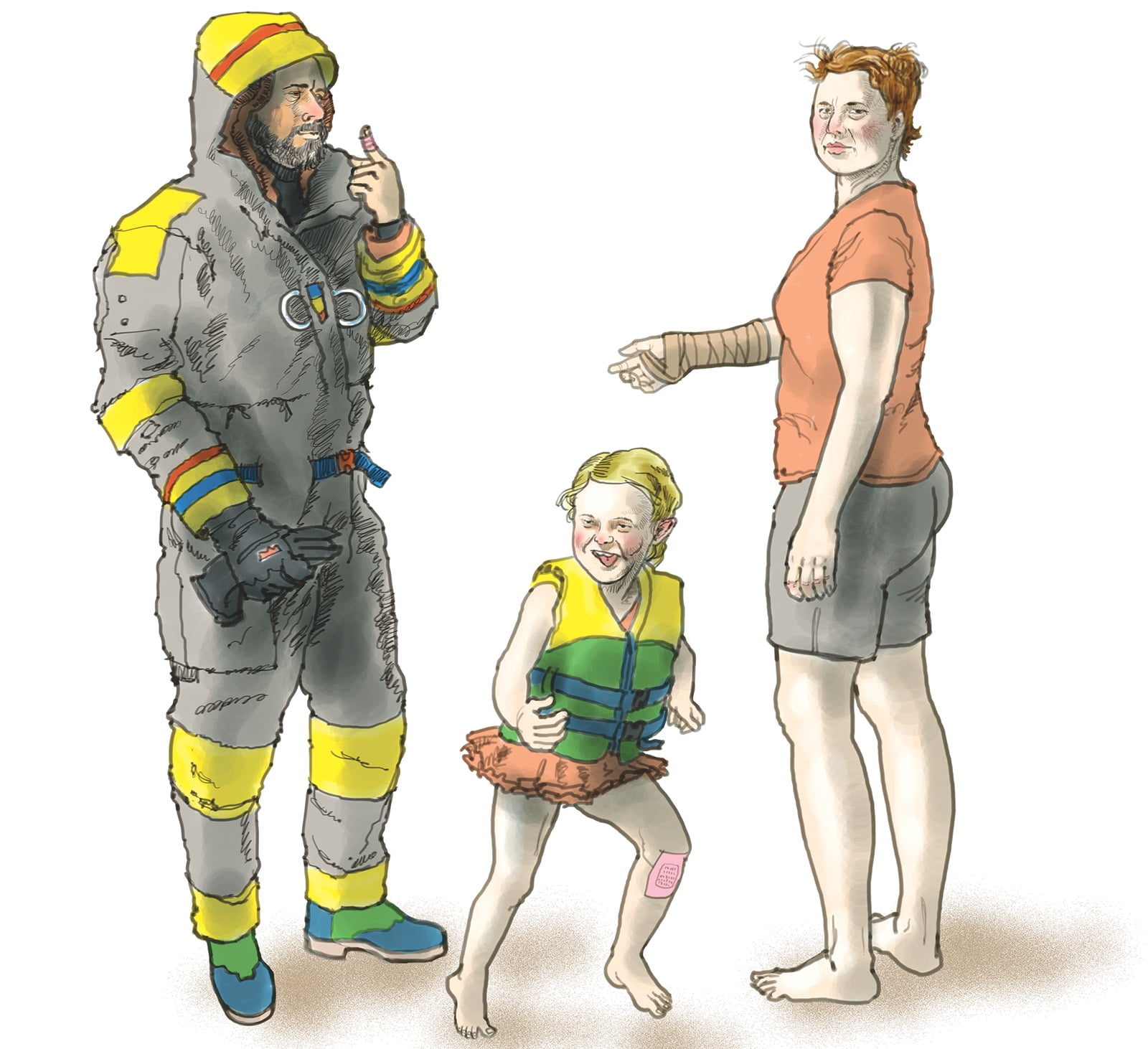
The basics can be further customized by adding things for your personal medical needs such as pediatric accommodations, specialized supplies for a crew member’s known medical issues, or for a specific geographic destination (think tropics versus Nova Scotia).
The quantity of each item to stock is a function of the size of your crew and length of time away from land. Remember to measure that in terms of how long you’ll be gone and how far away you’ll be.
As with other kits, organize these crew-specific supplies into waterproof containers that fit your available space. I once sailed on a gorgeous, million-dollar race boat with an expensive commercial kit aboard. When we needed it, we opened it only to find that the contents were soaked.
Periodically open your kit to check expiration dates and quantities and to refamiliarize yourself with this old friend. Your life might just depend on it.
Shelly Galligan spent 25 years as an emergency room nurse and uses that expertise and passion to help people on the water. After leaving nursing, she earned her captain’s license and American Sailing Association instructor certification. She maintains her RN license and associated critical care certifications, and has developed a curriculum to teach emergency medicine at sea.